Tell us about the job
Takes about a minute. No obligation.

A mini-split compressor in Putnam County works hard through summer and sits idle the rest of the year. Homes in Putnam County, MO run cooling about three months a year, from June through August. That idle stretch does not protect the compressor from failure; it just means all the starting, stopping, and heat-rejection happens inside a short window, and stress concentrates there. A contractor diagnosing a failed unit checks the contactor and the capacitor first, because those parts take a hit every time the compressor starts, and a short but intense cooling season gives them plenty of chances to wear out.
Refrigerant lines run to walls that were never designed for them, and the systems inside those walls have been running long enough that what a contractor finds on the bench decides whether the job is a repair or a conversation about replacement. Half the homes in Putnam County, Missouri were built in 1976 or earlier (2020-2024 ACS 5-year). A technician opening a unit in housing like this has to check whether the parts that failed are still in production, because a clean diagnosis means little if the components it calls for are no longer made. That is what the age of the stock actually changes about a repair call here.
The Parts of a Mini-split a Contractor Checks During Repair
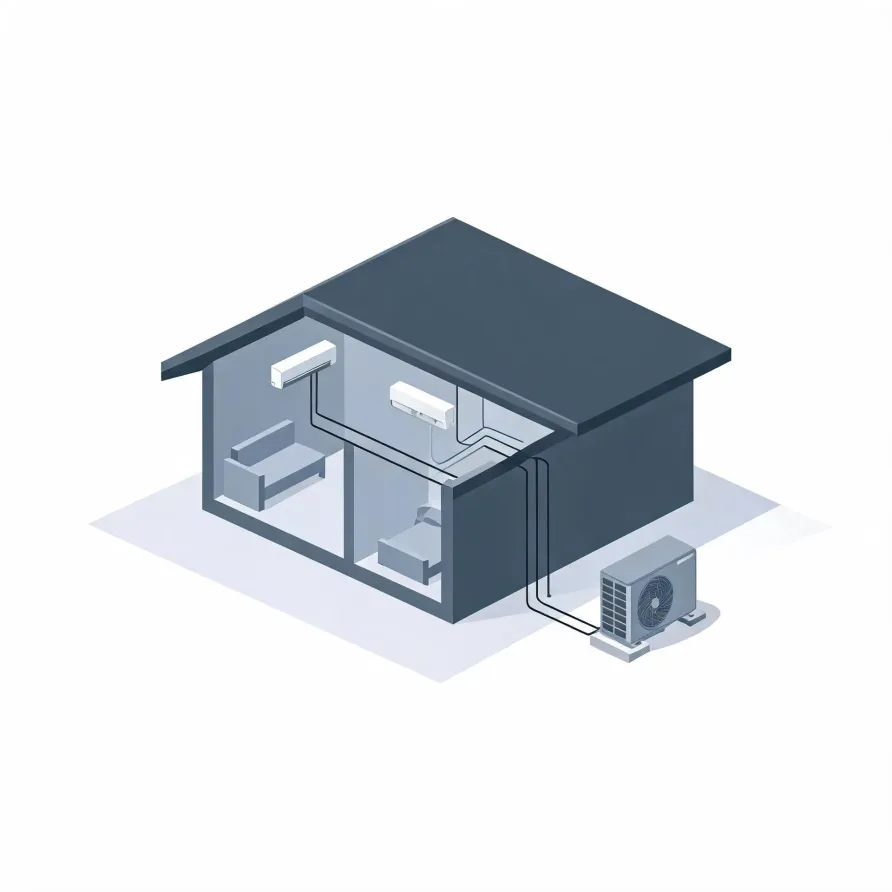
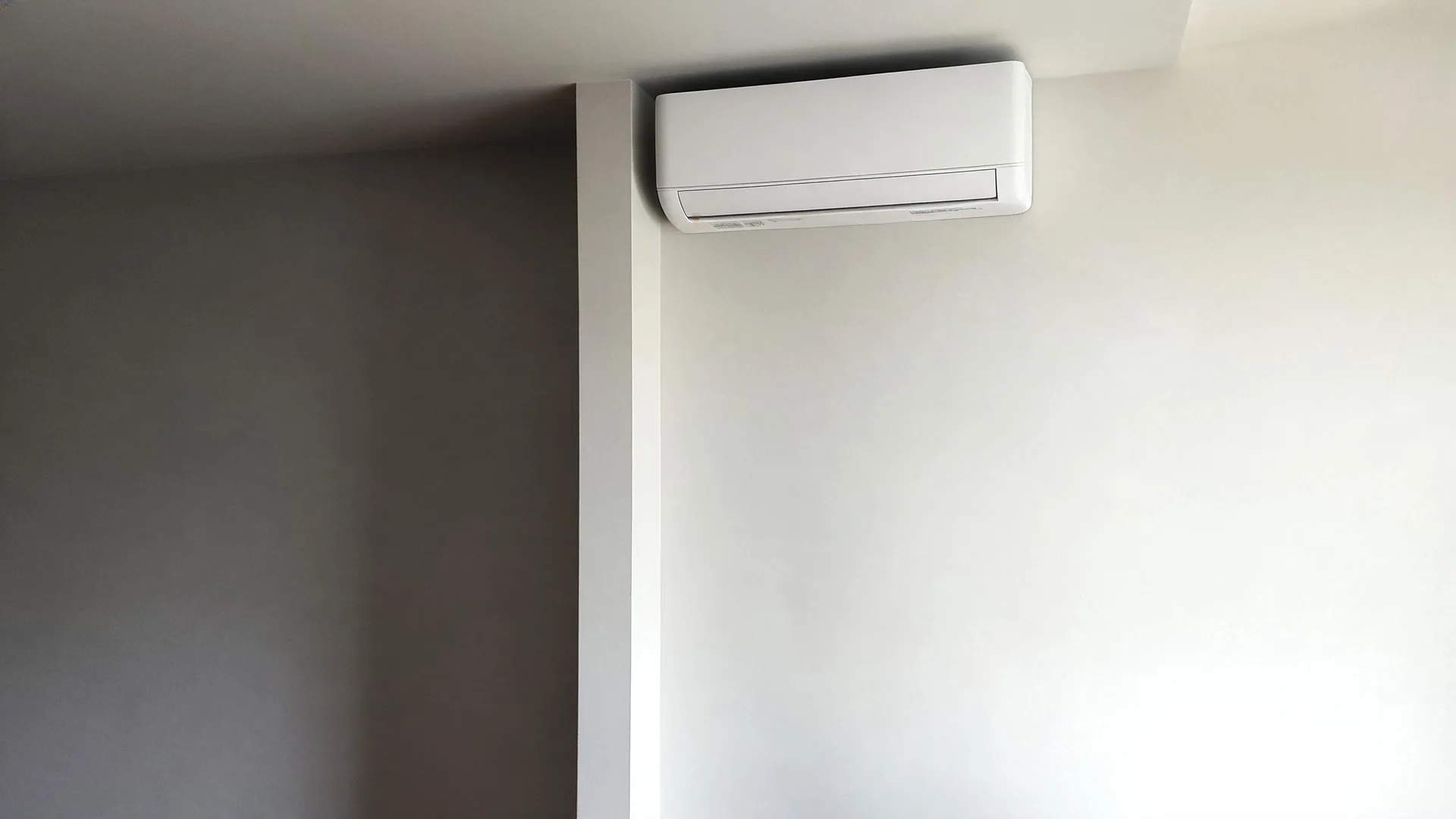
The indoor air handler mounts high on a wall inside the room and is the piece a homeowner notices first. It draws in room air, passes it across the coil, and delivers conditioned air back out. When it malfunctions, symptoms show up as weak airflow, ice on the coil, or air that stops reaching temperature.
The outdoor condenser unit sits on a pad or bracket outside the house and holds the compressor, the coil, and the fan that reject heat to the air. The refrigerant line set and the condensate drain line run between the two units through a small opening in the wall. A fault in any of these connecting parts can point a contractor toward the outdoor unit or back to the indoor one.
The drawing shows the general layout of a mini-split system, and a licensed contractor determines what applies to your specific installation.
Get matched in Putnam CountyPutnam County, by the numbers
50 severe weather events were recorded in Putnam County, Missouri between 2015 and 2024.
NOAA National Centers for Environmental Information, Storm Events Database, bulk CSV export, events 2015-01-01 through 2024-12-31.Half the homes in Putnam County, Missouri were built in 1976 or earlier (2020-2024 ACS 5-year).
U.S. Census Bureau, 2020-2024 American Community Survey 5-Year EstimatesPutnam County, Missouri holds 2,834 housing units (2020-2024 ACS 5-year).
U.S. Census Bureau, 2020-2024 American Community Survey 5-Year EstimatesOwners occupy 83.0% of the occupied homes in Putnam County, Missouri (2020-2024 ACS 5-year).
U.S. Census Bureau, 2020-2024 American Community Survey 5-Year EstimatesSevere Weather Events in Putnam County
Putnam County weather puts real strain on mini-split systems, and repair needs here track closely with what the climate demands of the equipment. How hard a system has worked, and how often it has been pushed to its limits, shapes what a local contractor finds when something goes wrong.
50 severe weather events, 2015–2024. Source: NOAA National Centers for Environmental Information, Storm Events Database.