Tell us about the job
Takes about a minute. No obligation.
Sizing a mini-split for Clay County means accounting for a compressor that works hard and then stops, not one that spreads its cycles across a longer year. Homes in Clay County, MO run cooling about four months a year, from June through September. The compressor, the condenser fan, and the contactor all log their wear inside that window. An undersized unit runs longer cycles to keep up, and a poorly charged system pushes the compressor harder still. A contractor quoting an install here works out the correct capacity before anything else, because a unit that struggles through its peak months accumulates stress that shows up long before the equipment should be failing.
Electrical service panels in houses built for an earlier generation of HVAC loads are the variable that decides how a mini-split installation goes in Clay County. Half the homes in Clay County, Missouri were built in 1987 or earlier (2020-2024 ACS 5-year). A panel that was sized for a smaller draw may need an upgrade before a new unit can run at full capacity, and that work gets scoped before the equipment is selected, not after. Ductwork is beside the point with a mini-split, but the electrical is not.
The Parts of a Mini-split System and What HVAC Installation Involves
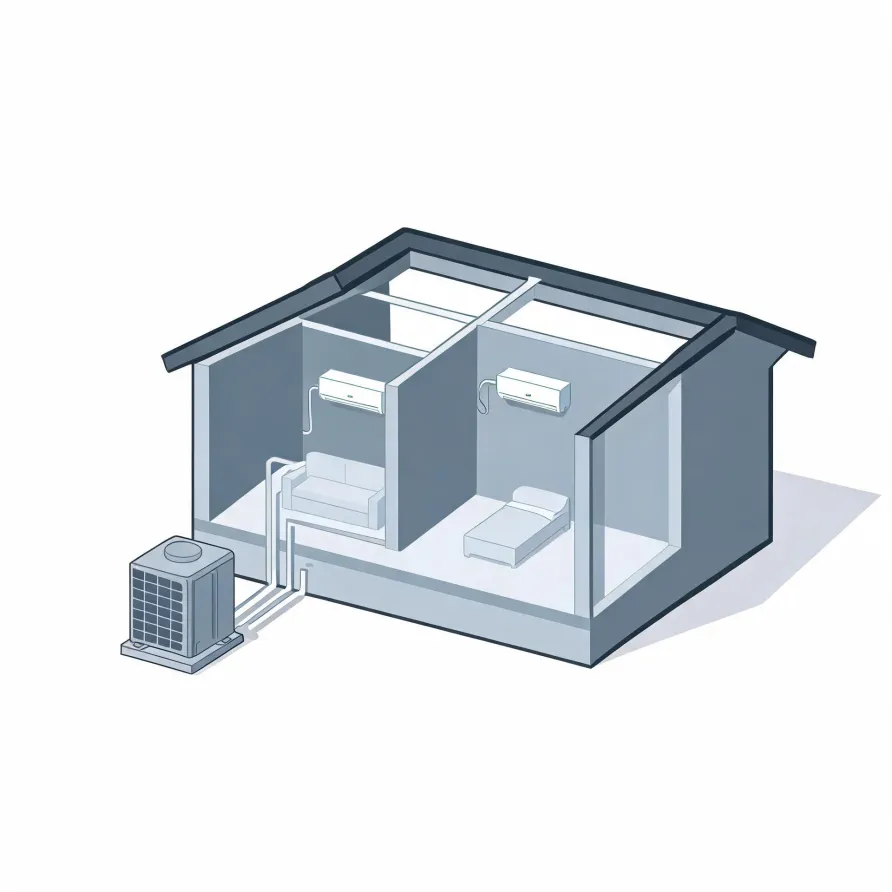
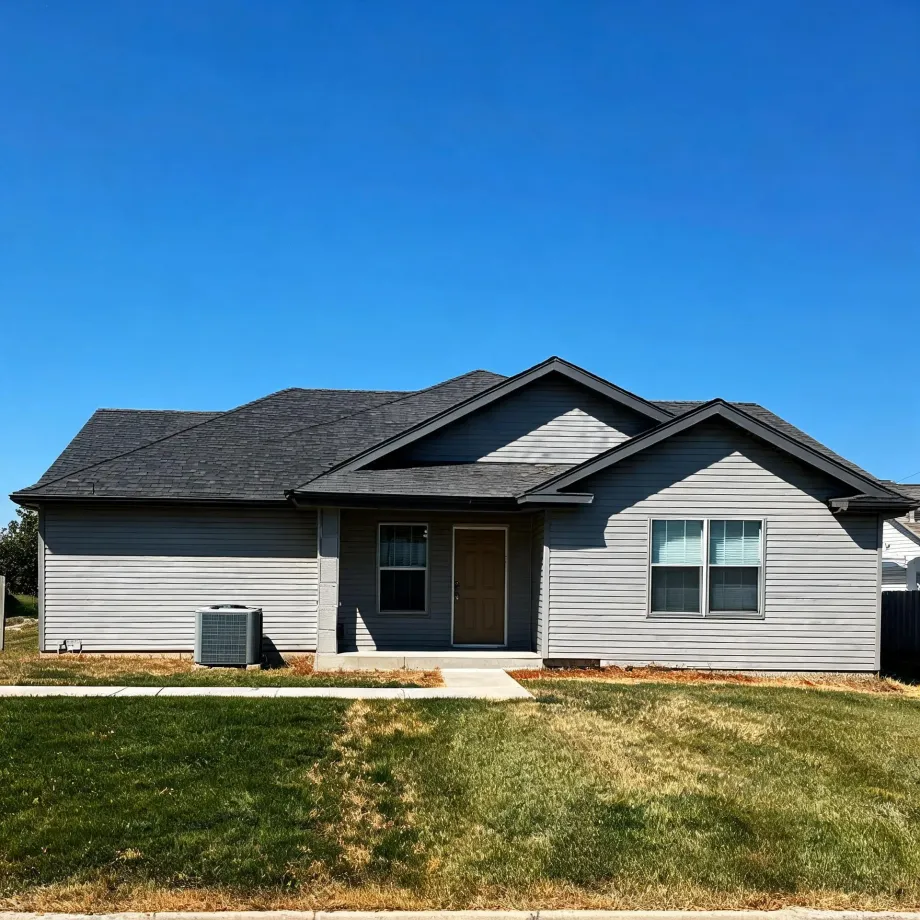
The indoor air handler mounts high on a wall inside the room being conditioned. It holds the evaporator coil and the fan that moves air across it. The outdoor unit sits on a pad or bracket outside the house and contains the compressor and condenser coil, which are the heart of the whole system.
A refrigerant line set runs through a small hole in the wall to connect the two units, carrying refrigerant between them. A condensate drain line runs from the indoor unit to the outside, removing moisture the coil pulls from the air. The electrical disconnect box mounts near the outdoor unit and gives the system its dedicated power source.
The drawing shows a typical layout, and a licensed contractor determines what applies to your specific home.
Get matched in Clay CountyClay County, Missouri, by the numbers
227 severe weather events were recorded in Clay County, Missouri between 2015 and 2024.
NOAA National Centers for Environmental Information, Storm Events Database, bulk CSV export, events 2015-01-01 through 2024-12-31.Half the homes in Clay County, Missouri were built in 1987 or earlier (2020-2024 ACS 5-year).
U.S. Census Bureau, 2020-2024 American Community Survey 5-Year EstimatesClay County, Missouri holds 107,719 housing units (2020-2024 ACS 5-year).
U.S. Census Bureau, 2020-2024 American Community Survey 5-Year EstimatesOwners occupy 69.5% of the occupied homes in Clay County, Missouri (2020-2024 ACS 5-year).
U.S. Census Bureau, 2020-2024 American Community Survey 5-Year EstimatesSevere Weather in Clay County
Heating and cooling equipment in Clay County works against local conditions year-round, and the stress storms put on that equipment is part of sizing and installing it right. What happens outside shapes what a system has to handle inside.
227 severe weather events, 2015–2024. Source: NOAA National Centers for Environmental Information, Storm Events Database.