Tell us about the job
Takes about a minute. No obligation.

Sizing a mini-split for a Clinton County home starts with understanding exactly how little the compressor is asked to do each year. Homes in Clinton County, MO run cooling about three months a year, from June through August. A compressor that sat idle through fall, winter, and spring can develop a refrigerant leak, a failing capacitor, or a seized contactor without giving any sign until the first hot afternoon in June. A contractor quoting a new install here factors that short active window into equipment selection and commission testing, running the system under load before signing off rather than assuming a cold start in summer will go cleanly.
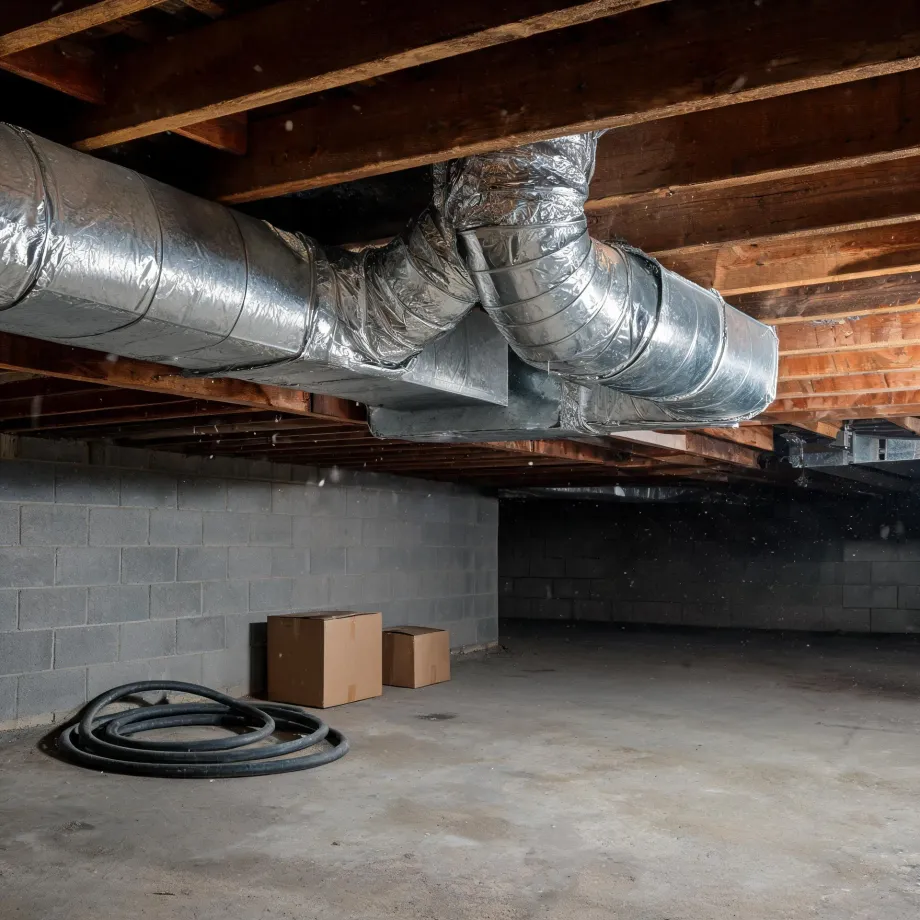
Ducted systems installed over the decades have come and gone in these houses, but the electrical panels they left behind were sized for what was running then. Half the homes in Clinton County, Missouri were built in 1978 or earlier (2020-2024 ACS 5-year). A contractor scoping a mini-split installation here checks whether the existing service can carry the new load before anything else on the job gets priced. If the panel falls short, that work gets done first, and the quote reflects it.
The Parts of a Mini-split System and What HVAC Installation Involves
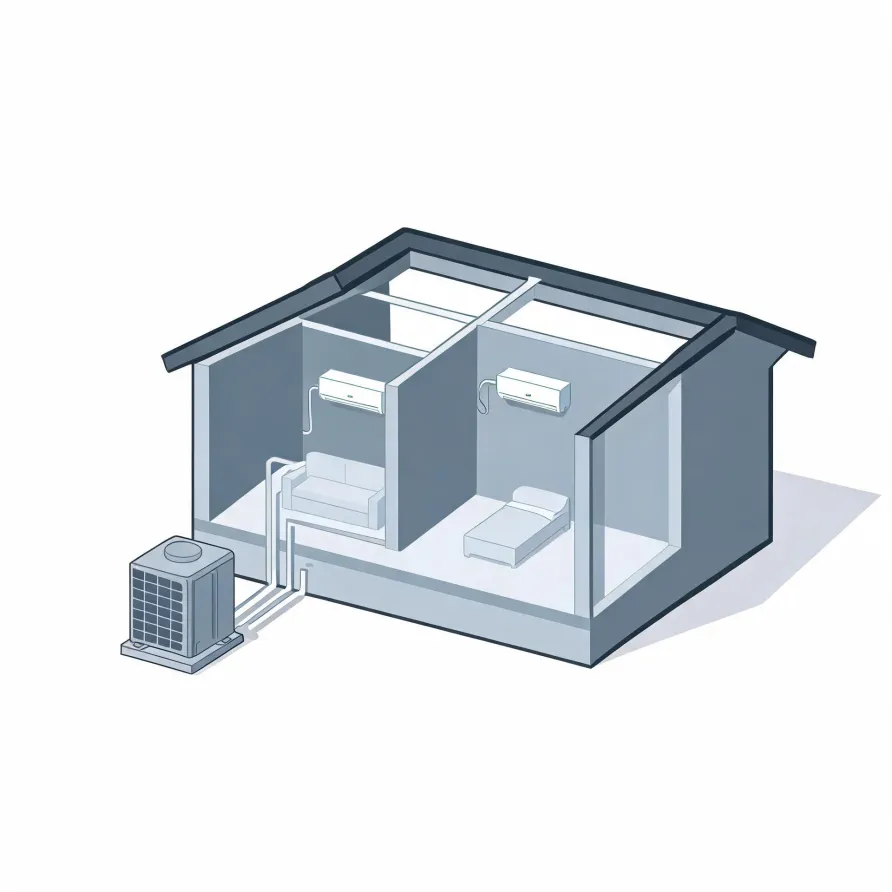
The indoor air handler mounts high on a wall inside the room and delivers conditioned air directly into that space. The outdoor condenser unit sits on the ground or a bracket outside the house and houses the compressor and coil that drive the whole system. Together, these are the two pieces a contractor is placing and commissioning.
A refrigerant line set runs through a small opening in the wall to connect the indoor and outdoor units, carrying the refrigerant between them. A condensate drain line also runs from the air handler to carry away moisture, and a dedicated electrical circuit is run to each unit to power it.
The drawing shows a typical layout, and a licensed contractor determines exactly how each piece is positioned and connected in your home.
Get matched in Clinton CountyClinton County, Missouri, by the numbers
95 severe weather events were recorded in Clinton County, Missouri between 2015 and 2024.
NOAA National Centers for Environmental Information, Storm Events Database, bulk CSV export, events 2015-01-01 through 2024-12-31.Half the homes in Clinton County, Missouri were built in 1978 or earlier (2020-2024 ACS 5-year).
U.S. Census Bureau, 2020-2024 American Community Survey 5-Year EstimatesClinton County, Missouri holds 9,077 housing units (2020-2024 ACS 5-year).
U.S. Census Bureau, 2020-2024 American Community Survey 5-Year EstimatesOwners occupy 75.7% of the occupied homes in Clinton County, Missouri (2020-2024 ACS 5-year).
U.S. Census Bureau, 2020-2024 American Community Survey 5-Year EstimatesSevere Weather Events in Clinton County
Heating and cooling equipment in Clinton County handles whatever the local climate throws at it, year after year. How hard that is depends on the weather record here, which is why that record belongs on a page about what your mini-split will be asked to do.
95 severe weather events, 2015–2024. Source: NOAA National Centers for Environmental Information, Storm Events Database.