Tell us about the job
Takes about a minute. No obligation.
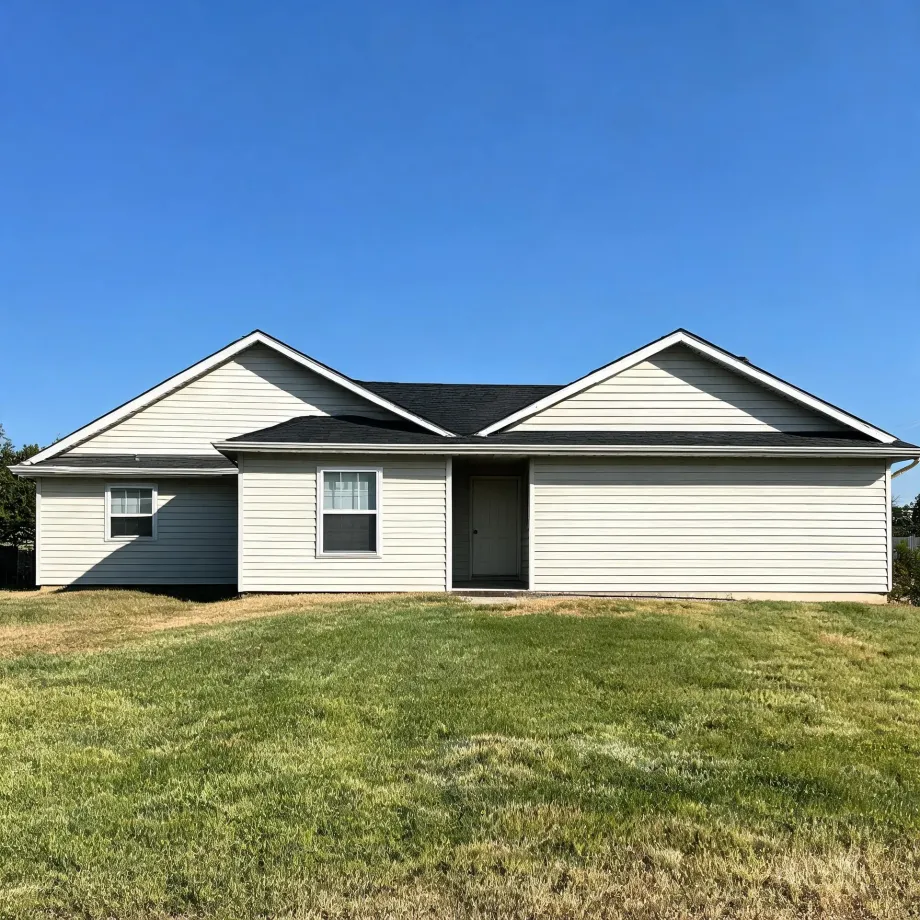
Sizing a mini-split for a Barton County home starts with what the compressor is actually asked to do each year. Homes in Barton County, MO run cooling about four months a year, from June through September. A contractor running a load calculation here has to account for a compressor that cycles hard through summer heat, then stands off entirely. Long idle periods let small installation faults hide until the unit starts up under full load in June, which is the worst moment to find them. Getting the refrigerant charge, the line set length, and the indoor head placement right at installation is what keeps that first startup clean.
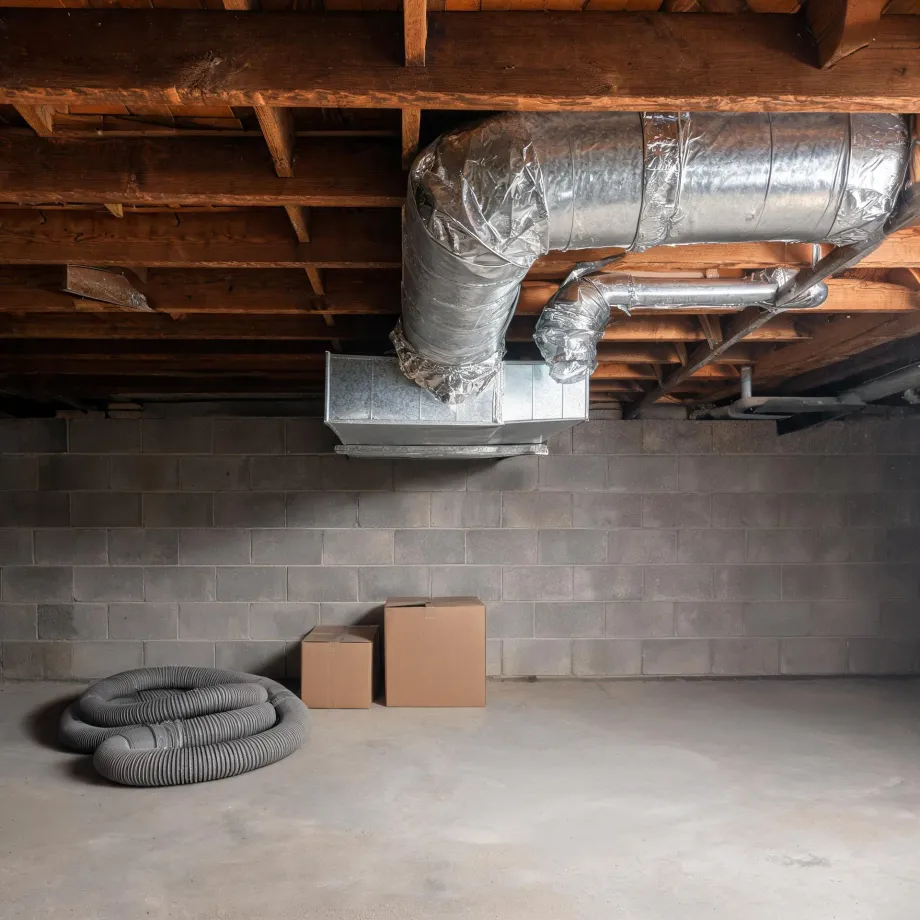
The electrical panel is where a mini-split installation in Barton County often stops or starts over. Half the homes in Barton County, Missouri were built in 1974 or earlier (2020-2024 ACS 5-year). Houses built in that era were wired for loads that bear little resemblance to what a modern mini-split draws, and a panel that has never been upgraded will not support the new service without work done first. A contractor quoting the job has to open the panel and read what is actually there before any equipment price makes sense.
The Mini-split System a Contractor Installs
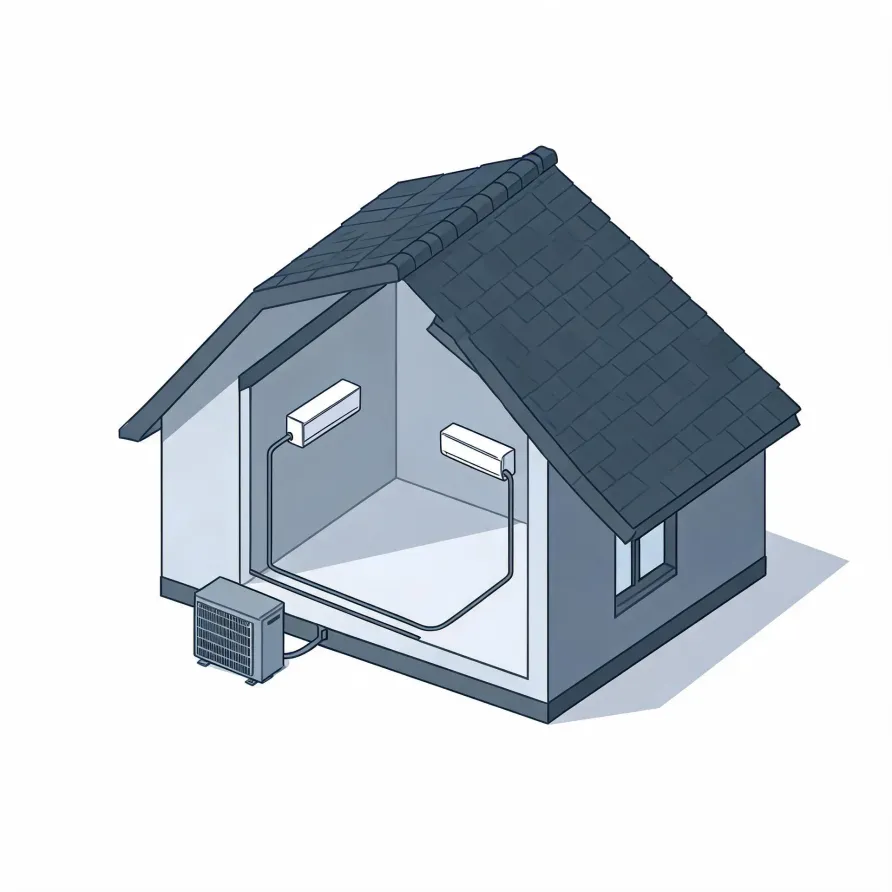
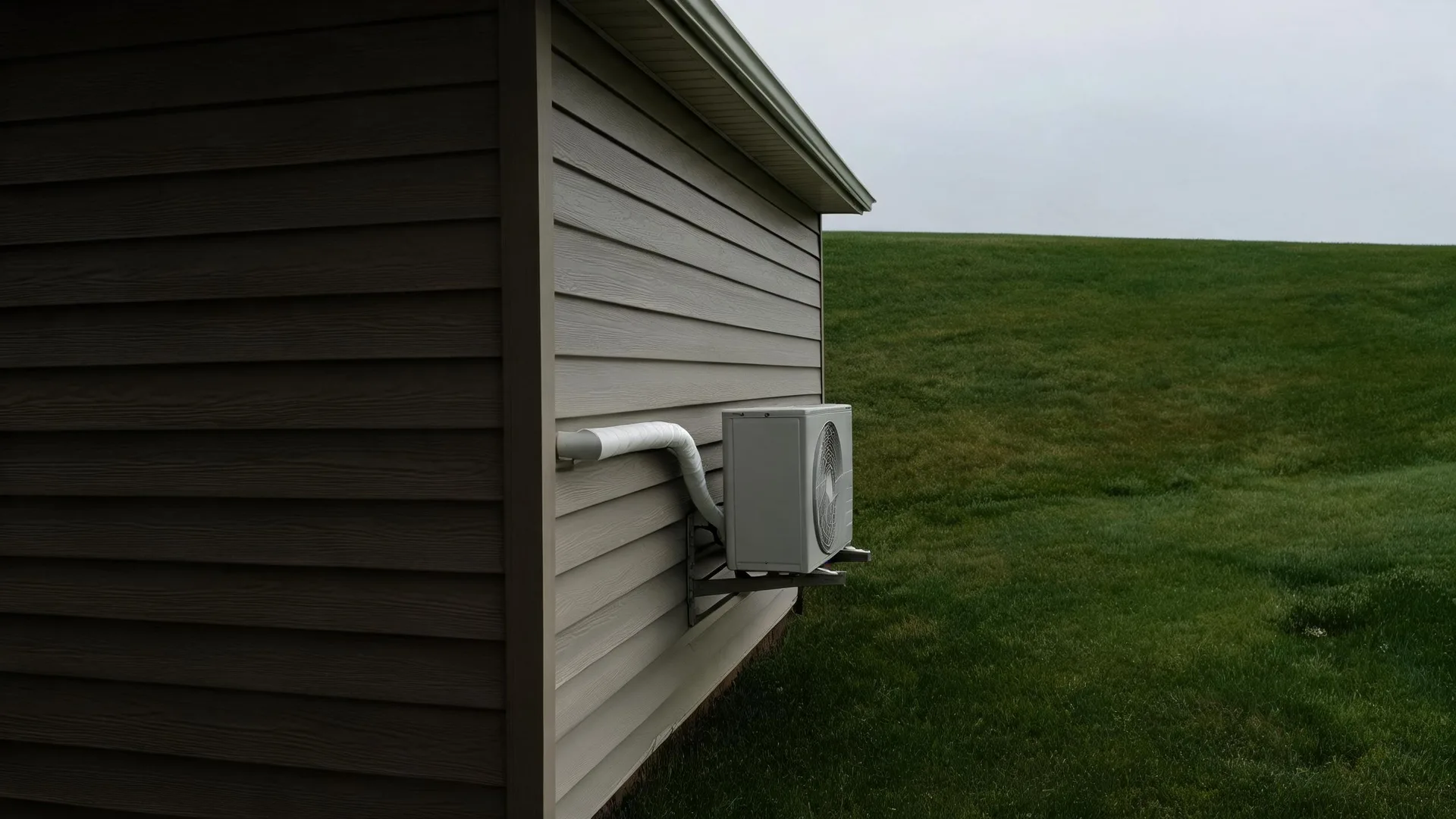
The indoor air handler mounts high on an interior wall in the room being conditioned, where it draws in room air and delivers treated air back into the space. The outdoor unit sits on a pad or bracket outside the house and holds the compressor and condenser coil, which are the mechanical core of the system.
A conduit runs through a small opening in the wall to connect the two units, carrying the refrigerant lines, a condensate drain line, and the power and communication cables that let the two sides work as one system. A disconnect box is mounted on the exterior wall near the outdoor unit to allow safe electrical shutoff.
The drawing shows a representative layout, and a licensed contractor determines exactly how the system is configured for your house.
Get matched in Barton CountyBarton County, by the numbers
98 severe weather events were recorded in Barton County, Missouri between 2015 and 2024.
NOAA National Centers for Environmental Information, Storm Events Database, bulk CSV export, events 2015-01-01 through 2024-12-31.Half the homes in Barton County, Missouri were built in 1974 or earlier (2020-2024 ACS 5-year).
U.S. Census Bureau, 2020-2024 American Community Survey 5-Year EstimatesBarton County, Missouri holds 5,285 housing units (2020-2024 ACS 5-year).
U.S. Census Bureau, 2020-2024 American Community Survey 5-Year EstimatesOwners occupy 68.1% of the occupied homes in Barton County, Missouri (2020-2024 ACS 5-year).
U.S. Census Bureau, 2020-2024 American Community Survey 5-Year EstimatesSevere Weather Events in Barton County
Weather in this part of Missouri puts real demands on heating and cooling equipment, and those demands shape what a well-sized mini-split installation needs to handle. The chart below pulls from recorded local data so you can see what the climate actually asks of the equipment serving your home.
98 severe weather events, 2015–2024. Source: NOAA National Centers for Environmental Information, Storm Events Database.