Tell us about the job
Takes about a minute. No obligation.
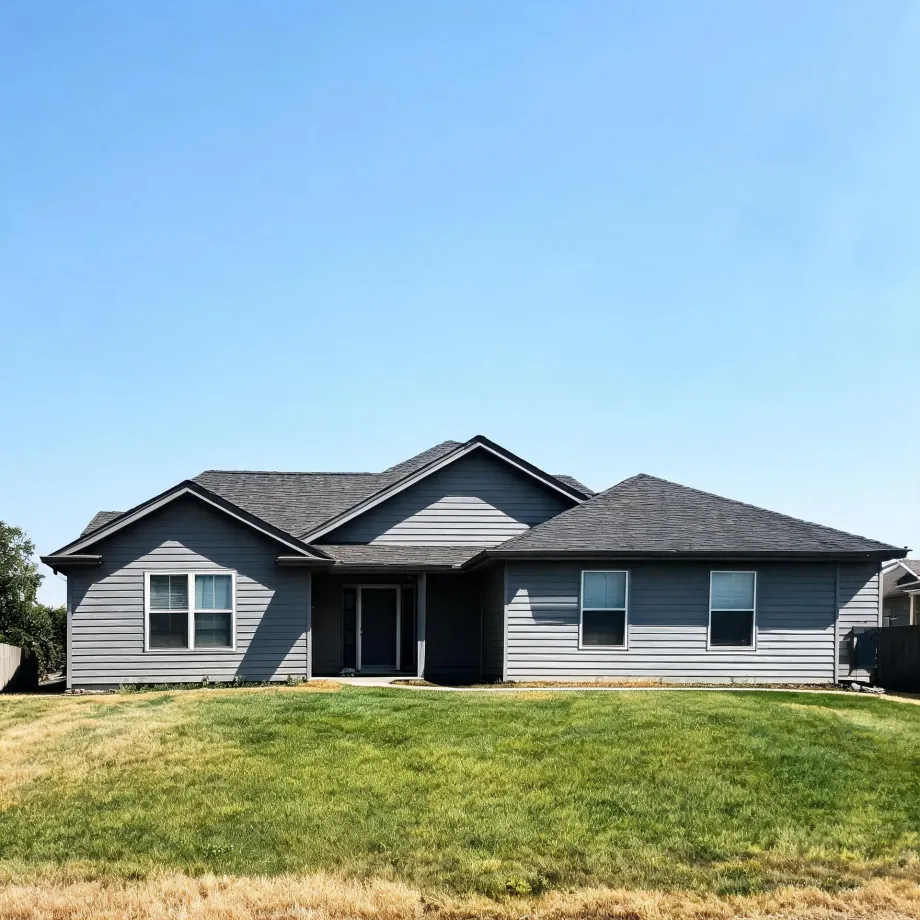
Sizing a mini-split for a Bates County home starts with what the compressor is actually asked to do each year. Homes in Bates County, MO run cooling about four months a year, from June through September. The compressor runs hard through that window, then sits. Long idle periods let refrigerant faults, corroded contacts, and weakened capacitors go undetected until the unit is called on in June, which is the worst moment to find out. A contractor quoting an installation here factors in that stop-and-start pattern when selecting equipment and placing the outdoor unit, because a system that is marginal on paper will announce it on the first genuinely hot afternoon.
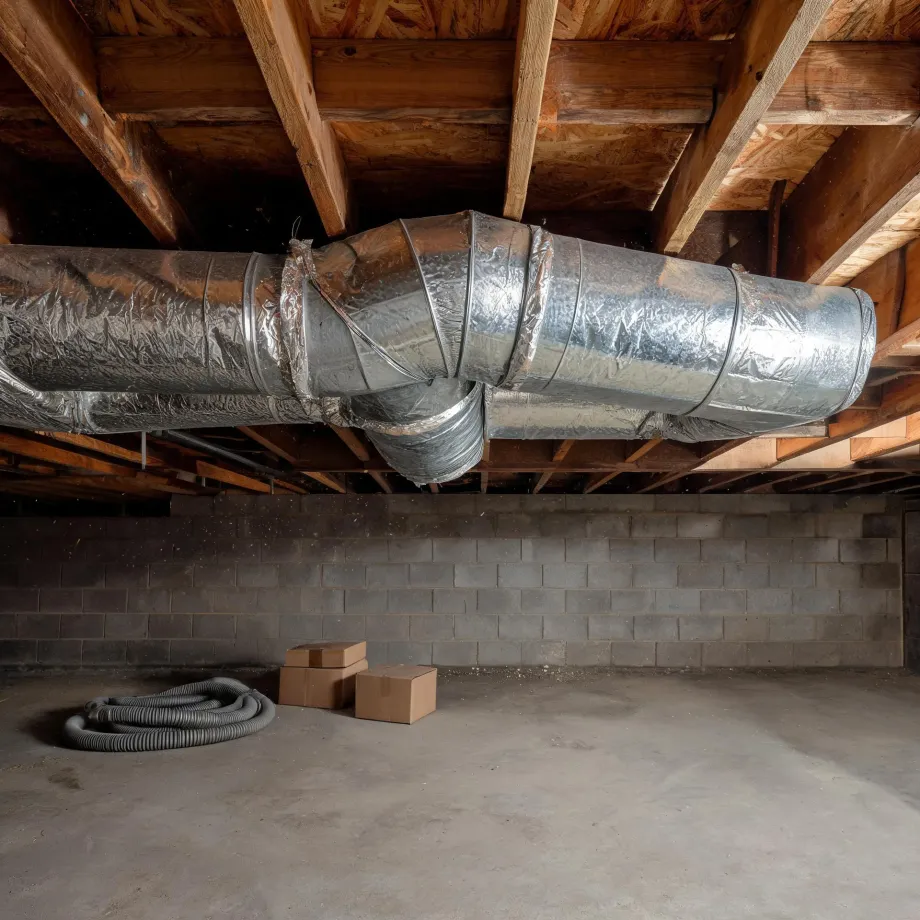
Electrical panels in much of this county were built for load demands that bear little resemblance to what a mini-split draws today. Half the homes in Bates County, Missouri were built in 1976 or earlier (2020-2024 ACS 5-year). A contractor quoting a new system here has to open the breaker panel and size what is already there before the equipment question is even on the table. If the service cannot carry the new unit, that panel work goes on the bill alongside the install.
The Parts of a Mini-Split System and What Gets Installed
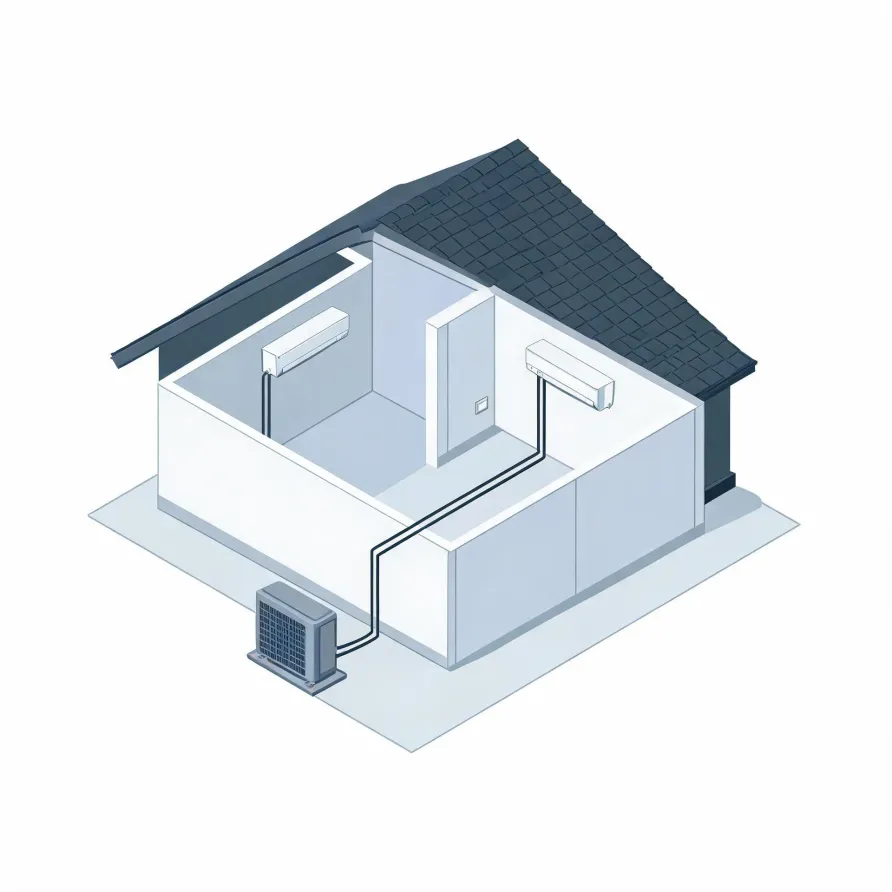
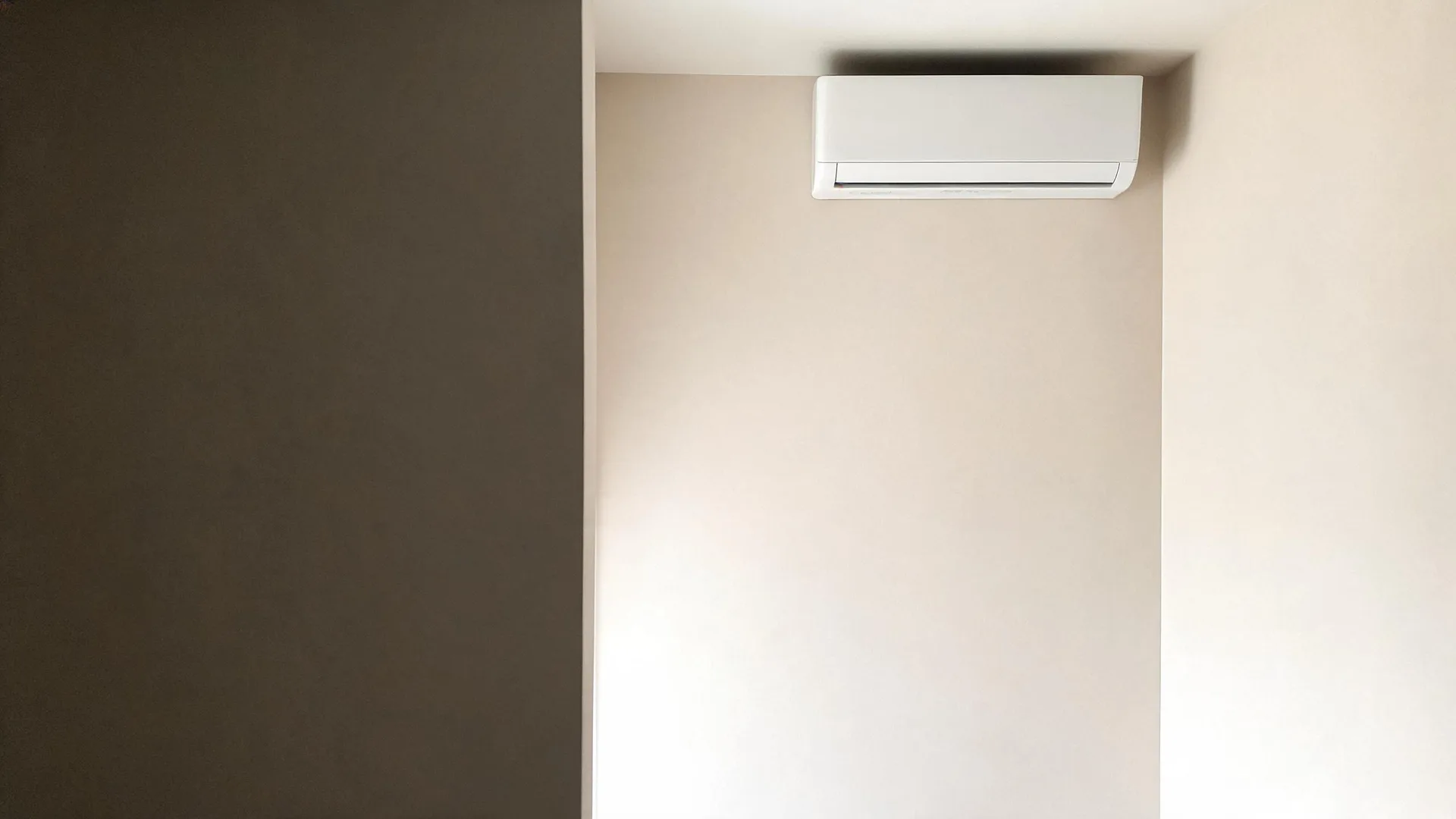
The indoor air handler mounts high on an interior wall inside the room being served, and it is the piece a homeowner sees and lives with every day. The outdoor condenser unit sits on a pad or bracket outside the house and holds the compressor and the fan that drives the whole system.
A refrigerant line set runs through a small opening in the wall to connect the two units, traveling alongside a condensate drain line that carries moisture out of the house. A dedicated electrical disconnect is mounted near the outdoor unit as part of the installation.
The drawing shows a representative layout, and a licensed contractor determines exactly how each piece is positioned and routed for your specific home.
Get matched in Bates CountyBates County, by the numbers
90 severe weather events were recorded in Bates County, Missouri between 2015 and 2024.
NOAA National Centers for Environmental Information, Storm Events Database, bulk CSV export, events 2015-01-01 through 2024-12-31.Half the homes in Bates County, Missouri were built in 1976 or earlier (2020-2024 ACS 5-year).
U.S. Census Bureau, 2020-2024 American Community Survey 5-Year EstimatesBates County, Missouri holds 7,192 housing units (2020-2024 ACS 5-year).
U.S. Census Bureau, 2020-2024 American Community Survey 5-Year EstimatesOwners occupy 74.9% of the occupied homes in Bates County, Missouri (2020-2024 ACS 5-year).
U.S. Census Bureau, 2020-2024 American Community Survey 5-Year EstimatesSevere Weather Events in Bates County
Heating and cooling equipment in Bates County works against whatever the climate throws at it, and local weather patterns shape how hard a system has to run and how long it holds up. Sizing and installing a mini-split here is a local decision, and the weather record is part of that picture.
90 severe weather events, 2015–2024. Source: NOAA National Centers for Environmental Information, Storm Events Database.