 Get matched
Why your mini split smells when heating in Missouri
Describe your mini split job, and a local pro who handles it gets in touch.
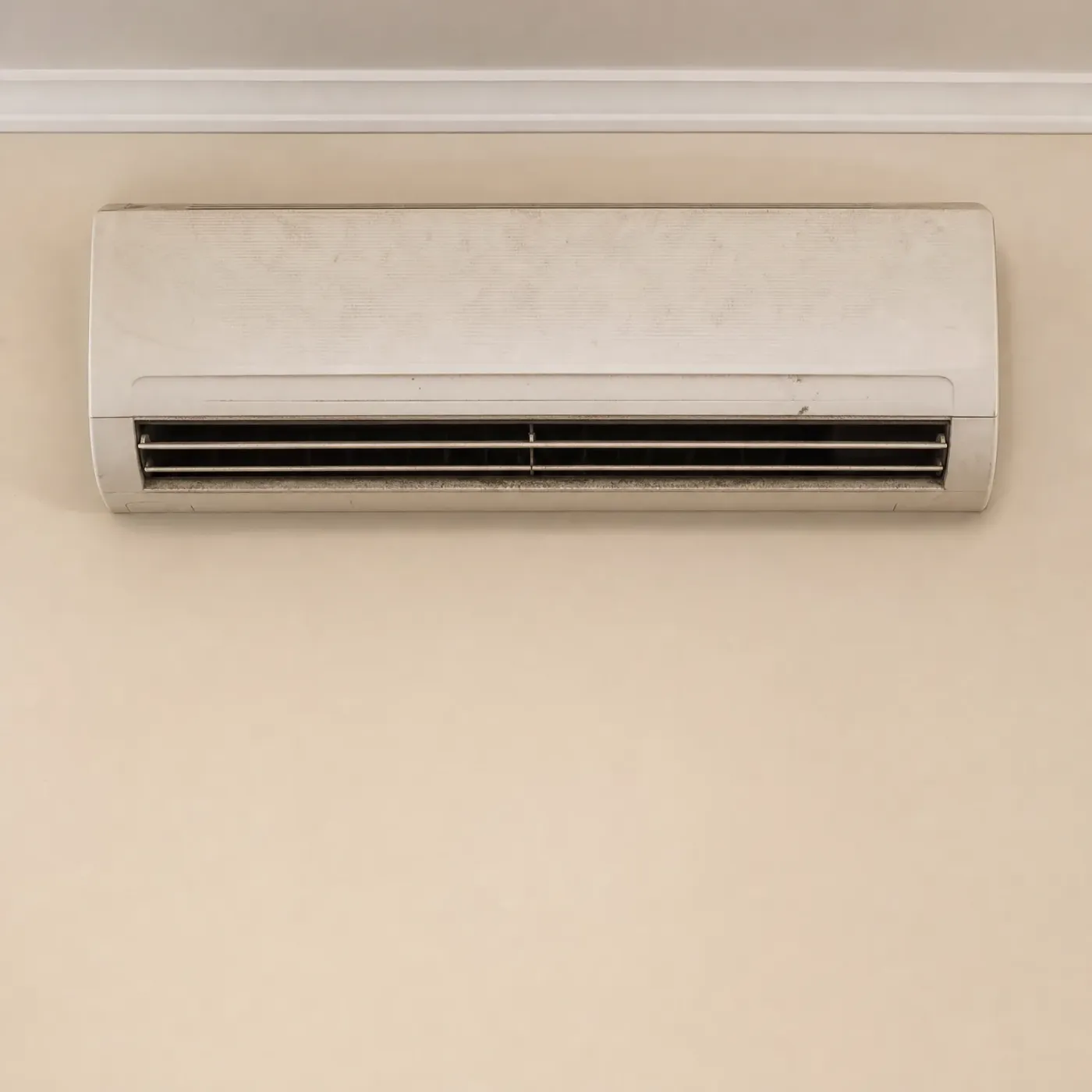
A mini split that smells when it's heating usually isn't broken. It's telling you something is sitting in the air path that the coil is now warming up. Most of the year that coil stays cool and damp, and anything that settles on it just sits there quietly. Once the unit switches to heat, that same coil gets warm, and whatever's built up on it starts to cook off. That's the smell.
In Missouri, summers get sticky, and a mini split indoor unit spends months pulling moisture out of the air. Dust, a little mildew, even pet hair can collect on the coil and the filter behind it during that stretch. Come winter, when most homes here switch over to gas heat but still run the mini split in certain rooms, that unit fires up its own heat strip or reverses its cycle, and the smell shows up in a space that was fine all summer.
Some of this you can check yourself. A musty smell points to moisture that never fully dried out. A sharper, almost electrical smell is different and worth paying attention to. Either way, it helps to know what's actually in the unit before guessing at what to do next.
This isn't something to figure out alone from a search result. A contractor who works on mini splits in your area can look at the specific unit, in the specific room, and tell you what's actually going on inside it. Once you send the request, that part stops being your problem to solve. You're not stuck chasing down who's available or whether they do this kind of work. Someone who handles this gets your information and reaches out to you directly, and from there it's a conversation about your unit, not a guessing game you're running by yourself.
Why does my mini split smell when it's heating?
Your mini split runs on heat for the first time this fall and that musty, almost sour smell fills the room. It wasn't there over the summer, or if it was, it never caught your attention like this. You're not imagining it, and you're trying to figure out if this is a sign of something wrong with the unit or just what happens when you switch modes.
The smell is dust and mildew on the coil getting heated for the first time
Switching to heat means the coil that stayed cool and damp all summer is now running warm and dry. Whatever settled on it while it sat cool, dust, a film of mildew, pet hair, gets baked off the moment heat mode kicks in. That's the smell. In Missouri, where a mini split might only run heat a few months a year while gas handles the rest of the winter, that coil can go a long stretch without warm air passing over it. The longer the gap, the more builds up, and the stronger the first smell tends to be. It usually fades within a day or two of regular use as the coil burns clean. If it doesn't, or if it brings on coughing or headaches, that points to something other than ordinary dust.

Dust and skin cells settle on the indoor coil all summer.
Switching to heat mode warms that coil for the first time in months.
Warm air passes over the buildup and picks up the odor.
The blower pushes that air straight into the room you're heating.
What is that smell doing to your living room
You'll notice it first when you walk into the room, before you even feel the heat. It can smell musty, sometimes sour, like a damp towel left too long. If you sit near the unit for a while you might notice it in the back of your throat, or your eyes might feel a little dry. Open the room up to air it out and the smell comes right back the next time the heat kicks on, because the coil is still coated and still getting warm. Left alone through a Missouri winter, that buildup doesn't clear itself. It sits there every time the unit runs, and the room never quite smells clean.

A local pro for your mini split repair

Once you send the form, finding a pro is off your list.
Sending the form costs nothing.
You'll run this mini split through the cold months here, so that smell is going to greet you most evenings until something changes. Sit in the room long enough and it gets into the couch cushions, the curtains, whatever's hanging on the coat hook by the door. Gas heat in most houses around here doesn't carry a smell like this into the room, which is part of why it catches people off guard the first time. Keep running the unit as is and the smell doesn't wear off. It comes back every time the blower kicks on, because whatever's sitting on that coil is still there. Some people turn the unit off and reach for a space heater instead, but that just trades one problem for a higher power bill, and power isn't free even where rates are low. The coil needs to be cleaned, not avoided.




Why the smell fades in and out
A mini split that only smells for the first few minutes of a heat cycle is telling you something specific. The coil holds the buildup, and it only releases that odor while it's warming up from cold. Once the coil reaches temperature, there's less moisture left to carry the smell into the air, so it can seem to disappear on its own. That's not the coil cleaning itself. The same buildup is still there, and it'll greet you again the next time the unit kicks on from a cold start, which in a Missouri winter can be several times a night.
Why this isn't a filter problem
The filter catches dust and hair before it reaches the coil, but it doesn't touch what's already stuck to the coil fins. That's why a reader can pull the filter, rinse it, snap it back in, and still get the same smell that evening. The coil sits behind the filter, and cleaning it means getting into the fins themselves, not just the mesh in front of them. A contractor doing a mini split repair will check both, but if only the filter gets attention, the smell usually comes back within a day or two.
Power costs 13.30 cents per kilowatt-hour statewide
At 13.30 cents a kilowatt-hour, running the blower longer while you chase that smell with open windows or a fan doesn't cost much here. There's no reason to let the odor sit in your living room to save on power. A repair that clears the coil is the cheaper fix either way.
EIA-861 2025 statewide residential average

The smell has an answer, not just a cause
A mini split that smells when it switches to heat is doing exactly what the facts above describe. Buildup sat on that coil all summer, and now the heat is cooking it off into the room you're sitting in. That's a cleaning and repair job, not a sign the unit is failing or that you did something wrong.
Once you get a contractor who works on mini splits lined up, the smell stops being something you have to figure out or live with through another Missouri winter. You hand it off, they look at the coil and the drain pan and whatever else is holding the odor, and you go back to just using the heat without walking into that smell every evening.



Mini Split Repair
Get the right pro for your mini split
After you send the request, you're done searching.