





Profile view of a bearded man wearing a black baseball cap and a dark gray T-shirt against a plain light background.

What size mini split a Missouri home needs

Step 1 of 3: Equipment

Sizing a mini split for a Missouri home comes down to square footage, ceiling height, insulation, and how many windows face the sun, not a flat number per room. A single room of 300 to 400 square feet usually runs on a 9,000 to 12,000 BTU unit, while an open living area of 600 square feet or more often needs 18,000 to 24,000 BTU, sometimes split across two zones. Missouri summers get humid, and a unit sized too large cools the air fast but shuts off before it pulls the moisture out, leaving the room cold and damp. Too small, and it runs constantly on the muggiest days without catching up. Most homes here heat with gas, so the mini split may only need to handle cooling and shoulder season temperatures, which changes the math from a home relying on it for winter heat too. A contractor measures the actual space before quoting a size, because a guess based on square footage alone misses what the room is doing with that heat.

A woman and a sleeping child wrapped together in a cream knitted blanket on a couch, with a potted plant, framed photo and lit lamp in the background.
A gray-haired woman in a cream knit sweater stands in a dimly lit kitchen at night, looking to her right, with a round loaf of bread in the foreground and a dark window and potted plant behind her.

A mini split that's too big for the room will knock the temperature down fast, then shut off before it's had time to do anything about the humidity. That's how you end up with a thermostat reading 72 and a room that still feels damp, which matters in Missouri summers more than the number on the wall. The unit is built to run at partial output for long stretches, not blast and stop, and that's what actually dries the air out. Getting the size right means looking past square footage alone. A room with big windows facing south or west takes on heat the square footage doesn't account for, so the load calculation has to factor that in separately. Come winter, sizing works a little differently, since most homes here already heat with gas and lean on the mini split only for the in-between weeks of fall and spring. A contractor who installs these year-round in Missouri homes knows how to weigh all of it, rather than sizing off a chart alone.

Why the right size matters more than power

  • An oversized unit cools the room fast then shuts off, so it never runs long enough to pull the humidity out of the air.
  • That short-cycling is what leaves a Missouri home feeling clammy even when the thermostat says it hit the set temperature.
  • A correctly sized unit runs longer at a lower output, which is what actually wrings the moisture out of sticky summer air.
  • Mini splits don't just blow cold air, they modulate their compressor speed to match the load in the room they're installed in.
  • A load calculation accounts for how sun exposure on south and west walls raises the BTU need beyond what square footage alone suggests.
  • Since most Missouri homes heat with gas, the mini split's heating mode often becomes a backup for shoulder season rather than the main source.
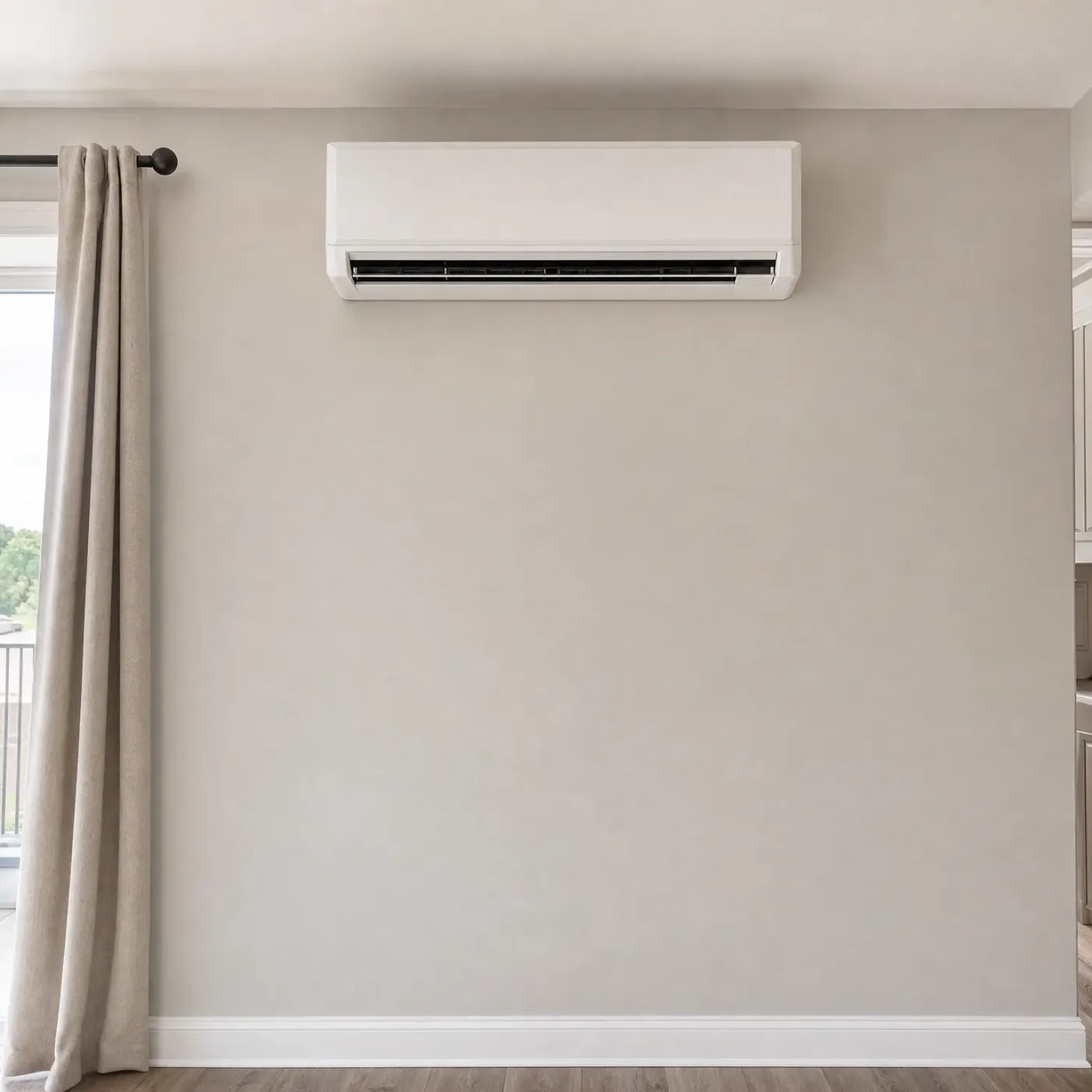
A white wall-mounted mini-split air conditioner unit high on a light gray interior wall, with a beige curtain and window at the left and wood-look flooring below.
A mini split sized right for the room holds a steady temperature and pulls the sticky Missouri humidity out of the air as it runs.
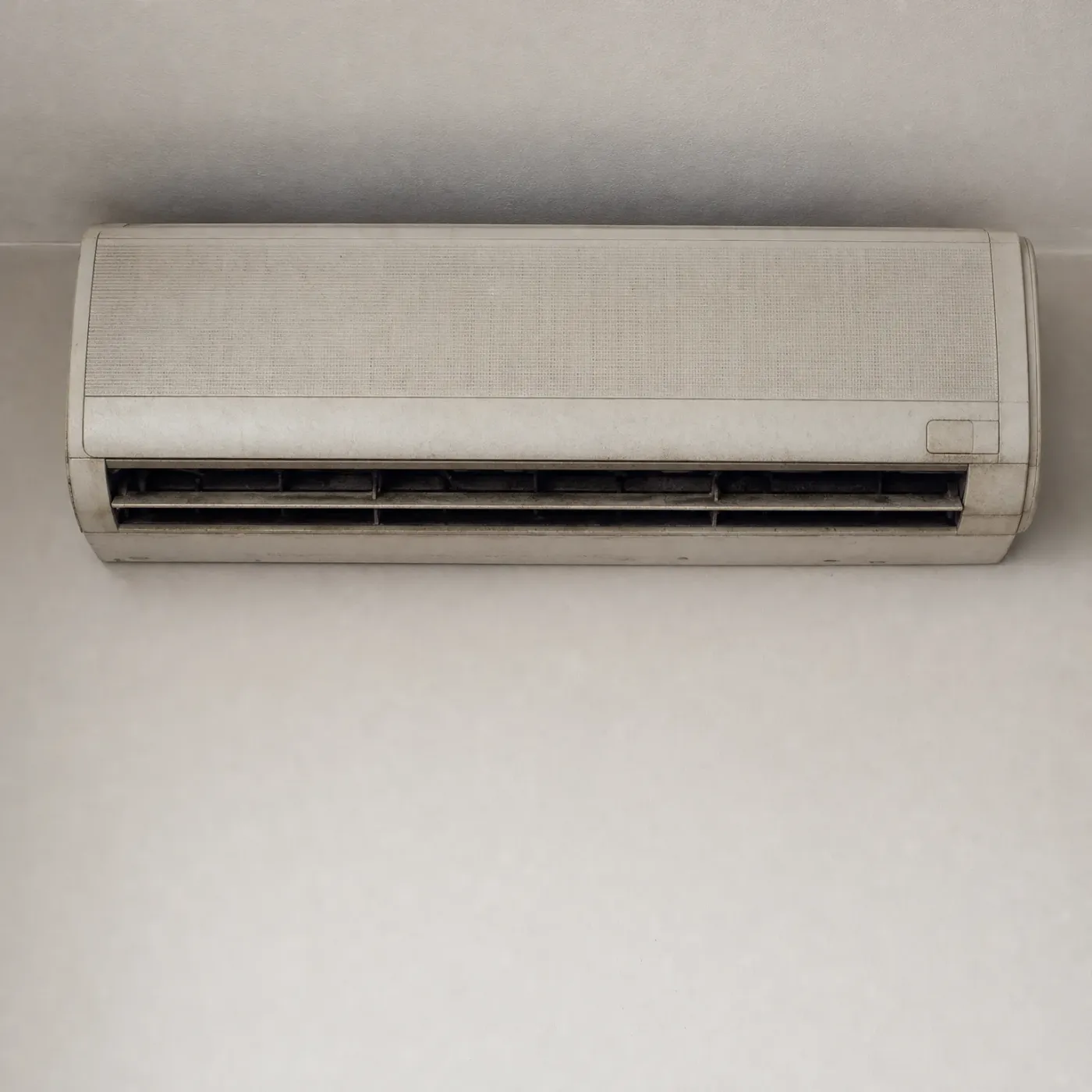
A dusty white wall-mounted mini-split air conditioner indoor unit with open louvers, installed near the ceiling on a plain light-colored wall.
A unit that's the wrong size short-cycles, and the dust and grime building up on the vents is a sign it isn't moving air the way it should.
A woman in a knitted shawl sits in a living room with a fireplace, shelves, a sofa with cushions, and a lamp by a bright window, looking off to the side.
A woman with long brown wavy hair in a green shirt over a white top stands in a living room with built-in white shelves, a ceiling fan, a potted plant and a sliding glass door.
A woman with shoulder-length gray-streaked hair in a light gray knit sweater stands smiling and looking off to the side in a living room with a sofa, houseplant, framed picture, and sunlit sliding glass door.
A woman with shoulder-length curly gray hair wearing a gray knit sweater stands near a window with a sheer curtain, looking to the side, with a blurred interior room behind her.

Skip calling around

Getting the BTU number right is only half the job. The unit still has to be set on the right wall, the line set run through to the condenser outside, and the circuit sized to match, and that's where a install goes wrong even when the equipment itself was picked correctly. Working that out over the phone with three or four companies means explaining your square footage and layout three or four times, then sitting with quotes that sized the job differently because each contractor walked through it differently, or didn't walk through it at all. One local contractor who installs these year-round in Missouri homes, muggy summers and all, has seen what a mismatched unit does to a room and sized around it before. Handing this off now means one visit, one estimate, built around the room you actually have instead of a guess over the phone.

Manual J tells the real number

A load calculation looks at your square footage, your ceiling height, how many windows you have and which way they face, and how much insulation is in the walls and attic. Two homes the same size can need different size units once you account for that. A contractor who works on mini splits every summer in Missouri has already seen how a sunroom with west-facing glass or a room over a garage throws the number off, and knows to check for it before the unit goes in, not after.
What a mismatch costs you later

A unit sized too small runs flat out all summer trying to catch up and never quite does on the hottest, muggiest days. A unit sized too big cycles on and off fast, so the room feels cool but the air stays damp. Either way you notice it in the room, not on a spec sheet. Getting the size right the first time means one visit, one correctly sized line set and circuit, and a system that holds steady through a sticky Missouri July instead of fighting it.

Power costs 13.30 cents per kilowatt-hour statewide

At 13.30 cents per kilowatt-hour, running an oversized mini split that short-cycles costs you more than one sized right off a load calculation. A unit sized to your home runs longer, steadier stretches at lower draw, which is what actually keeps the bill in check here, not just the sticker BTU number.

EIA-861 2025 statewide residential average

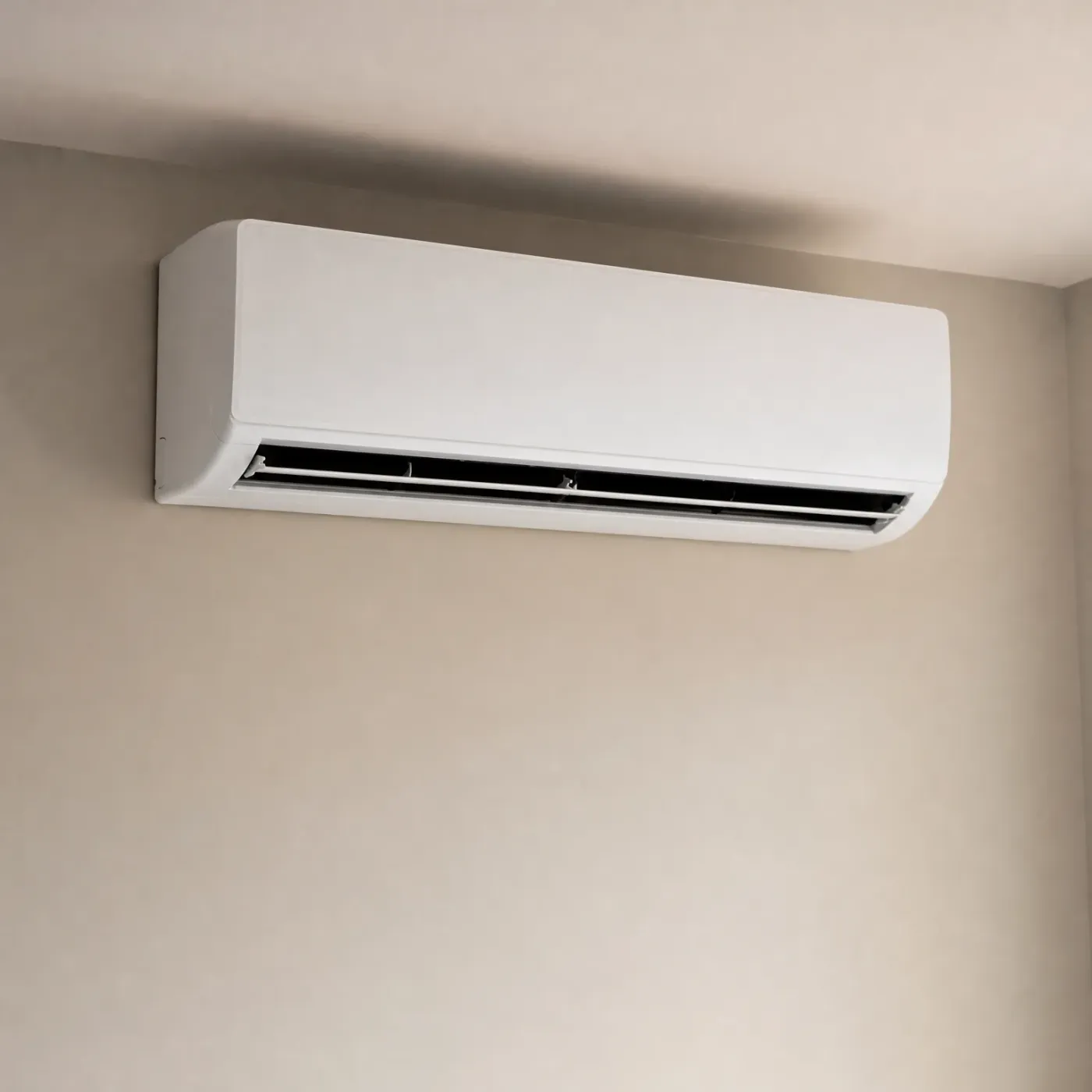
A white wall-mounted mini-split air conditioner installed near the ceiling on a plain beige interior wall.

Sized and running right

This is what a correctly sized mini split looks like doing its job: closed up, quiet, cycling on and off at a steady pace. The grille along the bottom is where conditioned air actually leaves the unit, and on a sized-right system it keeps moving long after the room feels cool.

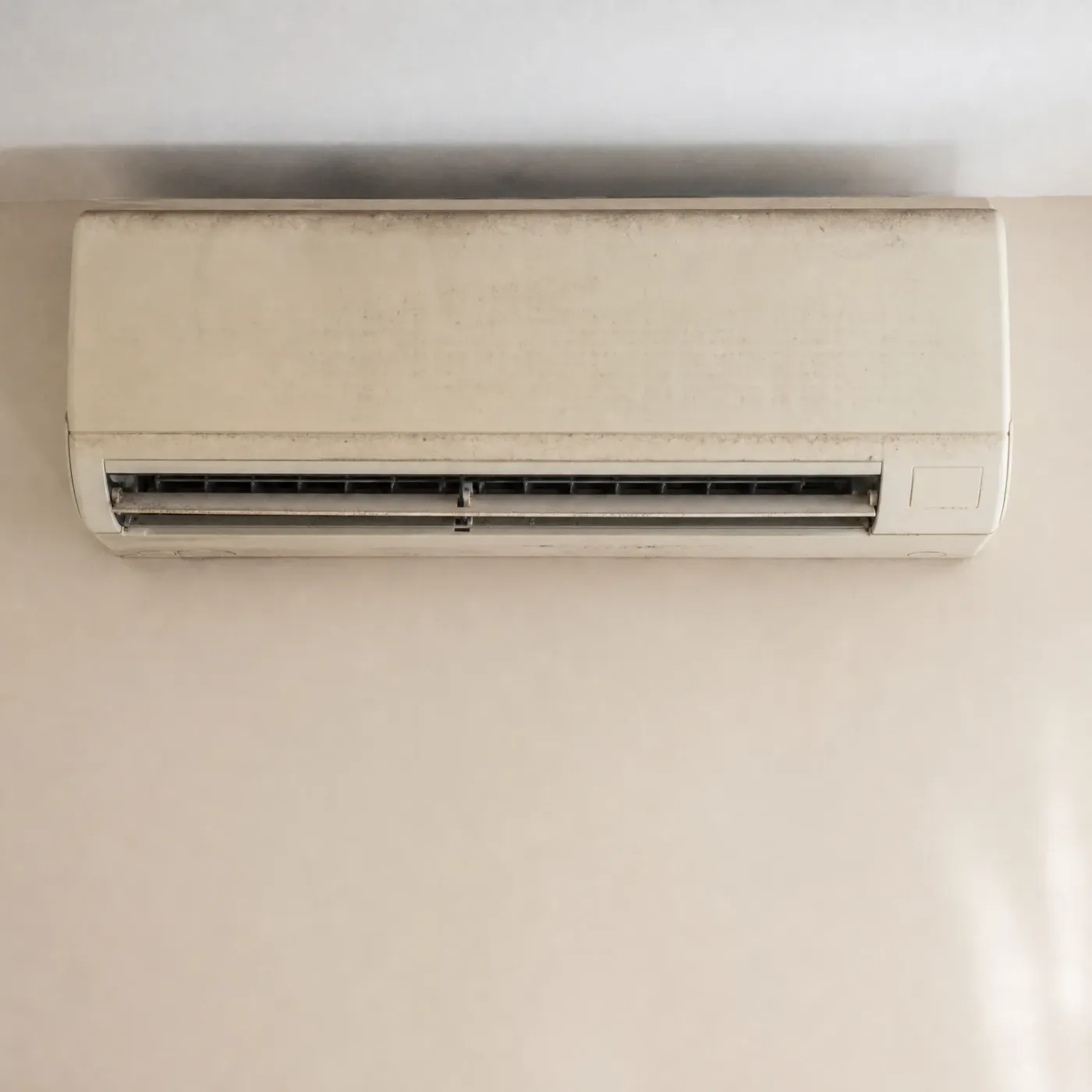
A dusty, discolored wall-mounted mini-split air conditioner unit near the ceiling of a plain beige interior wall.

Worn down well before its time

That discoloring on the casing isn't just age. A unit that short-cycles for years runs hotter and collects more dust and grime around the vents than one that runs long, even stretches. The casing shows what's been happening inside it all along.

A closed laptop and a cream mug of coffee on a coaster sit on a dark wooden table, with a potted plant at left and a kitchen counter, tiled backsplash and shelf of ceramics in the background.

The right size is the one a load calculation finds

No chart or rule of thumb replaces a Manual J done for your house, your windows, and your walls. That's the number a installer should hand you before anything gets mounted or wired in.

Finding someone to actually run that calculation and stand behind the install is its own chore, calling around, explaining your square footage and your ceiling height over and over, then sorting through quotes that size the job differently. A local contractor who installs mini splits in Missouri homes all summer has seen what undersized and oversized units do in houses like yours, and you only have to explain your house once.

A living room corner with a light beige sofa holding a textured taupe cushion, a large ceramic vase of olive branches by a window, a framed neutral artwork on the wall, and a dark bowl with stacked books in the foreground.
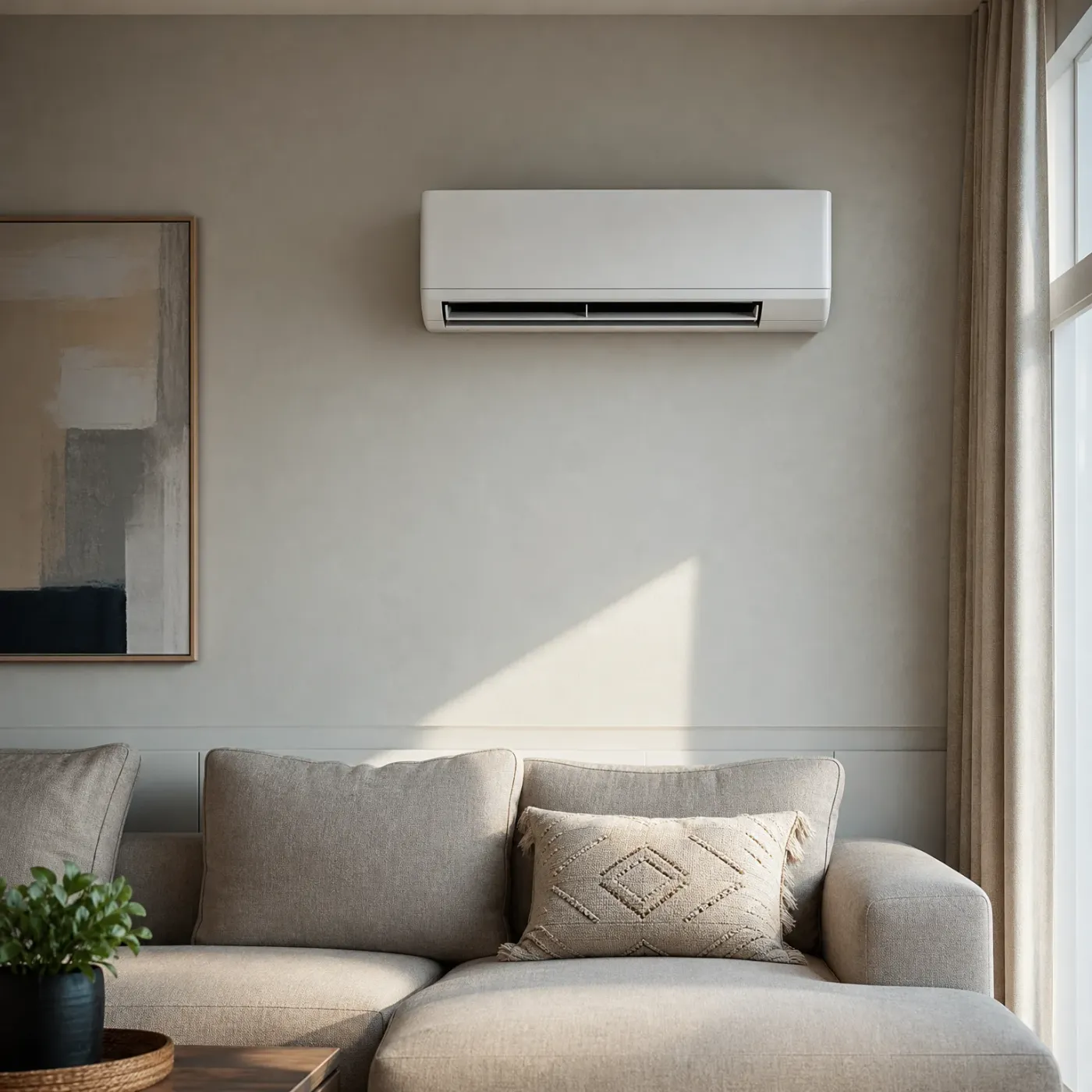
A white wall-mounted mini-split indoor unit on a light gray wall above a beige sectional sofa with a patterned cushion, beside a framed abstract artwork and a curtained window.

Describe it once

Find a local pro

Your request goes to one pro, not a list of companies.

It costs nothing to send, and you don't have to hire anyone.