




A white wall-mounted mini-split indoor unit on a gray interior wall above a beige sofa, with a framed picture, a floor lamp, wood slat wall trim, and a window showing green foliage.

A pro who works on mini splits

What a mini split tune-up covers in Missouri

A mini split tune-up covers the indoor coil and filters, the outdoor unit, the refrigerant charge, and the drain line, so it keeps up when Missouri gets sticky in July. This page gets into what a technician actually checks and why each part matters. Skip the search for who does it and get matched with a contractor who'll reach out directly.

Match me with a pro

A mini split tune-up means a technician cleans the indoor filters and coil, checks the outdoor unit, tests the refrigerant charge, and clears the condensate drain line. Each of these matters on its own. A dirty filter or coil makes the indoor unit work harder to pull humidity out of the air, and Missouri summers put that to the test for months at a stretch. Low refrigerant charge means the system runs longer to reach the same temperature, and it won't fix itself. A clogged drain line backs up and can leak into the wall or floor around the indoor head. None of these show up as a total breakdown right away. They show up first as a system that runs longer, costs more to run, and cools less evenly, and that is exactly the kind of problem worth catching before it turns into a repair.

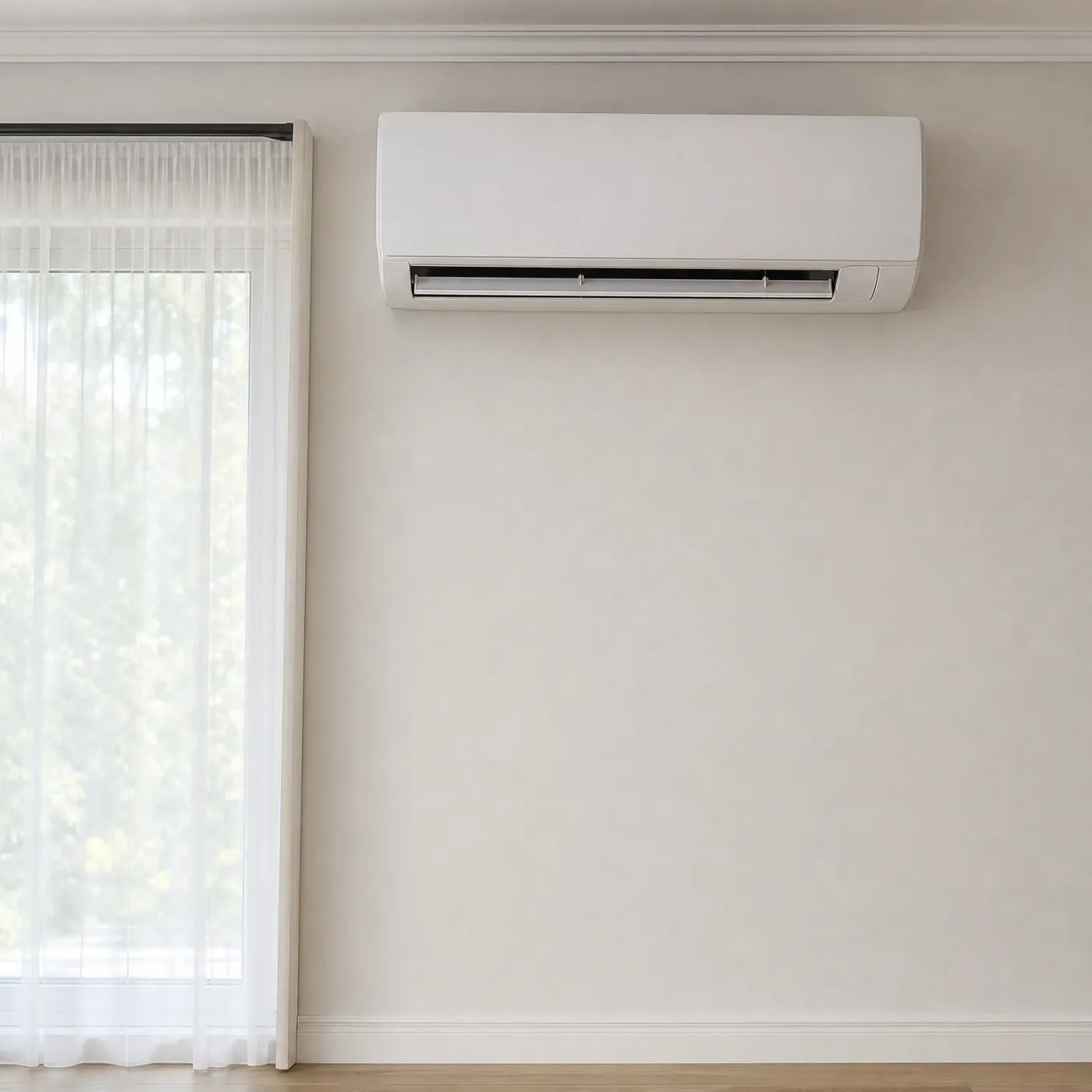
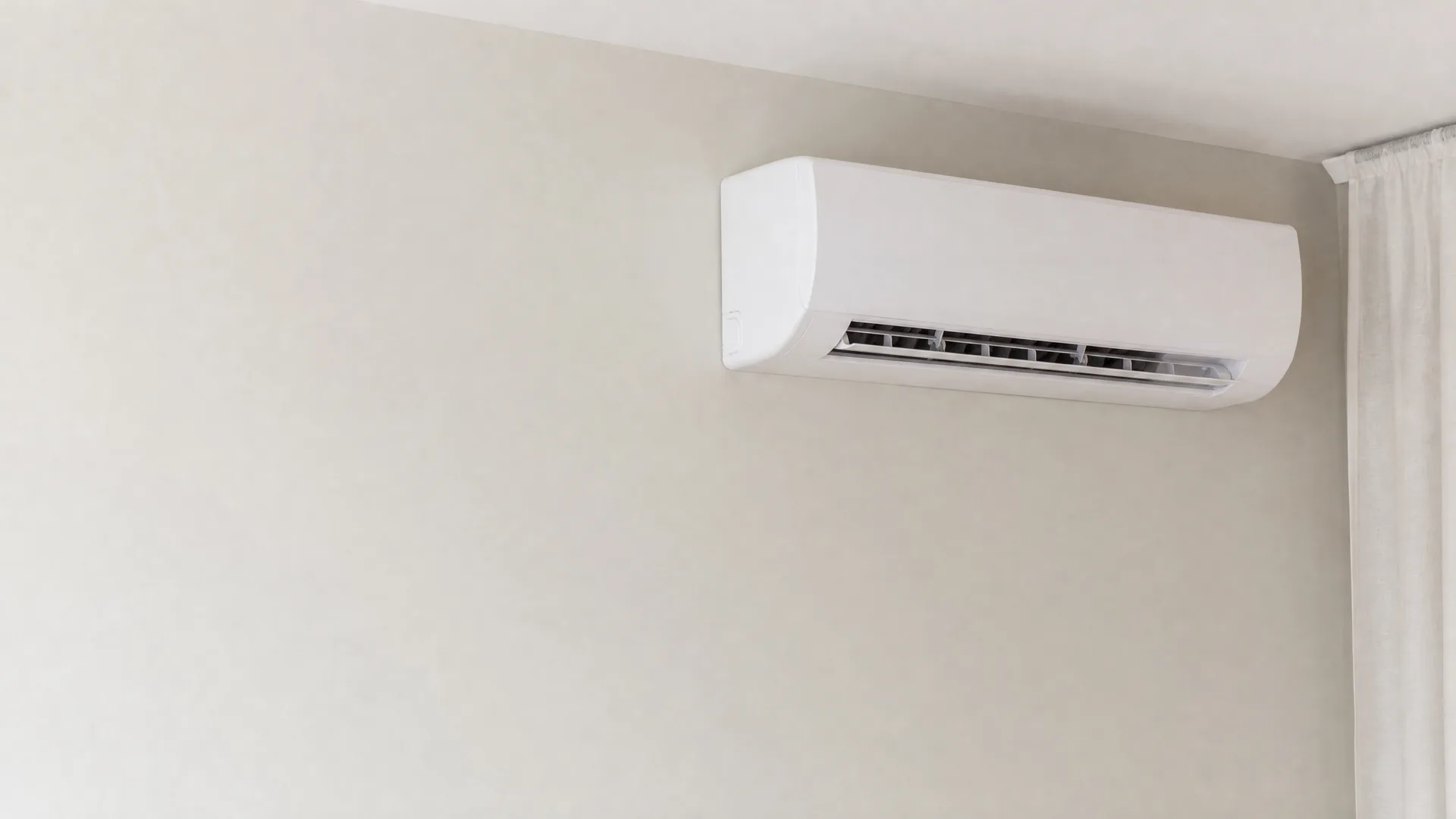
A white wall-mounted mini-split air conditioner on a beige interior wall, with a curtained window on the left and wood flooring with a light rug below.
A clean mini split like this one moves humid air out steadily, with the filter and coil doing their job unseen.
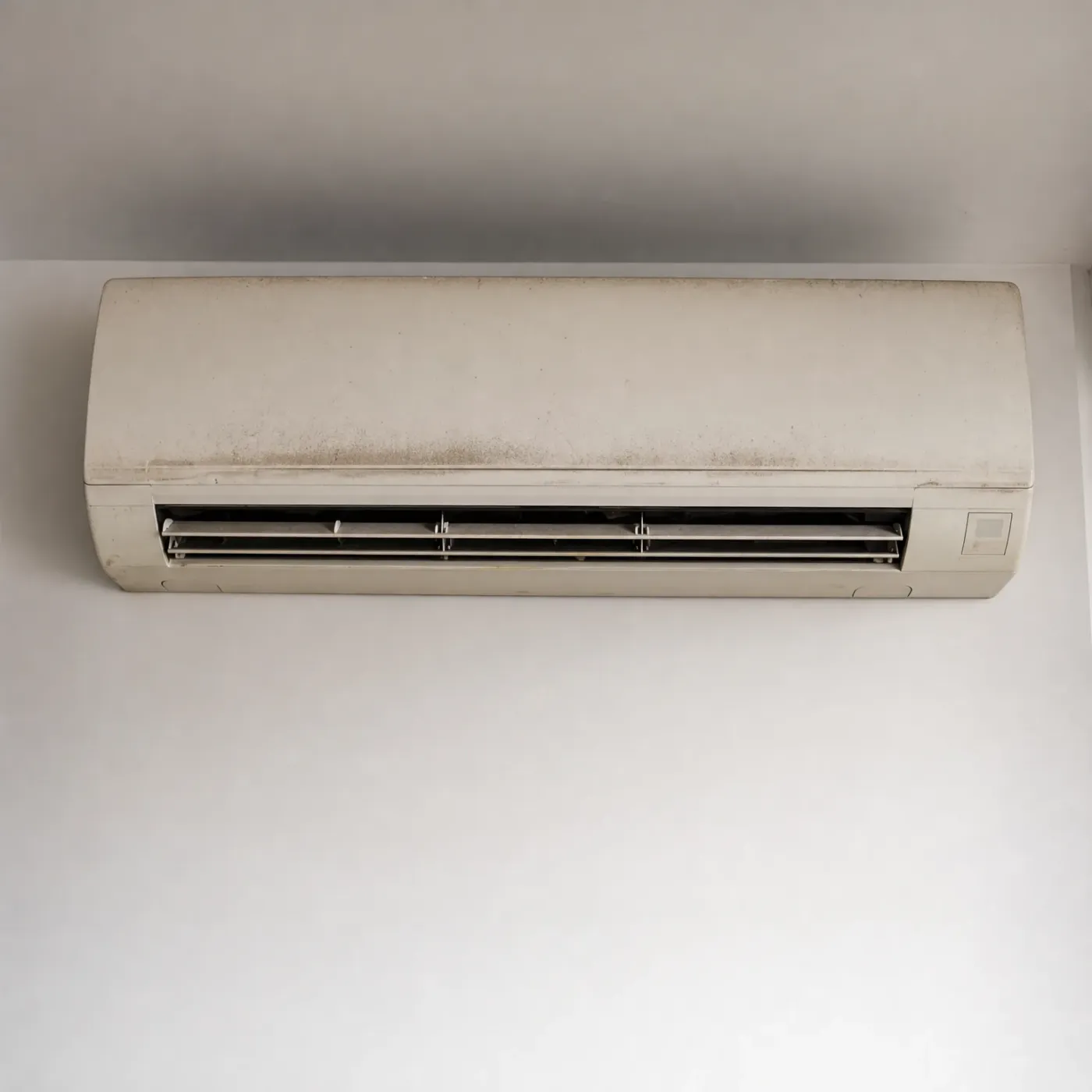
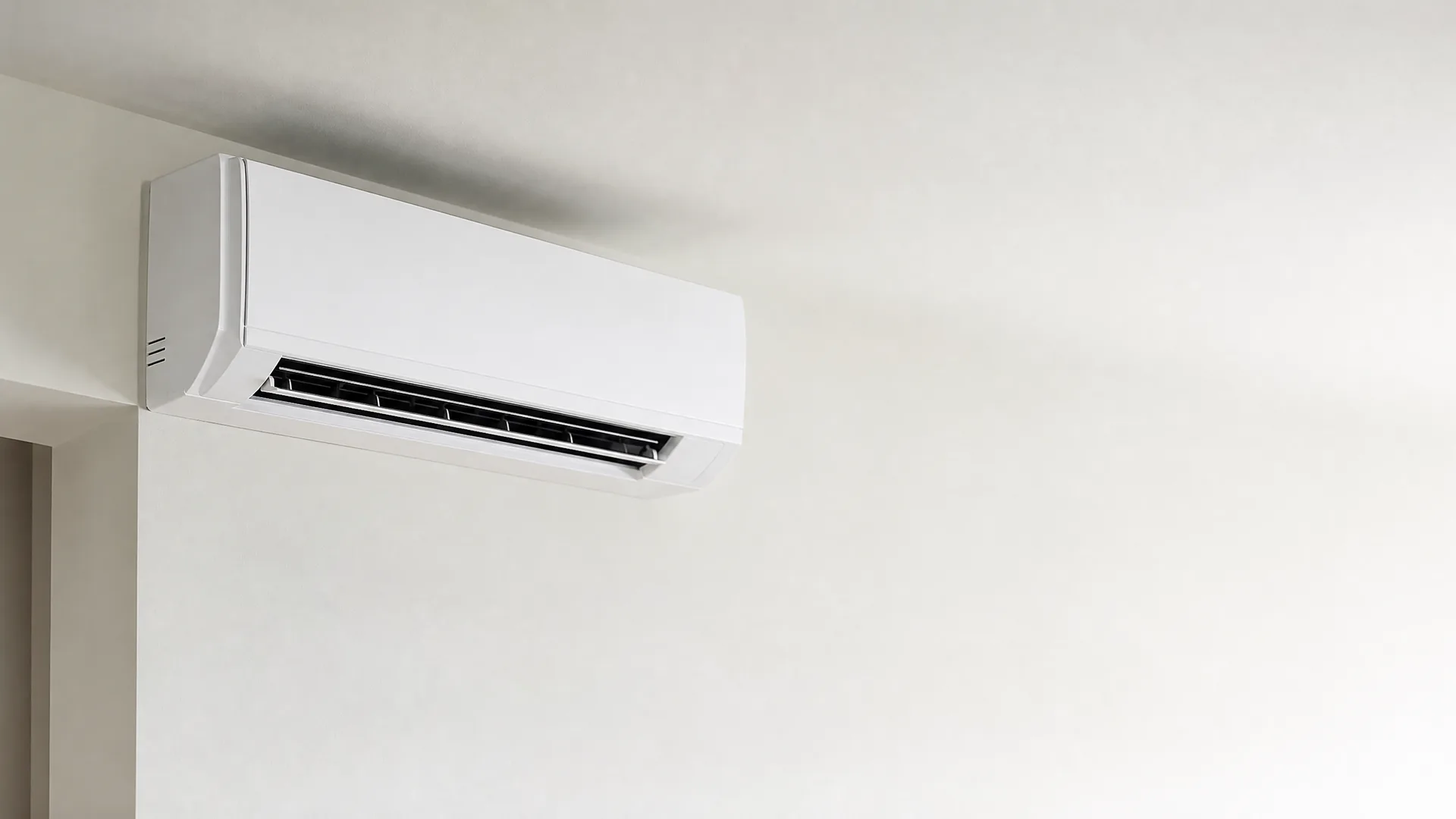
A white wall-mounted mini-split air conditioner indoor unit installed near the ceiling on a plain light-colored wall, with its horizontal outlet vent and louvers visible.
Dust built up like this across the casing and vents usually means the filter and coil behind it are just as dirty.
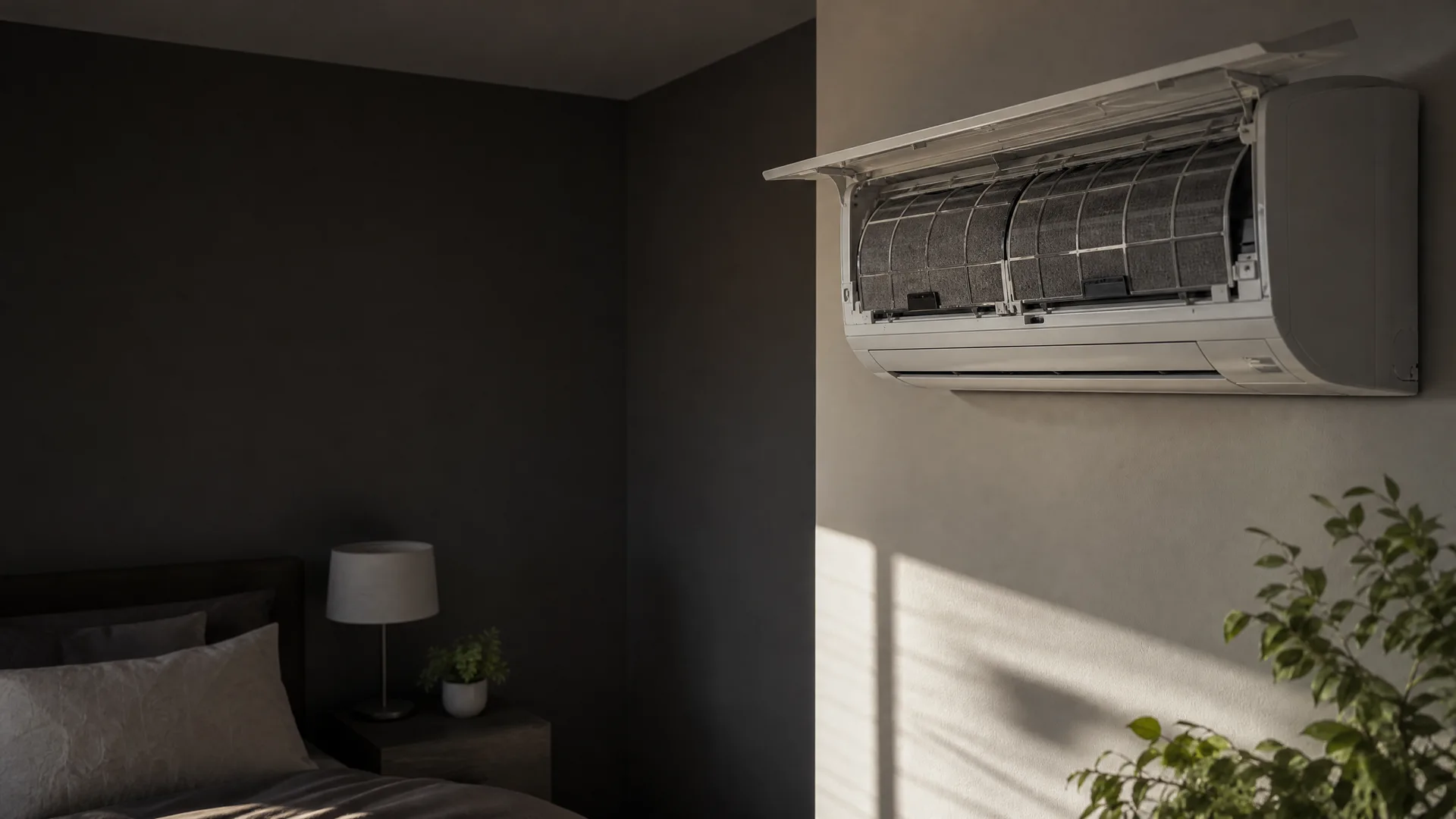
A wall-mounted mini-split air conditioner with its front cover open exposing the filters, in a dim bedroom with a bed, nightstand lamp and a potted plant.

You pop the front cover off the bedroom unit on a Saturday in April, before the heat sets in for good. The filter screen behind it has gone grey, a soft fuzz of dust caught in the mesh. You hadn't noticed the room feeling different, maybe a little slower to cool on warm afternoons, but you hadn't thought much of it. Outside the window the trees are just filling back in. You wipe a thumb across the screen and it leaves a clean streak. Missouri summers get sticky fast once they arrive, and this unit will run for months once they do. You set the filter on the sill to deal with, and look at the coil behind it, wondering what else back there needs a look before July.

Why does your mini split seem to be working harder lately?

You notice the air coming out feels weaker than it used to, or the room takes longer to cool down on a sticky July afternoon. The unit might run longer stretches without shutting off. Up close, you may catch a musty smell when it kicks on, or see water pooling near the indoor unit instead of draining away like it should. Sometimes there's a thin layer of dust visible on the vents, or the outdoor unit looks packed with leaves and grass clippings. None of this means the system is done for, but a clogged filter or a blocked drain line left alone can mean higher bills month after month, and standing water near the indoor unit can lead to damage that spreads beyond the mini split itself.

A white wall-mounted mini-split air conditioner unit near the ceiling on a plain light-colored interior wall with open space to the right.

The outdoor unit does its share

The compressor outside sits exposed to leaves, grass clippings, and whatever the wind carries. A technician clears the coil fins of debris and checks that nothing blocks airflow around the cabinet. Missouri summers put real hours on that compressor, and a coil caked with yard debris makes it run hotter than it should. Checking it twice a year, spring and fall, catches buildup before July asks the system to run flat out for weeks straight.

A white wall-mounted mini-split air conditioner unit installed near the ceiling on a plain beige interior wall, with a light curtain at the right edge.

Refrigerant charge is exact

A mini split is designed to run with a specific refrigerant charge, not an approximate one. Too little and the indoor coil can frost over even while the room stays warm. Too much and the compressor works against pressure it wasn't built to handle. A technician checks this with gauges against the manufacturer's spec, not by feel. It's one of the few checks on this list that isn't visible from across the room, which is part of why it gets skipped.

A woman in a cream cardigan and jeans stands with one hand raised facing an open front door of a gray horizontal-siding house, with a black lantern wall light, a potted shrub with yellow flowers, and a stone-faced porch column.

What a technician checks in order

A tune-up follows a sequence, not a checklist done at random. The indoor coil and filters come first, since dirt there affects every reading taken after. Next comes the refrigerant charge, measured with gauges at the service port, because a charge that's even a little off makes the compressor work outside its design range. The technician checks the temperature split between the air going in and the air coming out. A narrow split points to a charge problem or a coil that needs cleaning. Then the drain line gets checked for a clear path, usually by pouring water through it and watching it come out the other end.

Finding someone who does this correctly, in this order, with the right gauges, isn't something you can tell from a phone call or a star rating. A match puts you in touch with a contractor suited to your mini split and your situation, and that contractor contacts you directly. No more comparing quotes from names you don't recognize or explaining the same problem three times over.

A living room corner with a beige upholstered armchair holding navy and striped cushions, a small round wooden side table with a carved bowl and a potted green plant, a framed landscape picture on a pale wall, built-in shelving, and a curtained window.
Single-story house with tan horizontal siding and a dark shingled hip roof, fronted by a patchy green and brown lawn and a concrete walkway leading to the covered entry.

Summer air here averages a dew point of 66°F across June, July and August, by NOAA's averages for where Missouri homes sit. That's heavy air, the kind that sits on your skin even in shade. Your mini split isn't just cooling that air, it's wringing the moisture out of it, and that extra work falls on the indoor coil. A coil that's clean handles it. One caked with dust can't pull out as much moisture, so the room feels damp even when the temperature reads fine. Instead of tracking down a contractor yourself and walking through the same symptoms on call after call, you answer a few questions once and get matched with someone who takes it from there.

NASA POWER T2MDEW county cells weighted by homes

Get your mini split to the right pro

Fill out one form instead of calling around for a mini split tune-up.

No fee to send it, and nothing to sign.

Keeping up with a yearly tune-up

A mini split that gets checked every year holds its charge, runs its coil clean, and drains the way it should. You're not guessing when something feels off, because you have a baseline of how the unit runs when it's right. Catching a weak capacitor or a clogged drain line in spring costs you a service call. Leaving it alone until July, when the unit is running flat out against the dew point, turns that same small problem into a breakdown on the hottest week of the year, with a contractor booked solid and your bedroom stuck at 80 degrees.


Skipping it and hoping

Plenty of mini splits run for years without anyone touching the filter or checking the charge, and nothing happens, at least not that you'd notice right away. The unit still blows cold air in June. What you don't see is the coil losing efficiency a little at a time, or the drain line narrowing until a wet July afternoon backs it up. Power here is cheap enough that a less efficient unit doesn't hit your bill hard, but the unit itself pays for it, working harder each summer until something finally gives out.

A woman in a gray turtleneck sweater stands by a window looking outside at snowy ground, with a dimly lit living room containing a sofa, shelves, lamp and a lit candle behind her.
A woman in a cream cable-knit turtleneck sweater stands in a warmly lit living room with a fireplace and shelves behind her, looking out a window toward snow-covered trees and a railed deck.
A woman in a cream knit turtleneck sweater stands by a window looking out at snow, with a lit fireplace, sofa and lamp in the room behind her.
A woman in a gray knit sweater sits by a window looking out at falling snow, with a dimly lit living room containing a sectional sofa, pillows, a lamp and houseplants behind her.
A white wall-mounted mini-split air conditioner on a beige interior wall, next to a window with sheer white curtains and green foliage outside.

Running clean

A mini split like this one is moving air you don't think twice about, cool and steady into the room. The wall stays plain, the vents stay clear, and the unit just does its job while the curtains move in the breeze from the window.

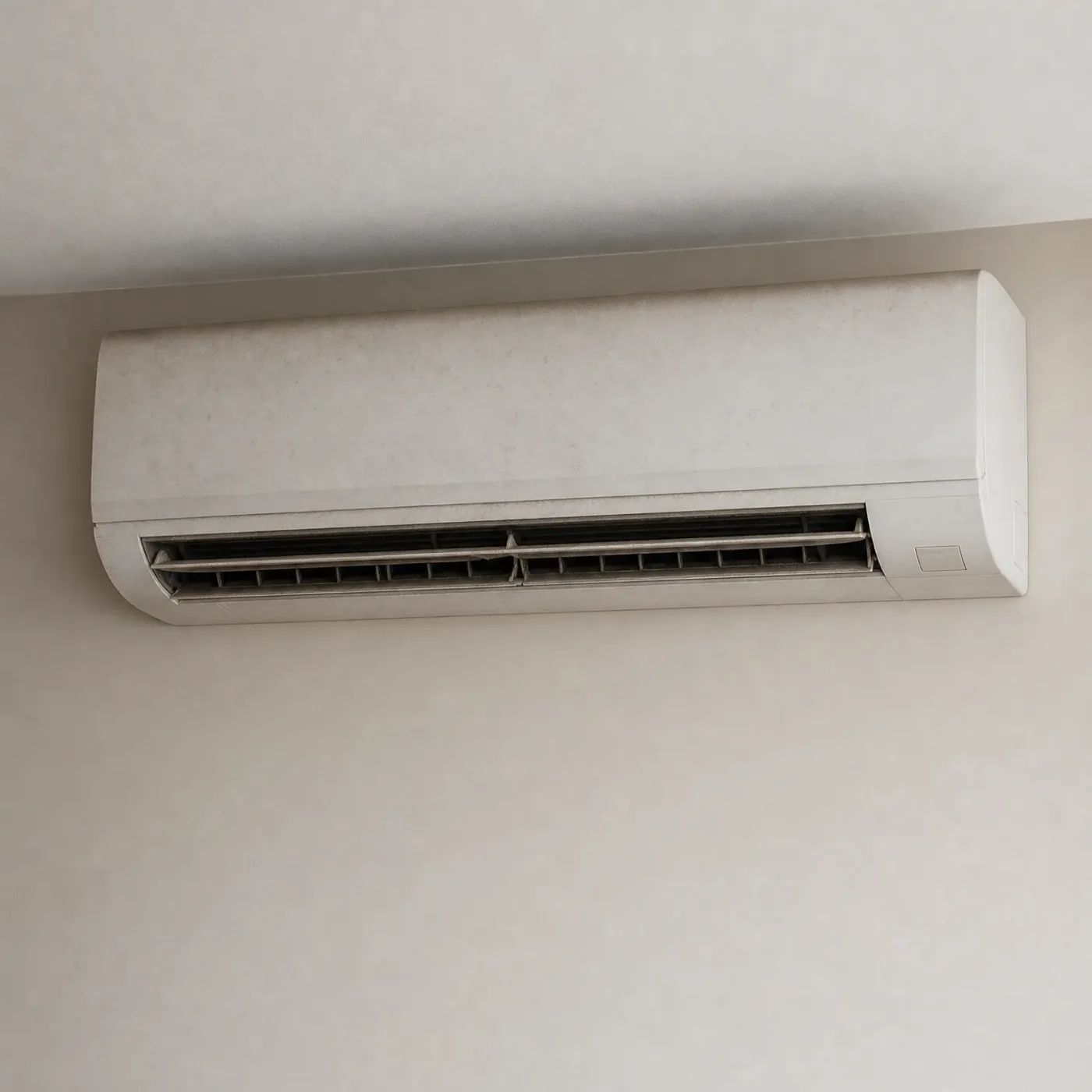
A dusty, discolored wall-mounted mini-split air conditioner indoor unit on a plain white wall, with its horizontal louvers and vent grille visible.

Needing attention

Grime like this across the top and vents didn't happen in a week. It builds while the unit keeps running, pulling air through a filter and coil that are collecting more than they're clearing. Left alone, it's the kind of small problem that turns into a bigger one.

Why does a technician check the refrigerant charge during a tune-up?

You've seen a technician hook up gauges to the outdoor unit and figured they were just checking if it's running. It seems like a strange thing to spend time on if the mini split is already blowing cold air. You want to know what the charge actually tells them that you can't tell just by standing in the room.

The charge tells a technician whether the unit can still pull moisture out of the air, not just move it around

A mini split that's low on refrigerant can still blow air that feels cool, so you won't necessarily notice from inside the room. What you will notice, eventually, is a house that feels damp even with the unit running, because a low charge cools the air without wringing the humidity out of it the way it should. In Missouri, where summer air holds a lot of moisture, that difference matters more than it would somewhere dry. A technician checks the charge against the manufacturer's spec using gauges at the service port. If it's off, the coil can't do its job right, no matter how clean it is or how long the unit runs.

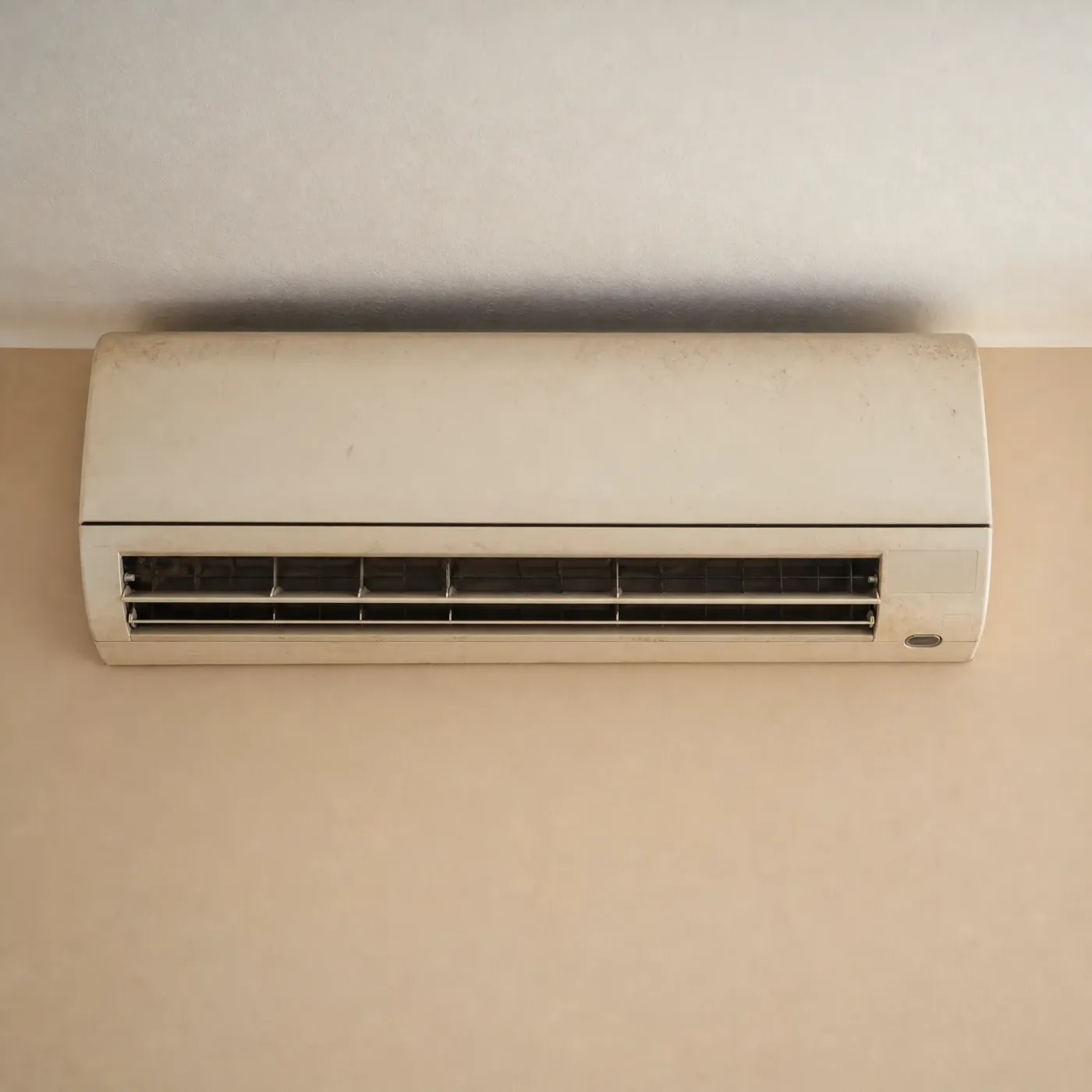
A wall-mounted mini-split air conditioner indoor unit with a dusty beige casing and dark louvered vent, installed near the ceiling on a plain beige wall.
Before you get your mini split maintenance
A white wall-mounted mini-split indoor unit installed high on a gray interior wall, with a sofa, dark table and window visible in an adjoining room to the right.
After you get your mini split maintenance

Power costs 13.30 cents per kilowatt-hour statewide

At 13.30 cents a kilowatt-hour, running a mini split that's low on charge or caked with dust costs you more every month it goes unchecked. A clean, properly charged system does the same job on less power, so the tune-up pays you back on every bill after.

EIA-861 2025 statewide residential average

  1. Technician pulls the filters and washes the indoor coil first

  2. Technician checks the blower wheel for dust buildup and spins freely

  3. Technician inspects the outdoor coil fins and clears debris around the cabinet

  4. Technician attaches gauges and tests the refrigerant charge against spec

A bearded man in a plaid flannel shirt stands in a kitchen looking out a window toward snow-covered shrubs, with a steaming mug on the windowsill and potted plants on a shelf behind him.
A smiling man with dark curly hair in a navy t-shirt sits on a gray couch indoors, with a large-leafed plant and a window in the background.

Where your mini split stands

  • A tune-up covers the indoor coil and filters, the outdoor unit, the refrigerant charge, and the drain line, in that order.
  • A mini split that holds its charge and runs clean keeps up through a Missouri summer without working harder than it should.
  • Skipping a year means small problems like a dirty filter or a slow drain get the chance to turn into bigger ones.
  • Instead of searching for a contractor, calling around, and comparing quotes yourself, you get matched with one who handles mini splits.
  • That contractor reaches out to you directly, so you explain your situation once instead of repeating it to every company you call.
  • A yearly check gives you a baseline for how your unit runs when everything is right, so you notice sooner when it isn't.

A mini split tune-up is straightforward: the filters and indoor coil get cleaned, the outdoor unit gets checked, the refrigerant charge gets tested, and the drain line gets cleared. In that order, because each step affects the next. Done every year, that's the whole story. Your unit holds its charge, moves air the way it should, and doesn't work harder than it needs to when the dew point climbs in July. Skip a year and nothing happens right away. The filter gets a little dirtier, the drain runs a little slower, and you don't notice because the unit still turns on and still blows cold. The problem is what that dirt and that slow drain turn into a year or two later, and by then it's not a filter you're replacing.

Finding someone to do this work usually means the same slog every time something in your house needs attention. You search, you call a few places, you explain what you have and what it's doing, you wait on quotes, you compare them without really knowing what you're comparing. None of that tells you whether the unit is running right. What it does is get matched with a contractor who works on mini splits specifically, who reaches out to you so you're not the one chasing anyone down. You explain your situation once. And once someone's checked your unit and told you where it stands, you have something to measure against next year, a sense of what normal looks like for your system, so you're not guessing the next time something feels off.

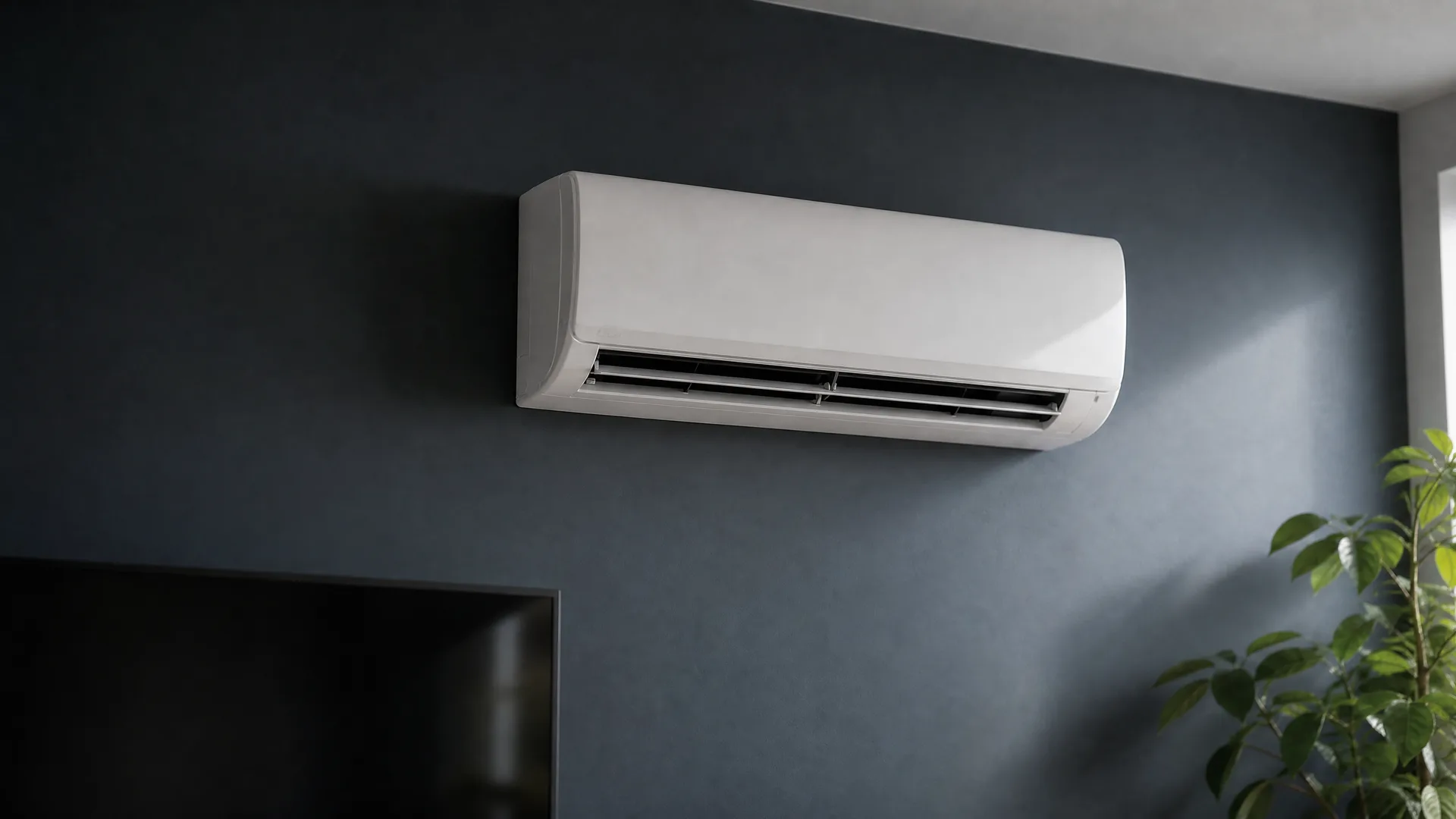
A white wall-mounted mini-split air conditioner on a dark gray interior wall, with a flat screen at lower left and a green leafy plant at lower right.

The right pro for this job

Step 1 of 3: Equipment