



Get Mini Split MO

Mini split smells musty in Kansas City, MO

Your mini split tune-up request goes to a pro who covers Jackson County.

Match me with a pro

A musty smell from your mini split almost always means water sitting somewhere it shouldn't. The indoor unit pulls moisture out of the air as it cools, and that water is supposed to drain away through a small condensate line. When that line clogs with algae or dust, or when the drain pan cracks or sits crooked, the water backs up and sits in the unit instead. Mold grows in that standing water and on the coil behind it, and the smell comes through the vents every time the fan runs. With summers in Jackson County staying muggy for months, the system runs long hours pulling moisture out of the air, which gives mold more time and more water to work with. A dirty filter makes it worse, since it slows airflow across the coil and lets condensation sit longer before it evaporates. The smell itself won't go away on its own. It points to something inside the unit that needs to be cleaned out or drained properly.

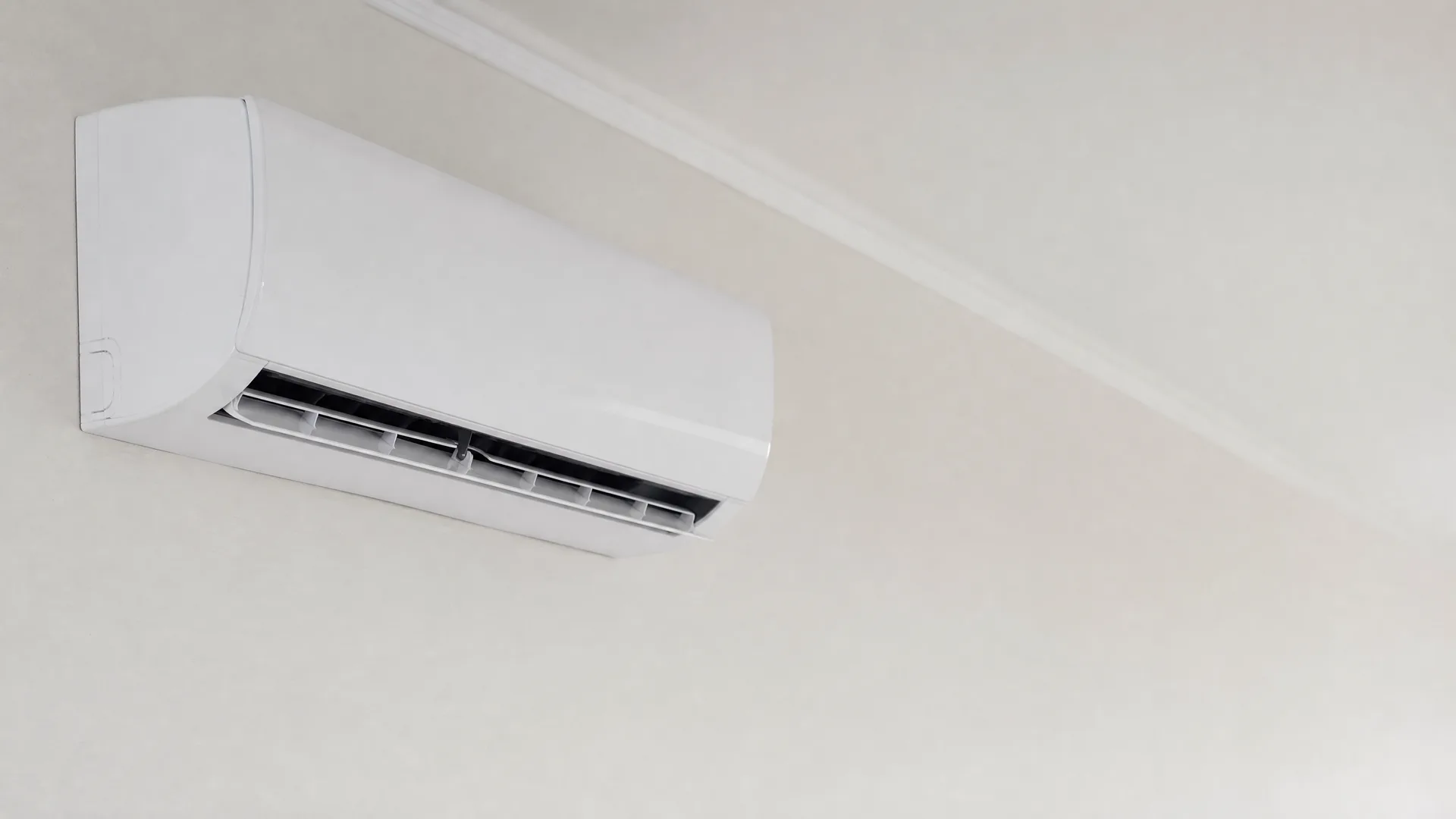
A white wall-mounted mini-split air conditioner indoor unit installed near the ceiling on a plain beige wall.

Why the smell comes back

The coil behind the filter stays damp for hours after the mini split shuts off. Dust and skin cells settle on that wet surface and feed mold growth right there on the fins. Running the fan-only setting for a few minutes after cooling helps dry the coil, but it will not clear mold that has already taken hold. Once mold is established on the coil itself, the smell returns every time the unit kicks on, no matter how clean the filter is.

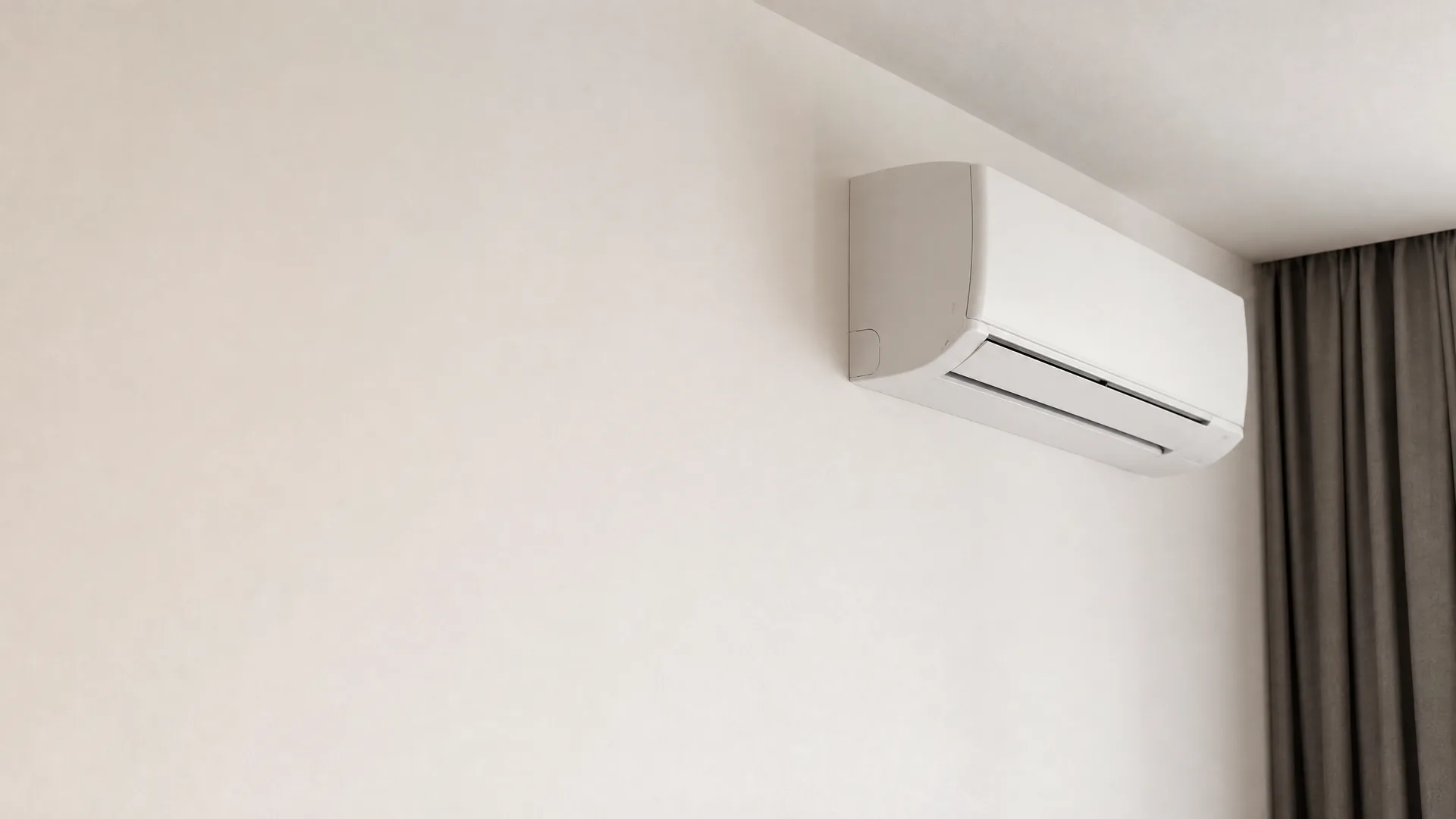
A white wall-mounted mini-split air conditioner on a plain off-white interior wall, with a gray curtain at the right edge.

What a clogged line does

A condensate line that cannot drain backs water up into the unit's drain pan, and standing water in a warm, closed cabinet grows mold within days. In Jackson County's long, humid summers, a mini split can pull several gallons of water from the air in a single week, so a blocked line does not take long to leave standing water behind. Some units have a float switch that shuts the system off when the pan fills, which stops cooling but will not clear the clog on its own.

Why does mold keep growing back in my mini split?

  • Cooling runs May through September

    Your mini split cools your home from May through September here. That's five straight months of the coil staying wet enough, long enough, for mold to take hold.

  • Heat runs October through April

    Heat runs October through April in Jackson County, so for seven months the unit sits idle with no airflow to dry out whatever took hold over summer.

  • Power here costs 13.55 cents per kilowatt-hour

    At 13.55 cents per kilowatt-hour, running the fan-only mode a few extra minutes after cooling costs you almost nothing next to a coil cleaning or a replaced unit.

NOAA nClimDiv 1991-2020 · EIA-861 2025

Where the smell actually starts

  • The blower wheel sits right behind the coil, and its curved blades collect a felt-like layer of dust that stays wet after every cooling cycle.
  • A clogged condensate line backs water up into the drain pan, and that standing water sours within a day or two.
  • The drain pan itself can crack or rust at the seams over years of use, holding a thin film of water the line never picks up.
  • Mini splits have no furnace cabinet to vent the smell outward, so odor from the coil blows straight into the room through the supply vents.
  • A dirty filter slows airflow across the coil, so the coil stays colder and wetter longer after each cycle, which gives mold more time to grow.
  • Refrigerant running low makes the coil colder than it should get, and a colder coil holds frost and then meltwater longer once the system shuts off.

Most of the smell traces back to the blower wheel and the coil behind your mini split's filter. Every time the system cools, that coil sweats, and the wheel sitting just behind it collects dust that never fully dries between cycles. That damp, dusty buildup is where mold gets its foothold, and once it's established on the wheel's blades, cleaning the filter alone won't touch it. The condensate line underneath has its own job, carrying that water out to a drain. When algae or debris clogs that line, water backs up into the pan instead of draining, and standing water left in a warm, enclosed unit turns sour in a day or two. Older units add another problem: the pan itself can crack or rust at the seams, holding a thin layer of water that the line was never positioned to catch in the first place. A dirty filter makes all of this worse. It slows the air moving across the coil, so the coil runs colder and stays wet longer after the system shuts off. Low refrigerant does something similar, dropping coil temperature further than it should and leaving frost that melts slowly once the unit stops running. None of these are things you can see without opening the unit up, and a mini split has no cabinet or ductwork to carry that smell away. It blows straight from the coil into the room.

A gray-haired, bearded man in a dark coat dusted with snow stands smiling in a dimly lit room with a lamp, mirror, framed art, and a sofa in the background.
An older man with white hair and a beard, wearing a dark snow-dusted coat and scarf, stands in a warmly lit interior hallway with a framed landscape picture, a table lamp and a potted plant behind him, and a snowy view through a window at left.
An older man in a dark snow-flecked overcoat and scarf stands smiling in a warmly lit home entryway, with a glass-paned door showing darkness outside and a lamp-lit room visible through a doorway behind him.
An older man with gray hair and a beard, wearing a dark snow-dusted jacket and scarf, stands smiling in a warmly lit interior hallway with a lit table lamp, a vase of dried branches, and a framed picture in the background.

Clean the coil, drain line and blower wheel now and the musty smell goes away for a while, but Jackson County summers put the coil right back in the same wet, dusty state within weeks.

A technician can also set the condensate line to drain faster and the blower to run a short dry-out cycle after every cooling run, so the coil doesn't sit wet long enough for mold to take hold again.

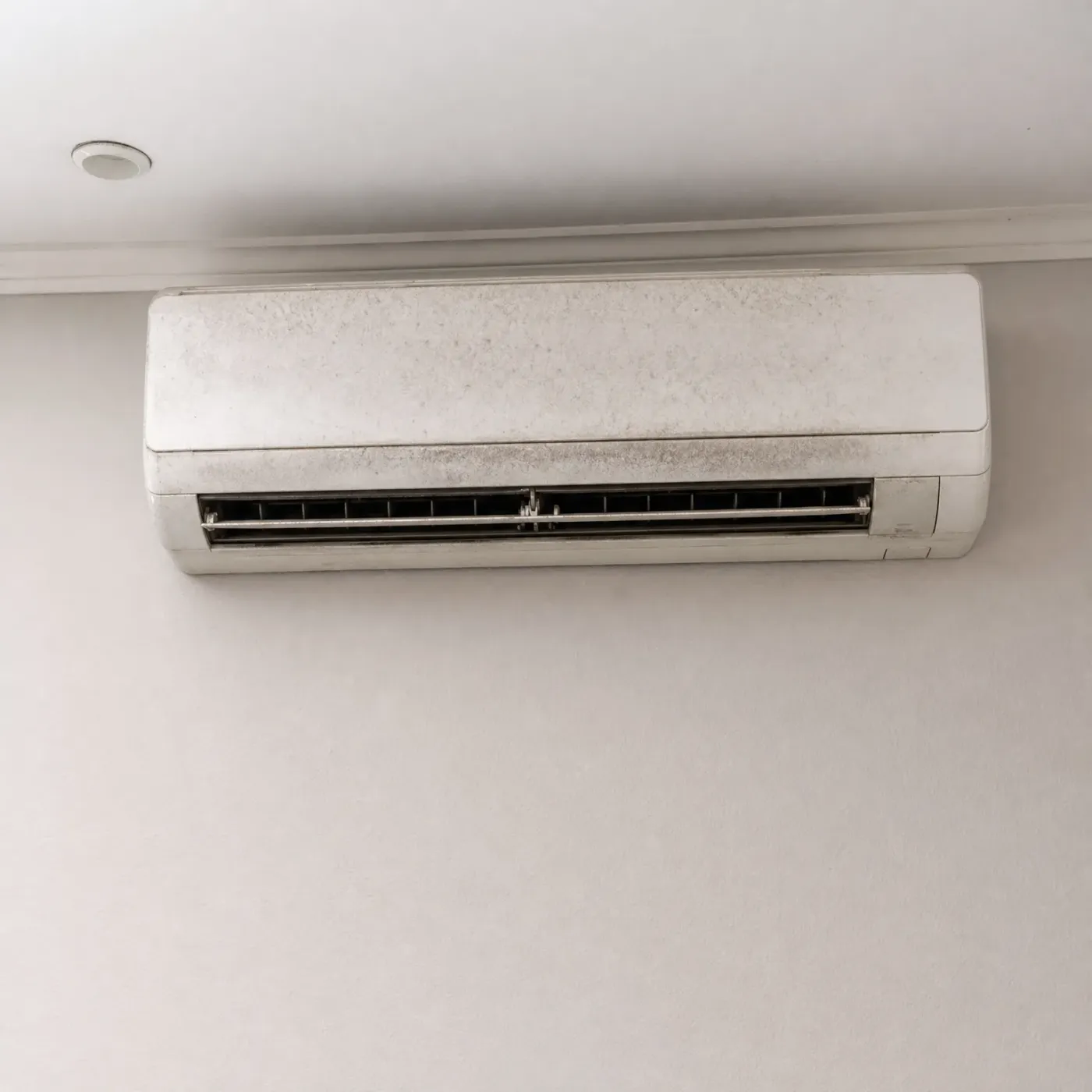
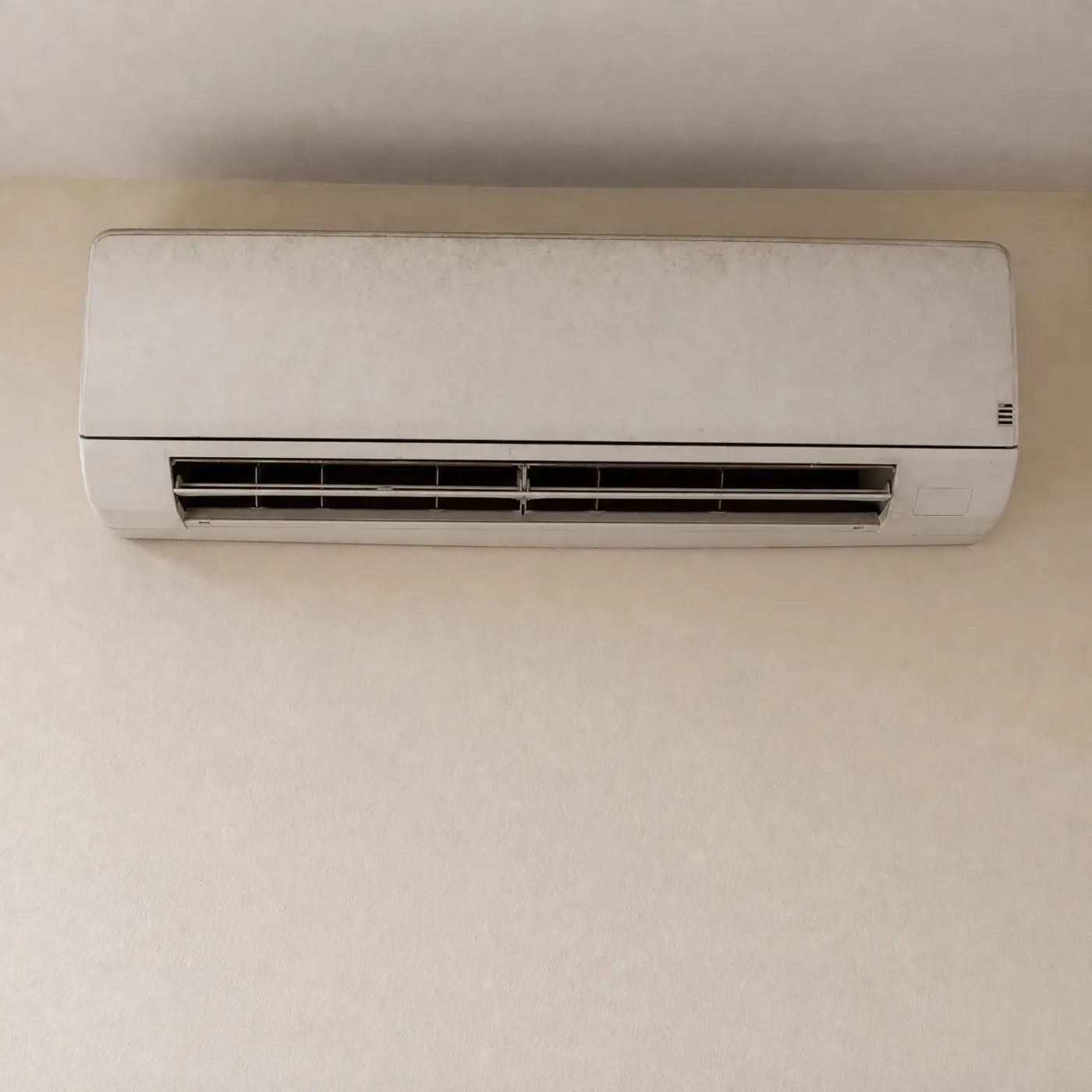
A white wall-mounted mini-split air conditioner indoor unit with visible dust and discoloration, installed near the ceiling on a plain beige wall.
Before you get your mini split maintenance
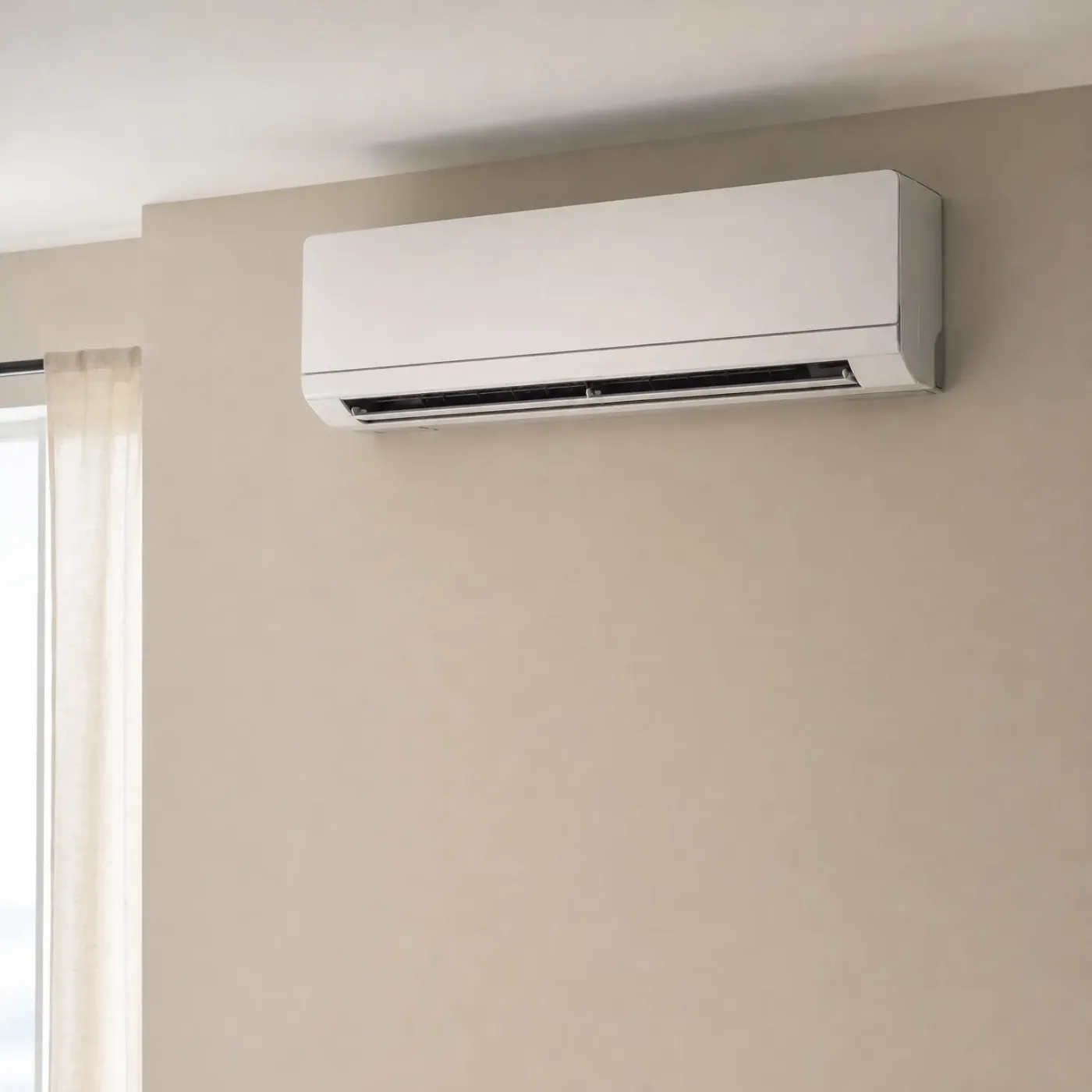
A white wall-mounted mini-split air conditioner installed high on a beige interior wall near the ceiling, with a sheer curtain and window at the left edge.
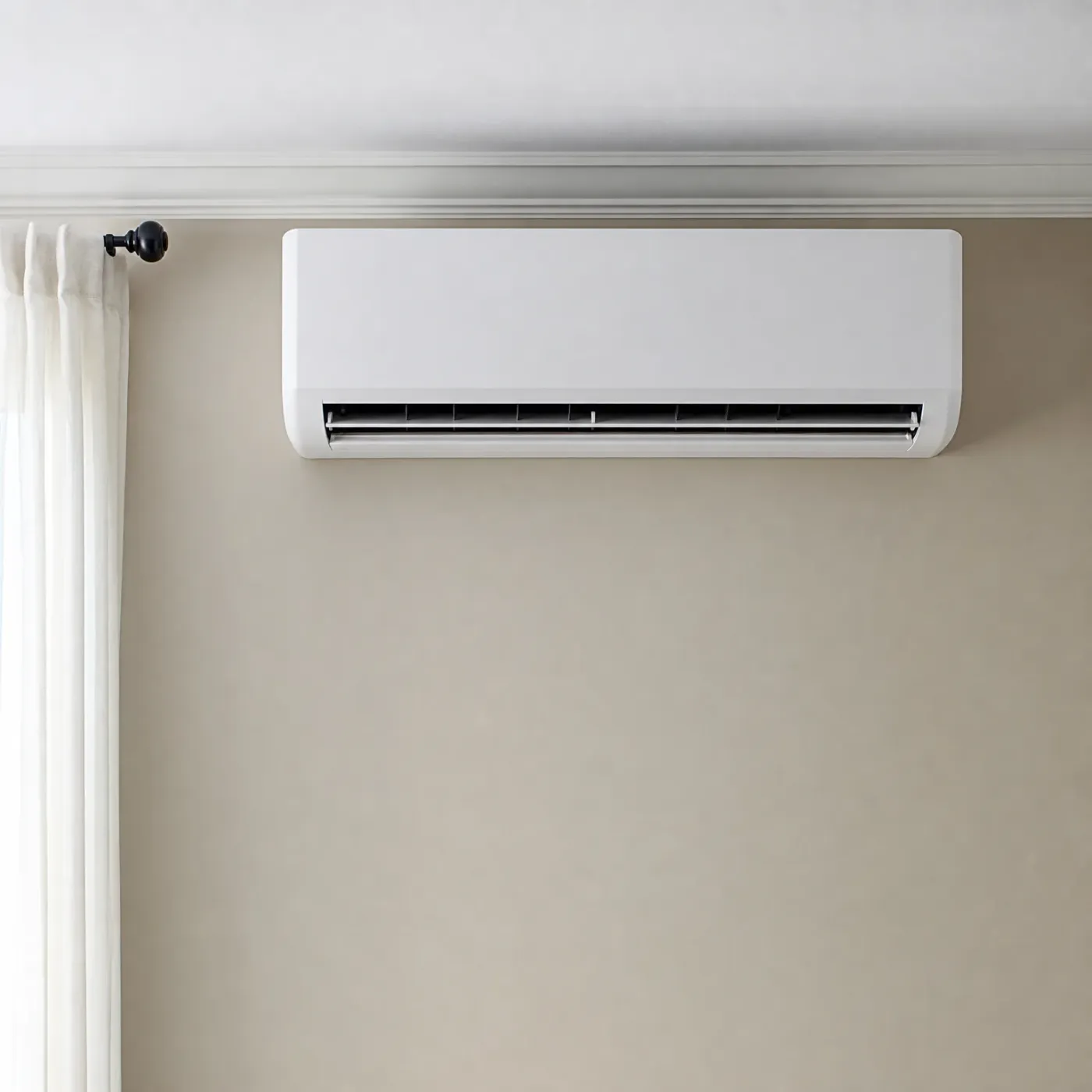
After you get your mini split maintenance

What you're breathing in the meantime

That musty air moves through the same room you sleep or work in, every time the fan kicks on. In a house in Jackson County, that's the bedroom or the living room most of May through September. Mold spores don't stay on the coil, they ride the airflow out through the vents and settle on furniture, bedding, whatever's in the room. Some people notice a scratchy throat or stuffy nose before they ever smell anything. If anyone in the house has asthma or allergies, a moldy coil is working against them all summer long.


What happens if you let it sit

A clogged drain line doesn't stay a smell problem. Water that can't get out of the pan keeps rising, and once it tops the pan it runs onto the wall or floor beneath the indoor unit. In a Kansas City summer, that's not a one-time spill, it happens every humid day the system runs. Drywall stains, trim swells, and the wall behind the unit can stay damp enough to grow its own mold, separate from what's on the coil. By the time you see water on the floor, the coil's been fouled for a while.

A woman wrapped in a cream textured blanket sits in an armchair beside a lit lamp and a dark window, with an open book in the foreground.
A smiling older woman with gray hair in a cream knit sweater stands in a dimly lit kitchen beside a window showing snow outside, with a round loaf of bread on the counter in the foreground.
A white wall-mounted mini-split air conditioner near the ceiling of a living room with a gray sofa, knit cushions, a wooden floating shelf holding a plant in a round vase, a framed print and a woven basket, and a large window showing green trees.

Get matched with a mini split pro in Jackson County

Skip calling around to set up a mini split tune-up.

Get matched with a pro who does mini split tune-ups in Jackson County.

Skip the calls

No fee to send it, and nothing to sign.

One Cleaning Or Staying Ahead of It

One-time cleaning

  • A one-time cleaning clears out what's built up on the coil, the drain line and the blower wheel right now, so the smell goes away for a while.
  • Nothing stops the coil from getting wet again the next time the mini split runs, so the same conditions that grew the mold the first time are still there.
  • Jackson County summers run May through September, and that's five months of the coil staying damp long enough for mold to take hold again.
  • Without a plan to keep the drain line clear and the coil dry between cleanings, most houses see the smell return within weeks.
  • You're left watching for the smell again and scheduling another cleaning once it shows up, rather than catching the problem before it starts.

Ongoing maintenance

  • Regular maintenance catches a clogged drain line or a dirty blower wheel before water backs up into the pan and sours.
  • A technician checks the same parts that caused the smell in the first place on a schedule, instead of waiting for you to notice the odor again.
  • Keeping the coil and drain line clear through the summer months means less time for mold to establish itself on the fins.
  • Maintenance visits timed around Jackson County's heavy cooling months catch problems while the coil is under the most stress.
  • You skip the cycle of noticing the smell, searching for help, and explaining the same problem over again each time it comes back.
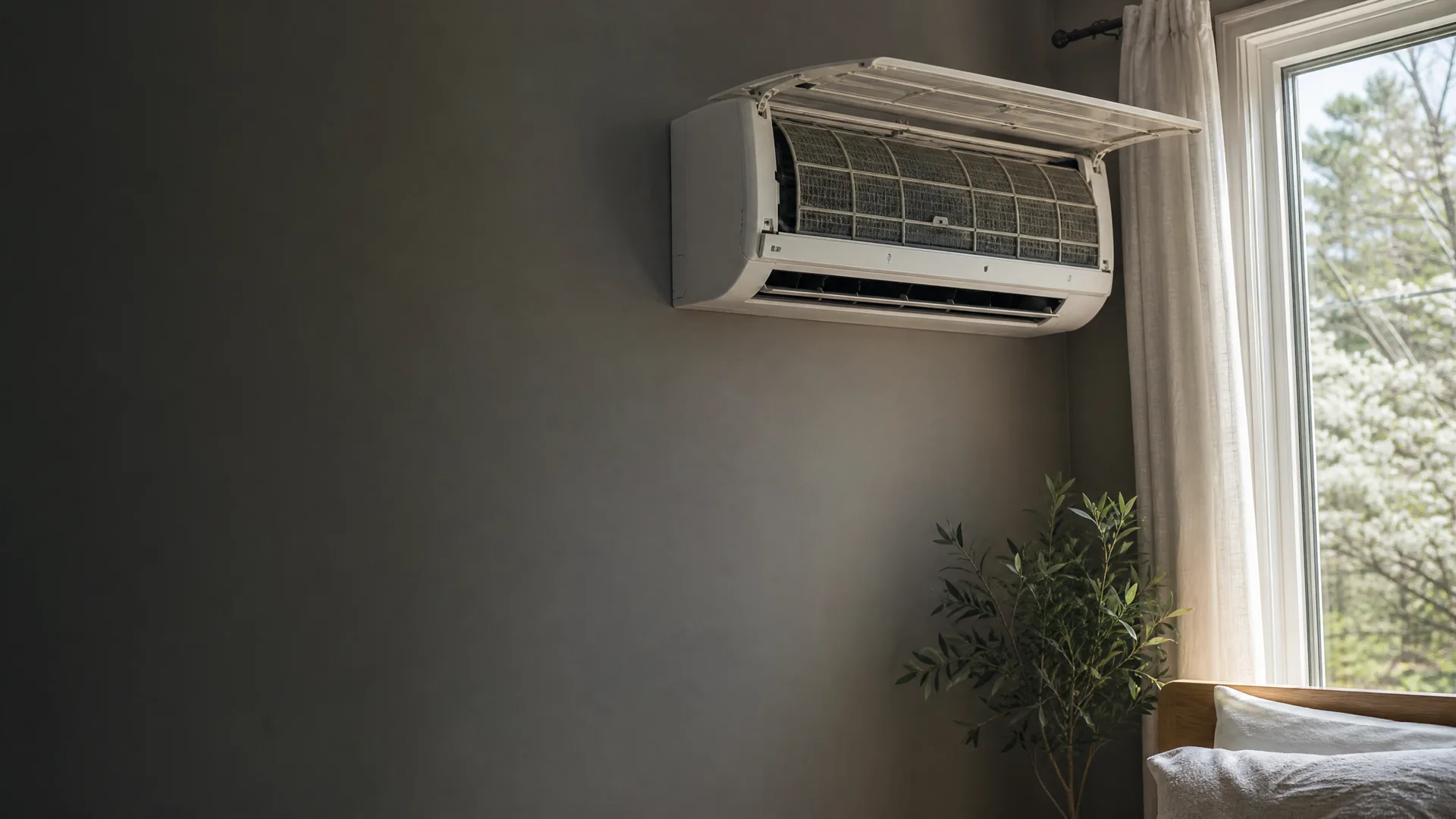
A wall-mounted mini-split air conditioner with its front cover open exposing the filters, on a gray interior wall beside a curtained window with green trees outside and a potted plant below.

It's a warm afternoon in late spring, and you finally pull the front cover off the indoor unit after noticing the smell again when the fan kicked on. The filter screen slides out grey with dust, heavier than you expected, the kind that's been sitting damp more than once. Behind it the coil looks the same, dulled with a thin film. You hold the filter up to the window light from across the room and the dust doesn't even shake loose easily. Outside, Jackson County is warming into the stretch of months when this unit will run almost every day. You set the filter on the windowsill, meaning to rinse it, already knowing it'll look like this again before summer's out.

A white wall-mounted mini-split air conditioner installed high on a beige interior wall below crown molding, with a sheer white curtain on a dark rod at the left edge.
A clean mini split like this moves air that doesn't carry any smell with it.
A dusty white wall-mounted mini-split air conditioner unit installed near the ceiling on a plain light-colored interior wall, with a small recessed ceiling fixture at upper left.
Dust packed into the casing like this holds the moisture that mold needs to keep growing.
A single-story gray horizontal-siding house with multiple front-facing gables, white-trimmed windows, a dark front door, and a concrete walkway crossing a partly dry lawn under a clear blue sky.

Jackson County summers don't just get hot, they get heavy. Summer dew points here average 66°F, according to NOAA, which is the point where air starts to feel thick instead of just warm. Your mini split has to wring more water out of air like that, and more water means a wetter coil for more hours of the day. That's more moisture sitting in the drain pan and soaking into the blower wheel every single cooling cycle. On a dry 66°F day the coil would shed that water fast. Here, it doesn't get the chance.

NASA POWER T2MDEW

Why does my bedroom smell off when the fan turns on

You notice it most when the unit first kicks on, a damp, sour smell that fades after a minute or so, then comes back the next time the fan starts. Sometimes it's stronger in the morning, after the unit has sat quiet overnight. You might see a dark spot or two on the wall below the indoor unit, or on the ceiling tile near it, where condensation has been dripping instead of draining. If the room feels stuffier than the rest of the house, or someone in it has been coughing more or waking up congested, that's worth paying attention to. Mold spores from a wet coil don't stay inside the unit. They move through the room on the air the fan pushes out, and a household breathing that in for months adds up.

  1. Refrigerant pulls heat and moisture out of the indoor air

  2. Water collects on the cold coil and drips into the drain pan

  3. The condensate line carries that water out of the house

  4. Standing water or a clogged line lets mold grow on the coil

A woman stands in the open doorway of a white stucco house holding the dark door, facing a man in a black cap and shirt seen from behind in the blurred foreground, with a potted flowering plant beside the entry.

A musty mini split isn't something you fix once and forget

The smell tells you where things stand. Water is sitting somewhere in that indoor unit, mold has taken hold on the coil or the blower wheel, and Jackson County summers will keep it that way unless someone deals with the coil, the drain line and the blower wheel together on a schedule. A single cleaning gets you a few weeks of clean air. Regular maintenance is what keeps the smell from coming back every time the fan kicks on.

You don't have to sort out which of those three parts is the problem, or call around to find someone who services mini splits in Jackson County, or explain the smell over and over to different companies while you compare quotes. Answer a few questions about your unit and what you're noticing, and a contractor who works on mini splits in this area will reach out to you directly, already knowing what you're dealing with.

A living room corner with a beige sofa and cushion, a round wooden coffee table holding a pale ceramic vase of eucalyptus stems and a wooden bowl, and a curtained window with a potted plant above a latticed radiator cover in the background.
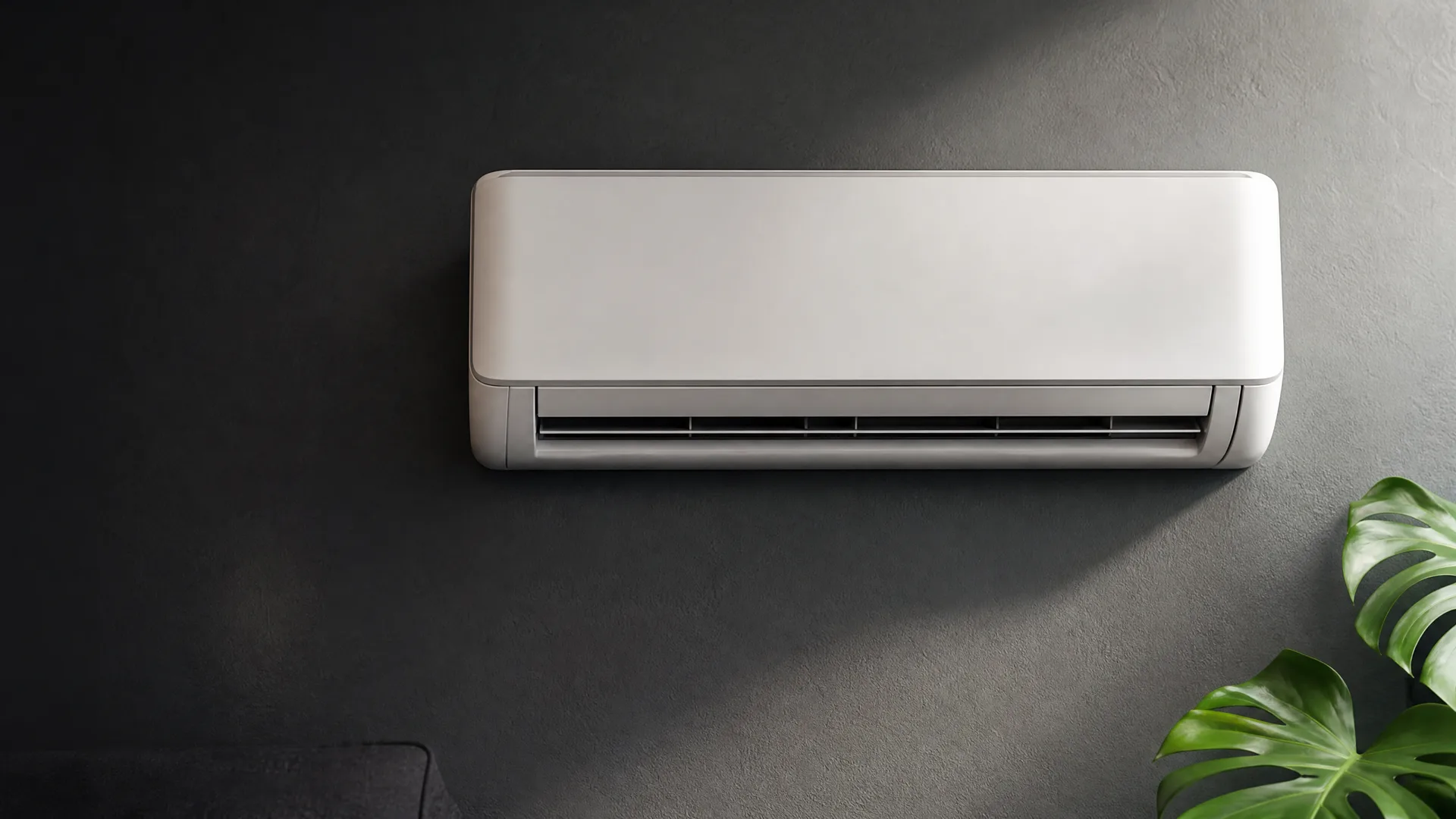
A white wall-mounted mini-split air conditioner on a dark grey textured wall, with a monstera plant leaf at the lower right corner.

Find a mini split maintenance pro in Jackson County

Step 1 of 3: Equipment