 Start one form
Mini split smells musty in Joplin, MO
Fill out one form instead of calling around for a mini split tune-up.
A musty smell from a mini split almost always means moisture sitting somewhere it shouldn't. The indoor coil gets cold and wet every time the unit runs, and if the condensate drain is slow or clogged, or the filter is caked with dust, that water sits and grows mold instead of draining away. In Jasper County, where summers stay sticky for months at a time, that coil is working long hours and has plenty of chances to collect the kind of grime that feeds mold.
Sometimes the smell shows up in winter too, if the unit is one you run for heat. A system that sits unused for a stretch can hold onto moisture from the last time it ran, and the smell greets you the next time it kicks on.
Either way, the fix means getting into the unit itself, pulling the filter, checking the drain line, and looking at the coil and blower wheel for buildup that a homeowner can't just wipe off from the outside. That's a job for someone who works on this equipment regularly, not a weekend project.
Finding that person is usually the slow part. You'd normally be searching for mini split contractors in the Joplin area, calling a few, explaining the smell and when it started, waiting to hear back, then doing it again with the next name on the list until someone has time to come out. This page skips that. It connects you with one licensed contractor local to Jasper County who services this kind of equipment through all of it, the long muggy summers and the cold winters, and has seen this exact complaint plenty of times. No juggling multiple callbacks, no repeating yourself to a different company each time.
Below, there's more on what usually causes the smell and what a service visit tends to involve. When you're ready, the button on this page is what connects you with that contractor.
That musty smell almost always means mold or mildew growing on the indoor coil or inside the blower housing, and it shows up most after the unit has been running a lot. Joplin summers stay humid for months, and your mini split is pulling moisture out of the air the whole time it runs. Every bit of that water is supposed to drain away through the condensate line, but a coil that never fully dries between cycles, or a filter so dirty that air can't move past it the way it should, gives mold something to grow on. Once that smell is there, it tends to come back every time the system kicks on, because the fan is blowing air straight across whatever is growing. It does not mean the unit is broken. It means something inside it needs to be cleaned, the coil, the drain line, or the filter, before the smell and the mold keep building.
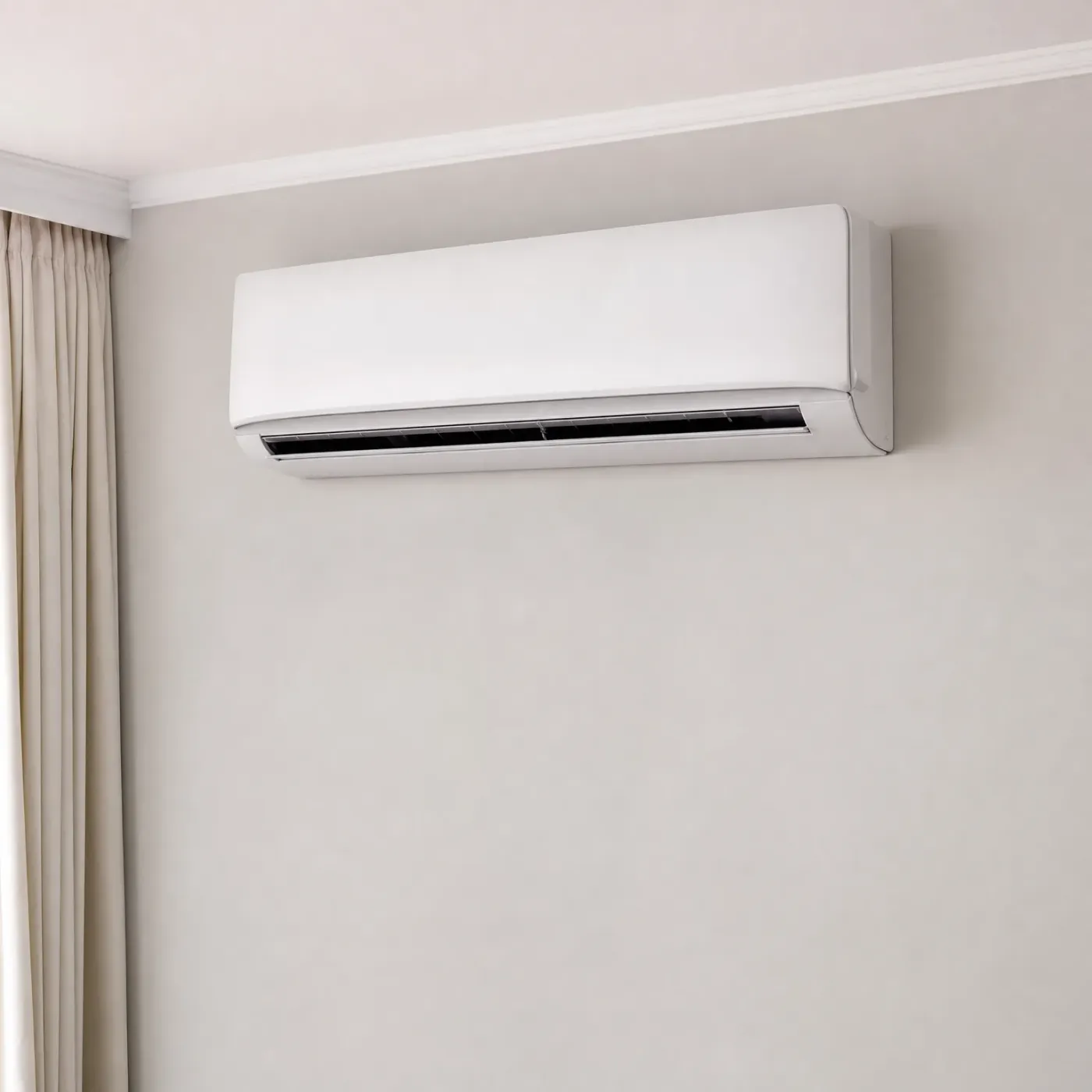
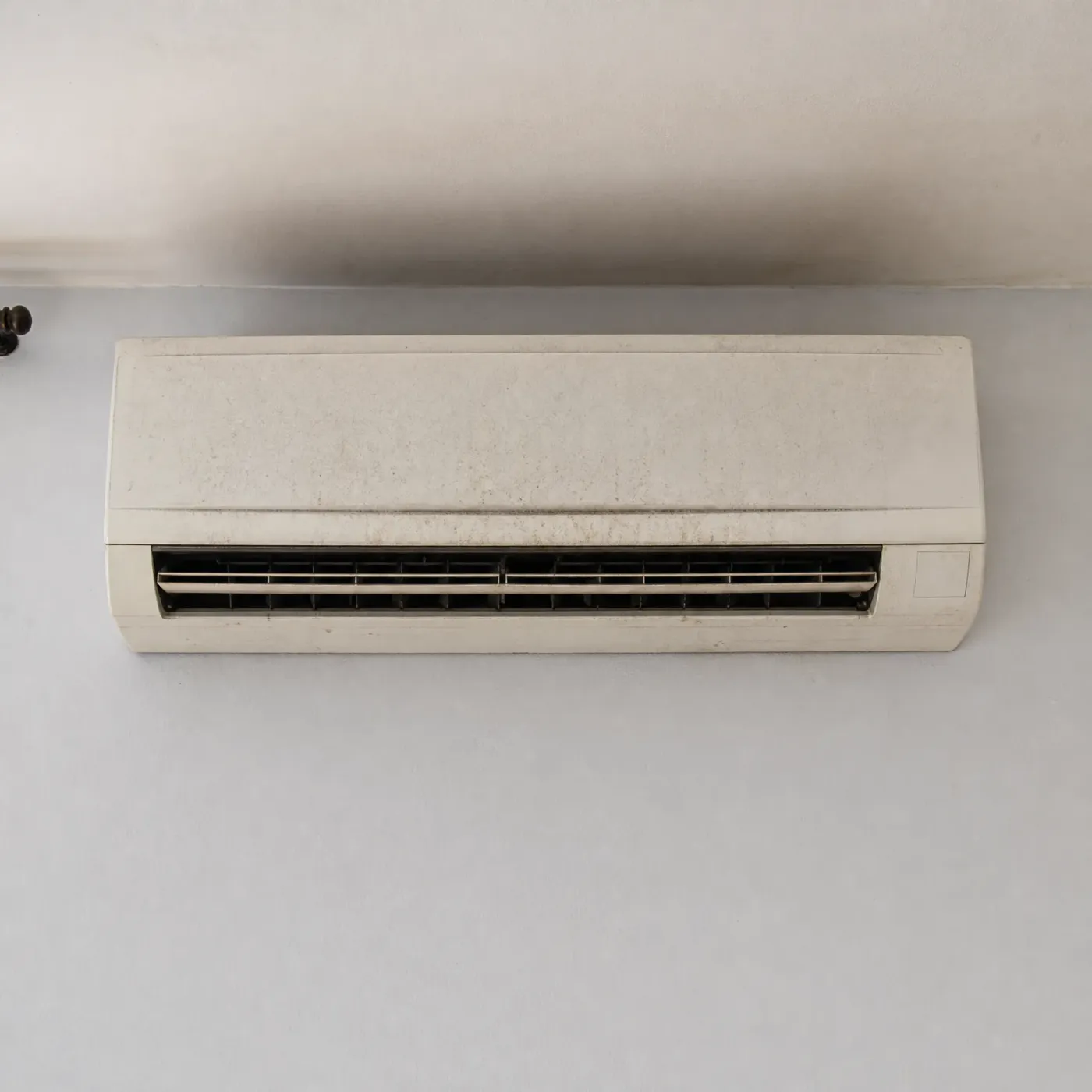
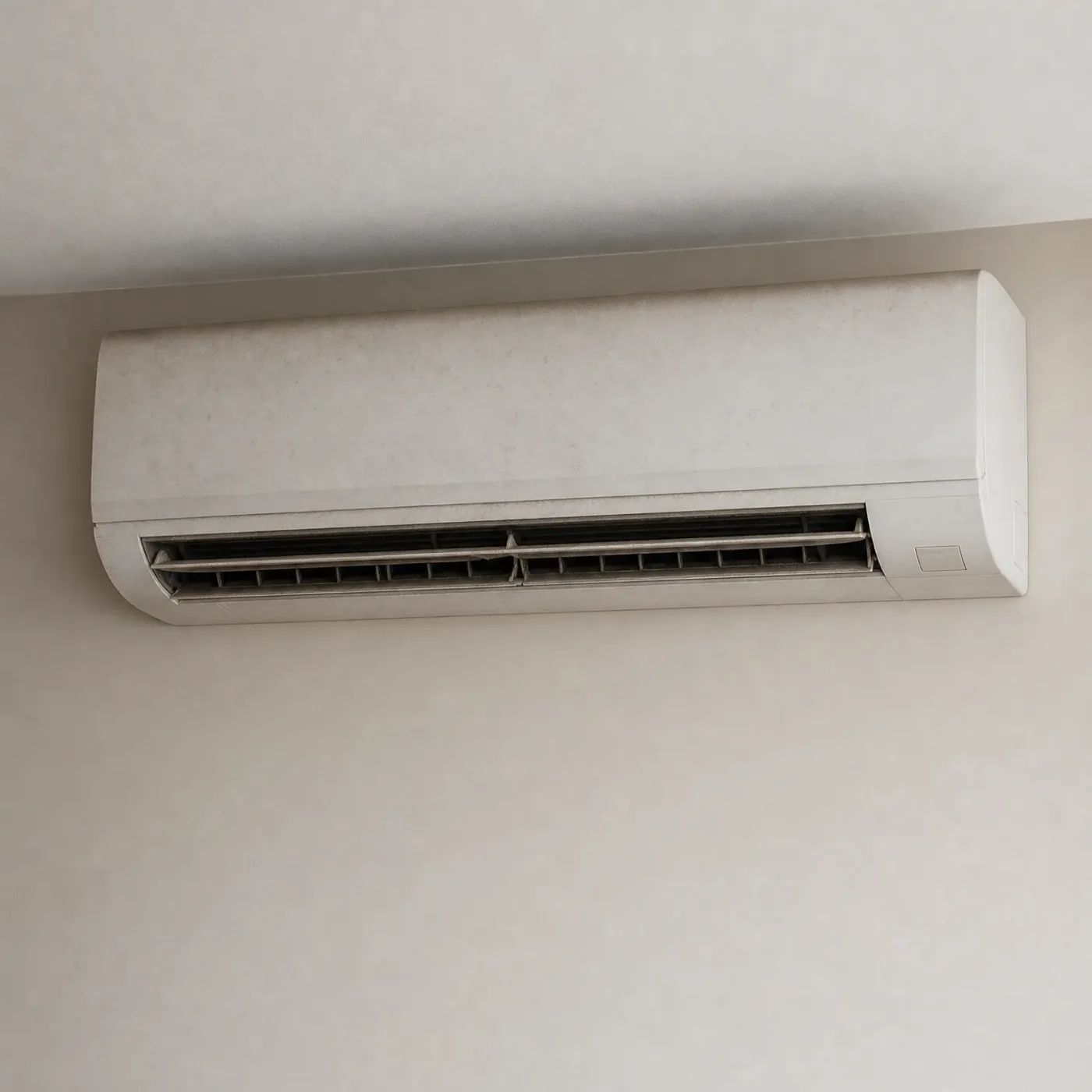
Take the cover off an indoor unit and the blower wheel is the part most people never see. It has curved fins, and dust packs into those curves no matter how often you swap the filter, because a filter only catches what passes through it. Below that sits the drain pan, draining by gravity alone, so a line that's pitched even slightly wrong leaves water behind instead of carrying it outside. Mold doesn't need long. Give it about two days of sitting water and it's established, which is why a drain that's just slow, not blocked outright, causes the same smell as one that's fully clogged. Some units run the fan a few minutes after the compressor stops to dry the coil off. Units without that step stay wet for hours after they shut down. And if the wall sleeve around the line set and drain hose isn't sealed well, humid outside air gets to that wet coil between cycles and keeps the cycle going.
Where the moisture actually hides
- The indoor unit's blower wheel has fins that curve, and dust builds up inside those curves where a filter change never reaches it.
- A mini split's drain pan sits right under the coil, and it relies on gravity alone, so even a slight backward tilt on the line keeps water from leaving.
- Mold needs about 48 hours of standing moisture to take hold, which is why a drain that's merely slow, not fully clogged, still grows it.
- Running the fan for a few minutes after the compressor shuts off dries the coil, and units without that setting stay wet long after they stop cooling.
- The line set and drain hose run through a wall sleeve, and a bad seal there lets humid outside air reach the coil between cycles.
- Washable filters that aren't fully dry before going back in seed the coil with the mold already growing on the filter itself.





One form, no calling around
A licensed local pro takes the request for your mini split tune-up.
Skip calling around to set up a mini split tune-up.
You only hire the pro if you want to.
Why does your mini split smell musty when it kicks on
You probably notice it most in the first minute or two after the unit starts, a damp, closed-in smell that fades as the room cools. Some households catch it from across the room before they even feel the air moving. It tends to be worse after the unit has sat off for a few hours, then runs again. Check the wall below the indoor unit for any staining or soft drywall, and look at the drain line outside where it exits the house to see if water is actually dripping from it while the unit runs. If nothing is draining out there, the water has to be going somewhere else, and left alone that usually means mold spreading further into the blower housing or the wall behind the unit.
Where the water should go
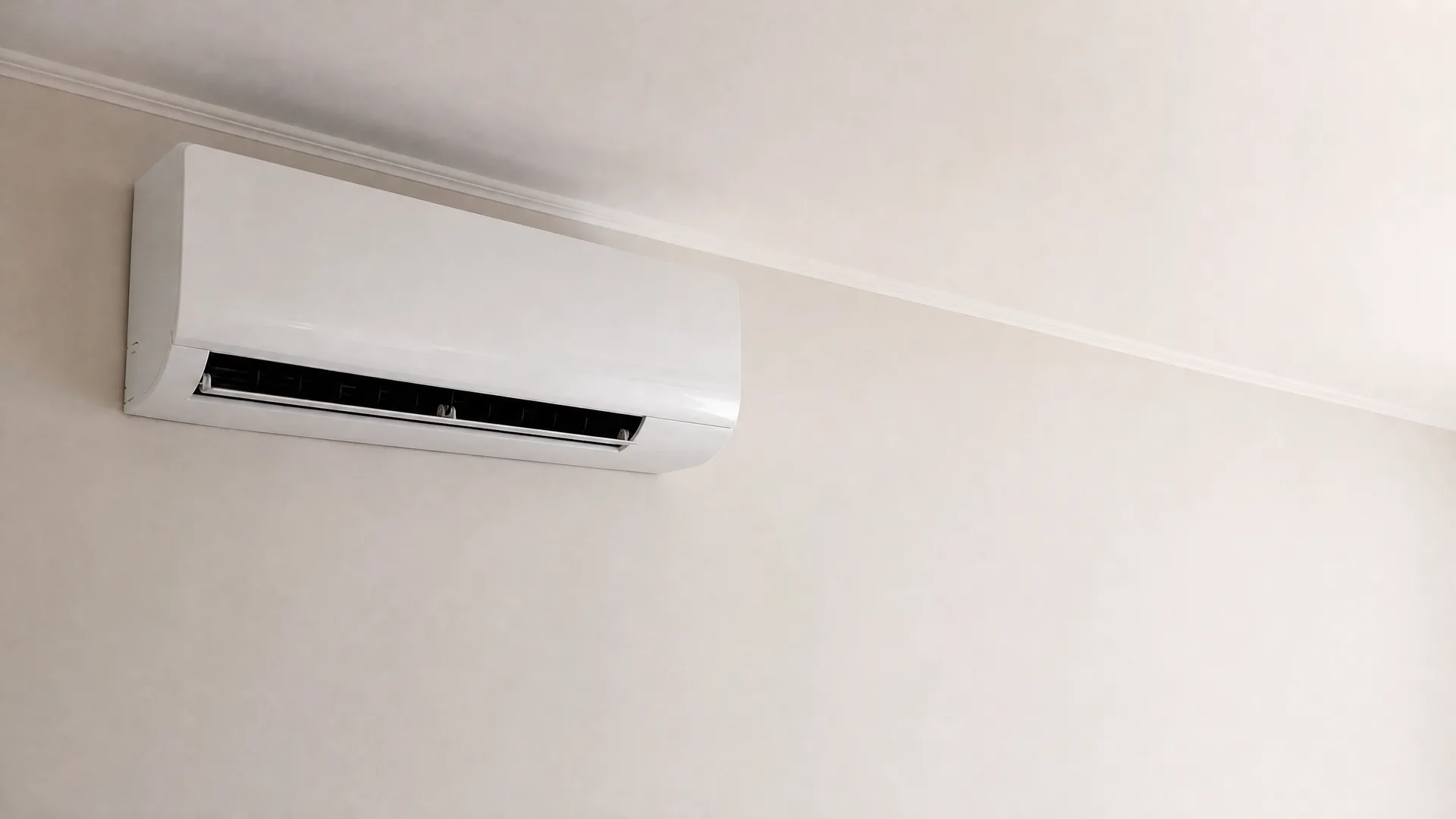
Every indoor unit makes condensate as it runs, and that water is supposed to leave through a small drain line, often out an exterior wall near the outdoor unit. Look there for a steady drip while the system runs on a humid day. No drip at all, or water staining below the indoor unit, means the line is blocked somewhere between the pan and the outside wall, and the water is finding another way out.
What a yearly cleaning covers
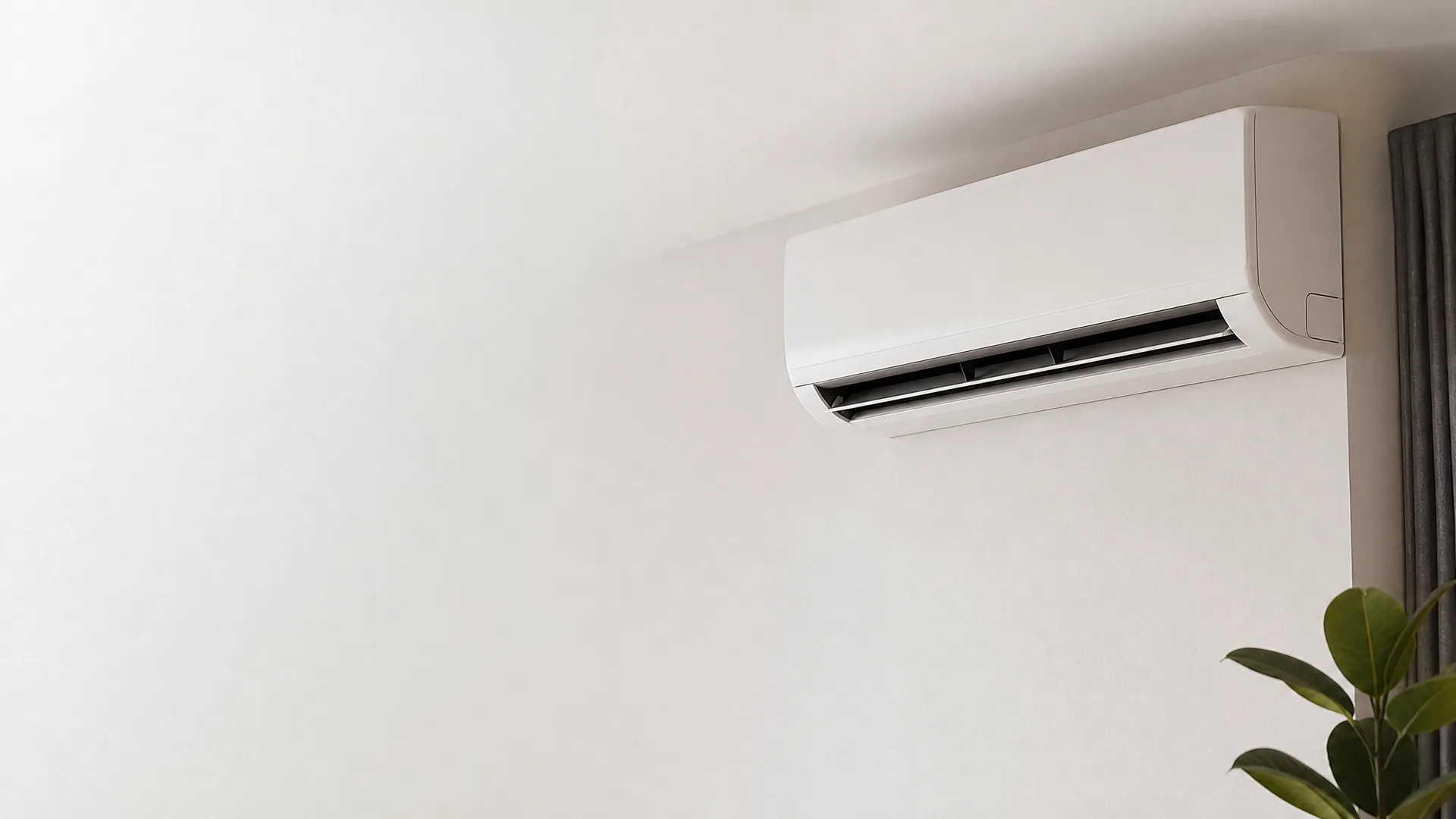
A maintenance visit clears the drain line with a vacuum or flush, washes the coil fins where mold takes hold, and checks the blower wheel for buildup in the curves of its fins. A contractor who services mini splits around Jasper County every summer knows which models clog their drains fastest and which filters trap dust before it ever reaches the coil. Catching it once a year keeps the smell from coming back.
Clean It Yourself or Call a Pro
Clean it yourself
- You can pull the washable filter, rinse it, and let it dry completely before it goes back in, which takes care of surface dust.
- A soft brush can reach the front of the blower wheel fins, though the curved back side stays out of reach without taking the housing apart.
- You can pour a cup of water into the drain pan from the indoor unit to check whether it drains freely or backs up.
- A shop vac at the outdoor drain line opening can sometimes clear a simple clog if the blockage sits close to the end.
- This works if the smell is new and mild, and it buys you a few weeks before deciding whether it's enough.
Call a local pro
- A tech who works on mini splits all summer in Jasper County has opened enough of these indoor units to know where the mold actually collects.
- Taking the blower housing apart to clean the fins properly isn't something most homeowners can do without the right tools or without risking a cracked part.
- A pro can run a line a camera or pressurized air through the drain line to clear a clog further back than a shop vac reaches.
- If water has already gotten into the wall, a local contractor can tell you whether that's a drywall issue or just surface staining on the unit.
- One call gets you a licensed contractor who already knows this equipment, instead of you tracking down and vetting someone yourself.
- This is the route if the smell keeps coming back after cleaning, or if you see water damage near the unit.

Warm room air passes over the cold indoor coil.
Moisture in that air condenses on the coil's surface.
Water drips down into the drain pan below it.
The pan feeds a drain line sloped toward the outside.
How much does Jasper County weather feed that musty smell
Cooling runs May through September
Cooling runs May through September. That's five months of your mini split pulling moisture out of the air onto the coil, five months for mold to take hold if the drain or filter falls behind.
Heat runs October through April
Heat runs October through April. The unit sits idle most of that stretch, and a coil that was never cleaned going into fall just holds that smell until you switch it back to cooling.
Power here costs 14.50 cents per kilowatt-hour
Power here costs 14.50 cents per kilowatt-hour. A mini split working harder because a dirty coil blocks airflow pulls more power at that rate, on top of the smell.
NOAA nClimDiv 1991-2020 · EIA-861 2025
Cooling runs May through September
Five months is a long stretch for a coil to stay wet. Your mini split isn't running a few times a week and drying out between uses, it's cycling day after day from May to September, and every run adds a little more moisture for mold to work with if the drain or filter has fallen behind.
NOAA nClimDiv 1991-2020


Where the smell comes from
- A musty smell means moisture is sitting on the coil or in the blower housing instead of draining away.
- A clogged drain line, a caked filter, or a dusty blower wheel are the usual reasons that moisture doesn't clear.
- Five months of steady cooling in Jasper County gives mold plenty of time to take hold if any of those get behind.
- A filter you clean yourself helps, but the curved back of the blower wheel and the drain line both need tools and a trained eye to reach.
- A local contractor who services mini splits all summer knows which of these three spots is failing before taking the cover off.
- Working with one licensed contractor means one visit, one diagnosis, and no juggling calls from several companies.
The musty smell has one of three sources: a drain line that's not clearing condensate, a filter caked with enough dust to hold moisture against the coil, or a blower wheel with buildup in the curves a filter never touches. Jasper County summers run long enough, May through September, that any one of these left alone gives mold months to settle in, not days. You can rinse a filter yourself and that helps. The drain line and the back of the blower wheel are a different matter. Reaching them means pulling the housing apart, and knowing which one is actually the problem before you do that saves you from taking a unit apart over a dusty filter when the real issue is a sagging drain line out back.
That's where a contractor who works on mini splits all summer earns the visit. Someone who sees this same complaint across Jasper County through every humid stretch knows the usual order to check: drain first, then the coil, then the blower wheel, because that's the order these three usually fail in. You won't need a second opinion or a round of quotes to get there. One licensed, local contractor takes the call, looks at your unit, and tells you straight which of the three it is. No explaining the smell to three different companies, no comparing estimates that describe three different jobs. Just one visit, one answer, and a clear sense of what it'll take to get the air coming off your mini split back to smelling like nothing at all.

Skip the search
The pro who gets in touch is licensed in Missouri and works in Jasper County.