Tell us about the job
Takes about a minute. No obligation.
A mini-split compressor cycles hard every time the system pulls heat out of the house, and those starts and stops add up across a full cooling season. Homes in Bollinger County, MO run cooling about four months a year, from June through September. The compressor, the condenser fan motor, and the contactor all accumulate wear through that period, and any weakness in those parts shows up as reduced capacity or failure to start when temps climb in June. A contractor diagnosing a repair here works through those components before looking elsewhere, because that is where the load lands.
What runs behind the walls of a house here shapes what a repair actually costs. Half the homes in Bollinger County, Missouri were built in 1982 or earlier (2020-2024 ACS 5-year). That generation of residential wiring was sized for loads that predate the equipment now drawing on it, and a mini-split pulling on an undersized circuit can produce symptoms that point at the unit when the unit is fine. A contractor who opens the system and finds clean internals still has the branch circuit to account for before the diagnosis is closed.
The Parts of a Mini-split a Contractor Checks During Repair
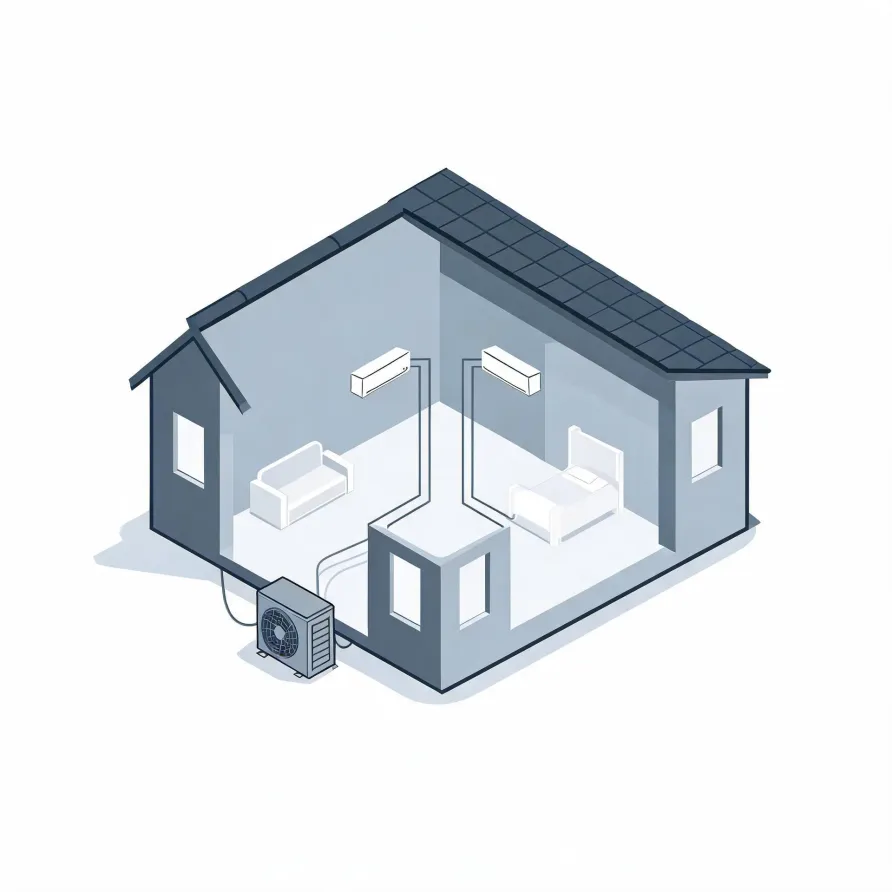
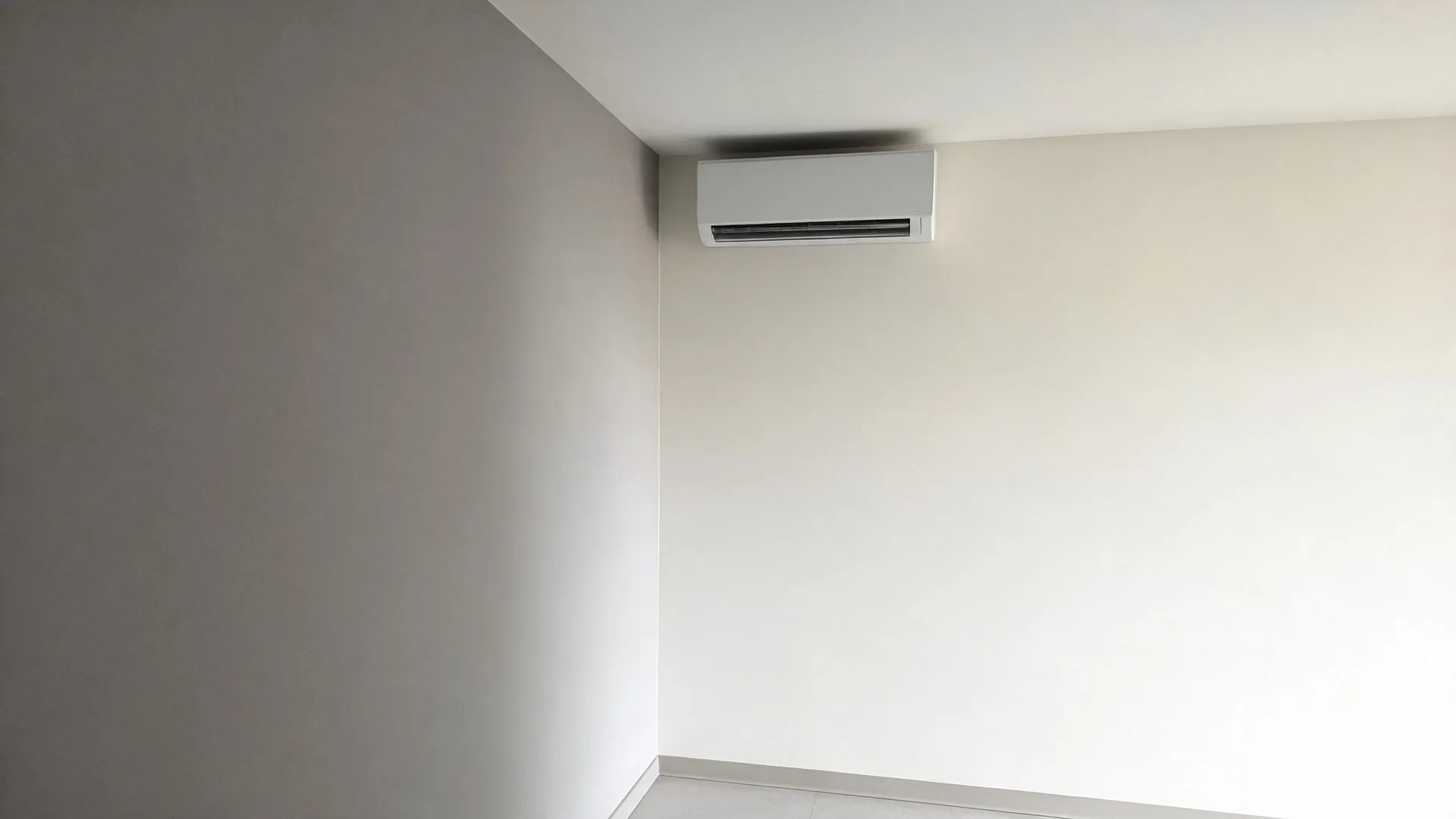
The indoor air handler mounts high on a wall inside the room and pushes conditioned air directly into the space. When it fails, the signs show up there first: weak airflow, frost on the unit, strange sounds, or air that never reaches the right temperature. The outdoor condenser sits outside the house and runs the refrigeration side of the system.
A refrigerant line set runs between the two units through a small opening in the wall, carrying the refrigerant that makes the whole system work. A contractor also checks the condensate drain line, which carries moisture out of the indoor unit, and the electrical connections at both ends, since a fault at either point can shut the system down.
The drawing shows the general layout of a mini-split system, and a licensed contractor determines which components need attention in your specific home.
Get matched in Bollinger CountyBollinger County, by the numbers
104 severe weather events were recorded in Bollinger County, Missouri between 2015 and 2024.
NOAA National Centers for Environmental Information, Storm Events Database, bulk CSV export, events 2015-01-01 through 2024-12-31.Half the homes in Bollinger County, Missouri were built in 1982 or earlier (2020-2024 ACS 5-year).
U.S. Census Bureau, 2020-2024 American Community Survey 5-Year EstimatesBollinger County, Missouri holds 5,046 housing units (2020-2024 ACS 5-year).
U.S. Census Bureau, 2020-2024 American Community Survey 5-Year EstimatesOwners occupy 82.3% of the occupied homes in Bollinger County, Missouri (2020-2024 ACS 5-year).
U.S. Census Bureau, 2020-2024 American Community Survey 5-Year EstimatesSevere Weather Events in Bollinger County, Year by Year
Bollinger County weather puts real stress on heating and cooling equipment, and that stress shows up in how often systems need repair. A mini-split working hard against local conditions is a mini-split that a contractor will see more than once.
104 severe weather events, 2015–2024. Source: NOAA National Centers for Environmental Information, Storm Events Database.