Tell us about the job
Takes about a minute. No obligation.
A contractor quoting a mini-split repair in Taney County starts by asking what the compressor has already been through. Homes in Taney County, MO run cooling about four months a year, from June through September. That load falls on a small set of parts: the compressor, the contactor, and the condenser fan cycle together every time the unit runs. By the time one of them fails, the others have the same hours on them. A contractor who replaces the failed part and walks away leaves the homeowner calling again before the season ends.
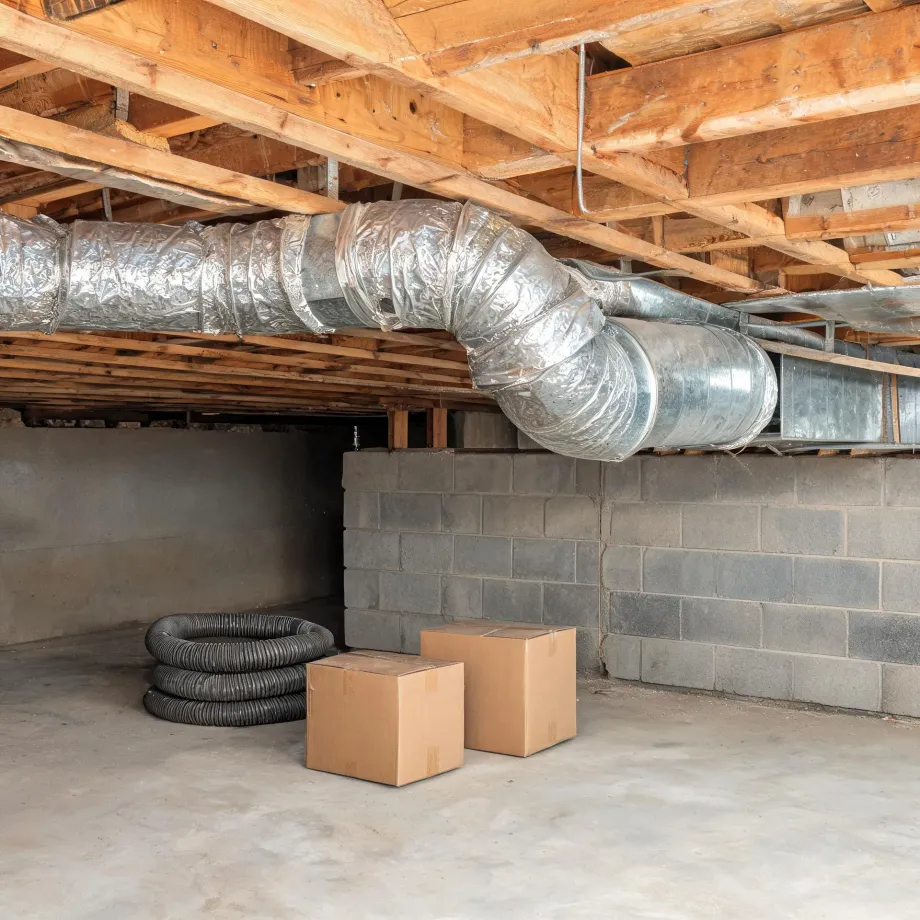
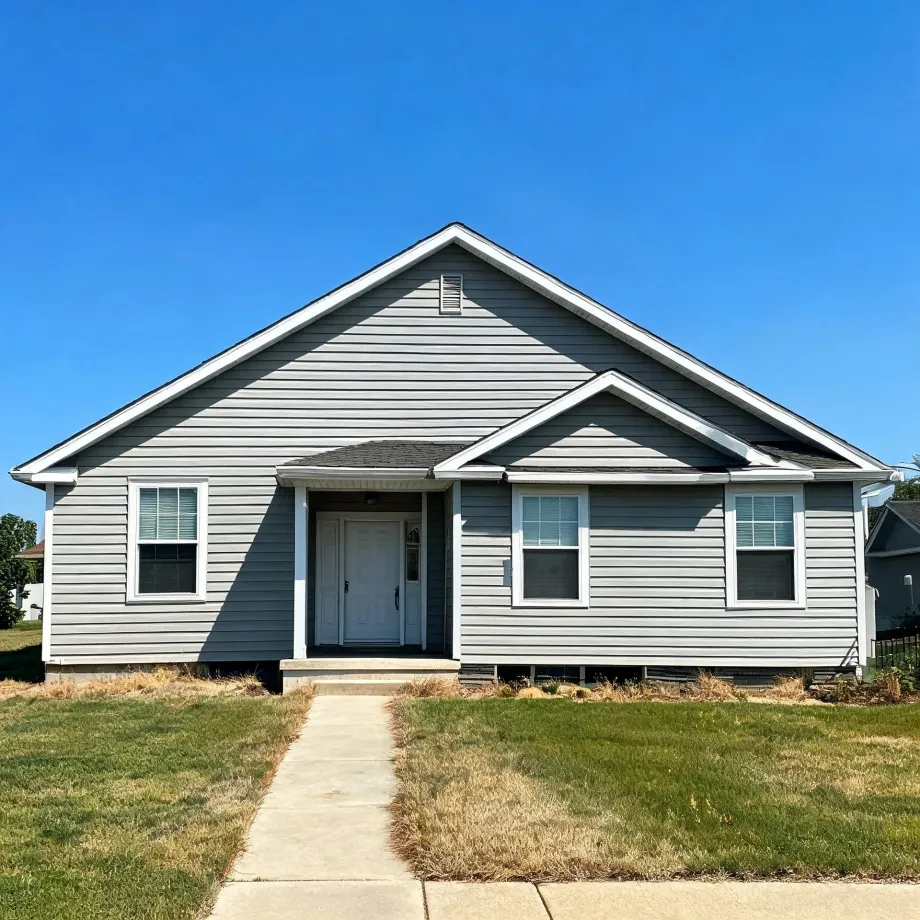
Stock built to the standard of an earlier era carries equipment that has since been through one or more replacement cycles, and the refrigerant lines, drainage paths, and internal components a contractor opens may belong to a system that has outlived its own parts supply. Half the homes in Taney County, Missouri were built in 1995 or earlier (2020-2024 ACS 5-year). That gap between the house and the equipment inside it shapes how a repair quote gets written. When a part is no longer catalogued, a contractor has to locate old-stock components, source a compatible substitute, or tell the homeowner the repair cost has changed.
The Parts of a Mini-Split a Contractor Checks During Repair
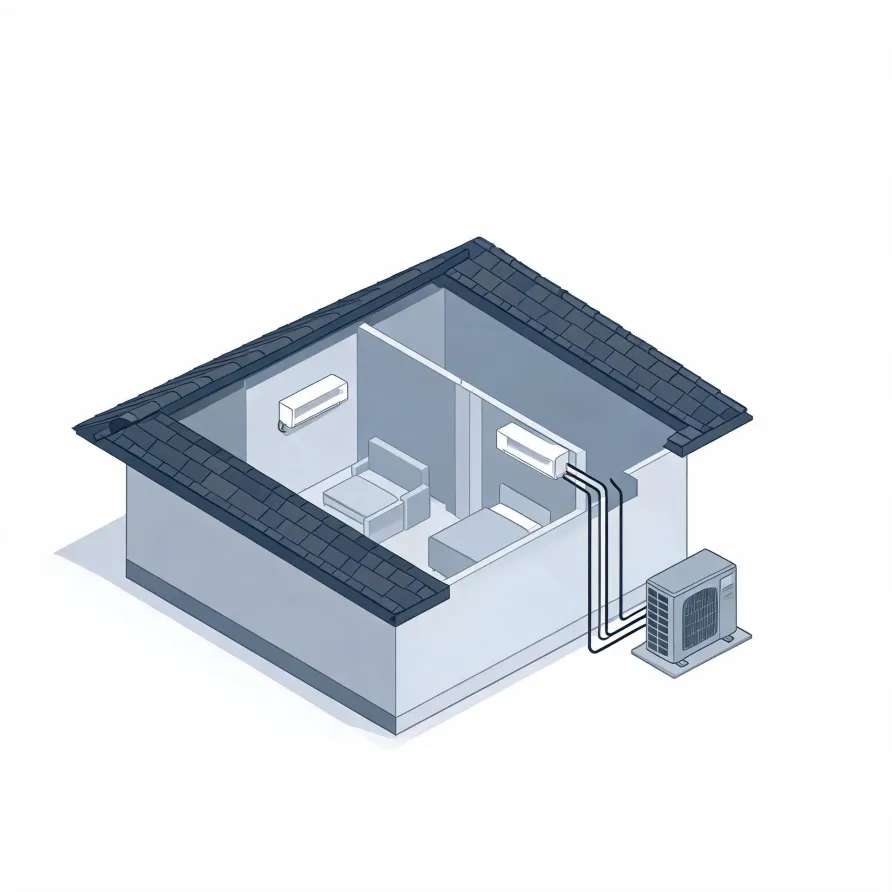
The indoor air handler mounts high on a wall inside the room and is where most problems announce themselves: weak airflow, ice, odd sounds, or water dripping down the wall. The outdoor condenser unit sits on a pad or bracket outside and houses the compressor, which is the part contractors reach for first when the system stops cooling or heating altogether.
A refrigerant line set runs between the two units through a small hole in the wall, carrying the refrigerant that makes the whole exchange possible. A condensate drain line runs from the air handler to the outside, and a clogged drain is one of the more common reasons water appears where it should not.
The drawing shows a typical layout, and a licensed contractor determines which components are involved in your specific situation.
Get matched in Taney CountyTaney County, by the numbers
253 severe weather events were recorded in Taney County, Missouri between 2015 and 2024.
NOAA National Centers for Environmental Information, Storm Events Database, bulk CSV export, events 2015-01-01 through 2024-12-31.Half the homes in Taney County, Missouri were built in 1995 or earlier (2020-2024 ACS 5-year).
U.S. Census Bureau, 2020-2024 American Community Survey 5-Year EstimatesTaney County, Missouri holds 30,175 housing units (2020-2024 ACS 5-year).
U.S. Census Bureau, 2020-2024 American Community Survey 5-Year EstimatesOwners occupy 67.0% of the occupied homes in Taney County, Missouri (2020-2024 ACS 5-year).
U.S. Census Bureau, 2020-2024 American Community Survey 5-Year EstimatesSevere Weather Events in Taney County, Year by Year
Extreme weather puts real load on mini-split systems, and the stress shows up later as repair calls. How hard the climate pushes the equipment here is a local fact, and it shapes what keeping a system running in Taney County actually involves.
253 severe weather events, 2015–2024. Source: NOAA National Centers for Environmental Information, Storm Events Database.