

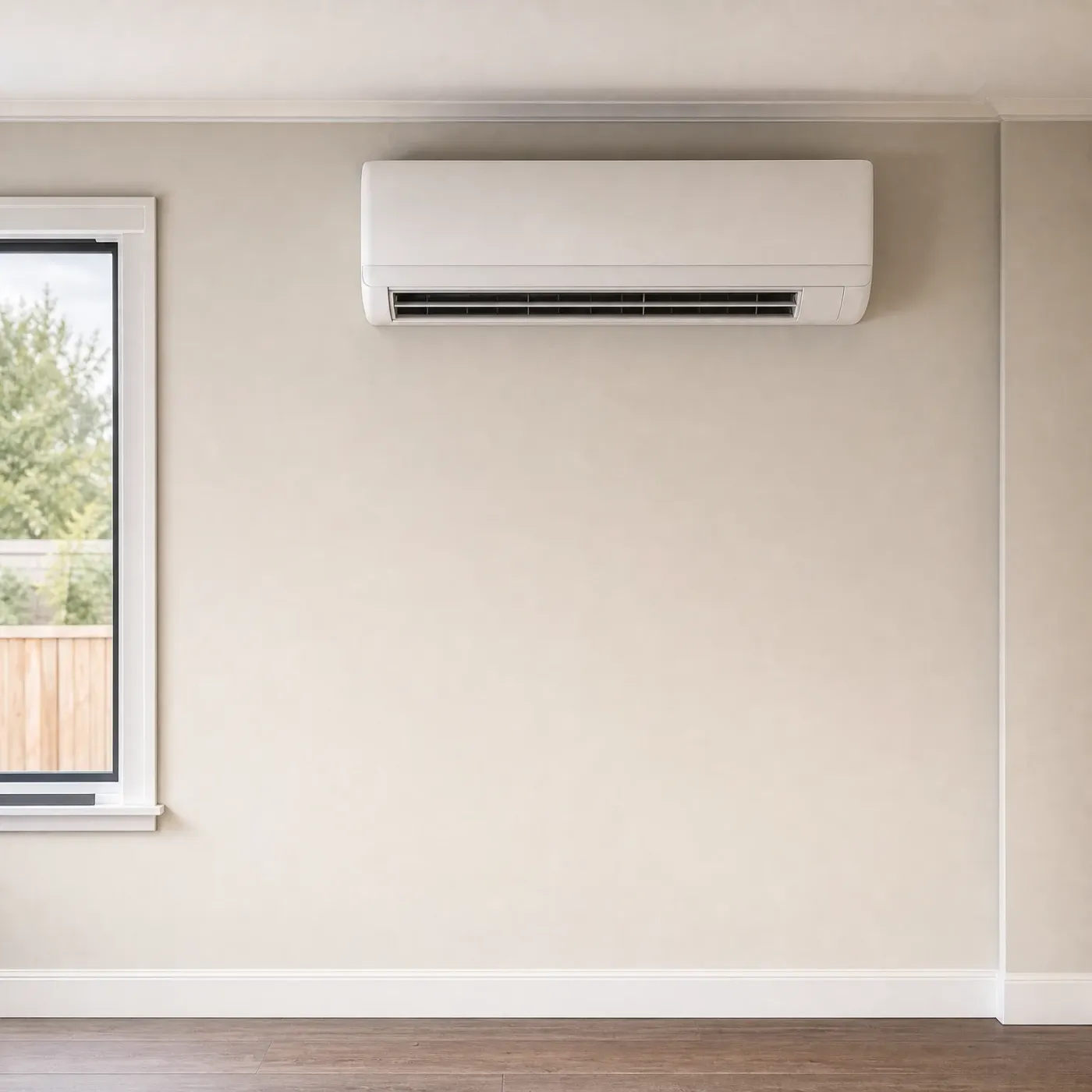
Running the way it should
Air comes out warm at the vent, the room comes up to temperature, and the unit cycles off once it gets there. It keeps up even when it's in the 30s outside, and you're not running a backup furnace just to stay comfortable.
A Clay County pro who repairs mini splits gets your request.
Connect with a proA mini split that won't heat in cold weather is usually doing exactly what it was built to do. Below a certain outdoor temperature, most heat pump mini splits lose capacity, and on the coldest nights around Liberty, that drop can be enough that the unit runs but the air coming out feels cool or just lukewarm. Ice on the outdoor unit points to the same thing, and the system should clear it on its own through a defrost cycle. If the indoor head is running but blowing room-temperature air no matter how low it's gotten outside, or if it isn't running at all, that's different and points to a problem with the unit itself: a refrigerant leak, a failing compressor, or a control board that isn't calling for heat properly. A mini split that's been fine all winter and suddenly stops heating during a cold snap needs someone to look at it before the next one hits.
Air comes out warm at the vent, the room comes up to temperature, and the unit cycles off once it gets there. It keeps up even when it's in the 30s outside, and you're not running a backup furnace just to stay comfortable.
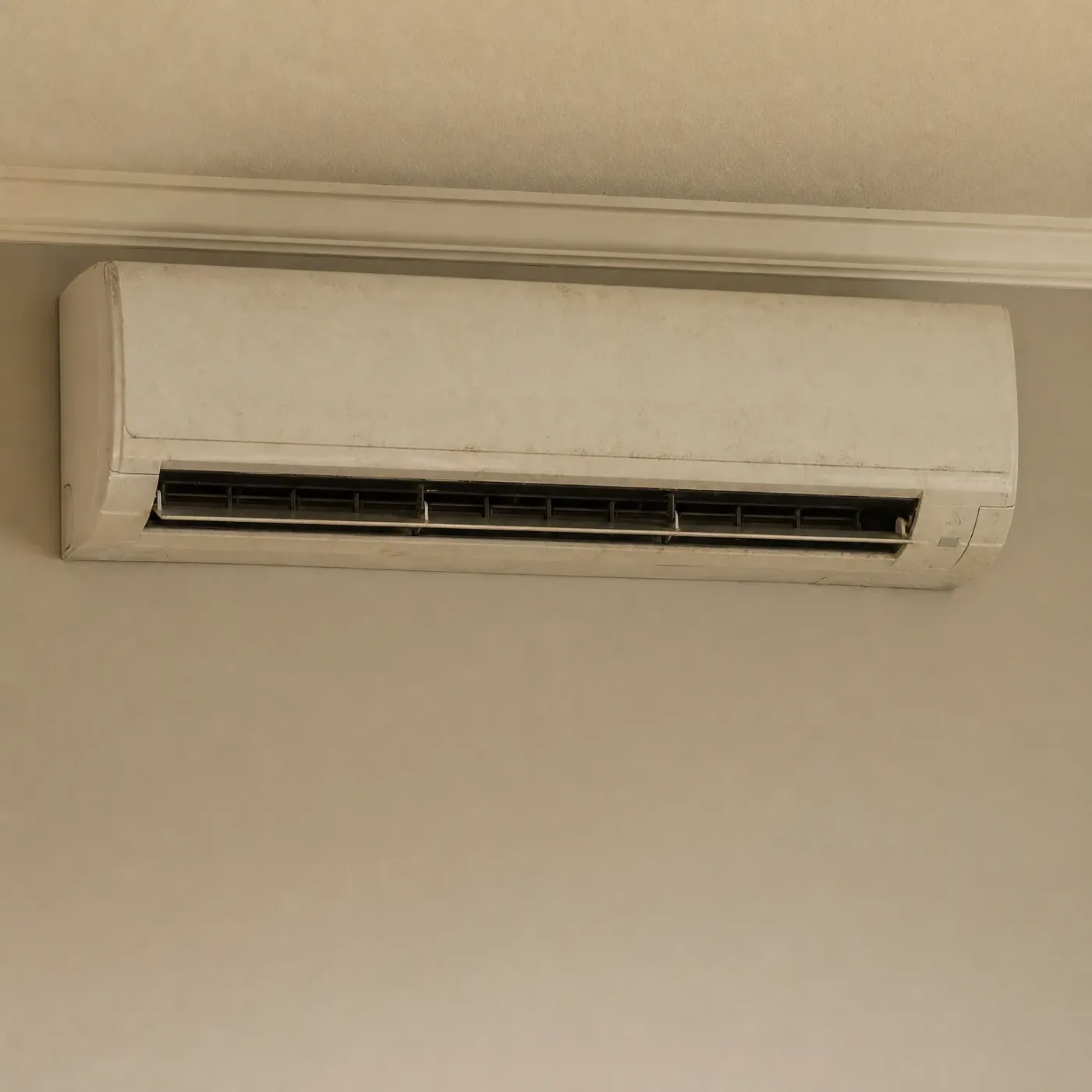
The fan runs but the air feels barely warm, or the unit runs constantly without the room catching up. A coil that's iced over, a dirty filter, or a unit that's just old can all cut into what it can put out on a cold night.
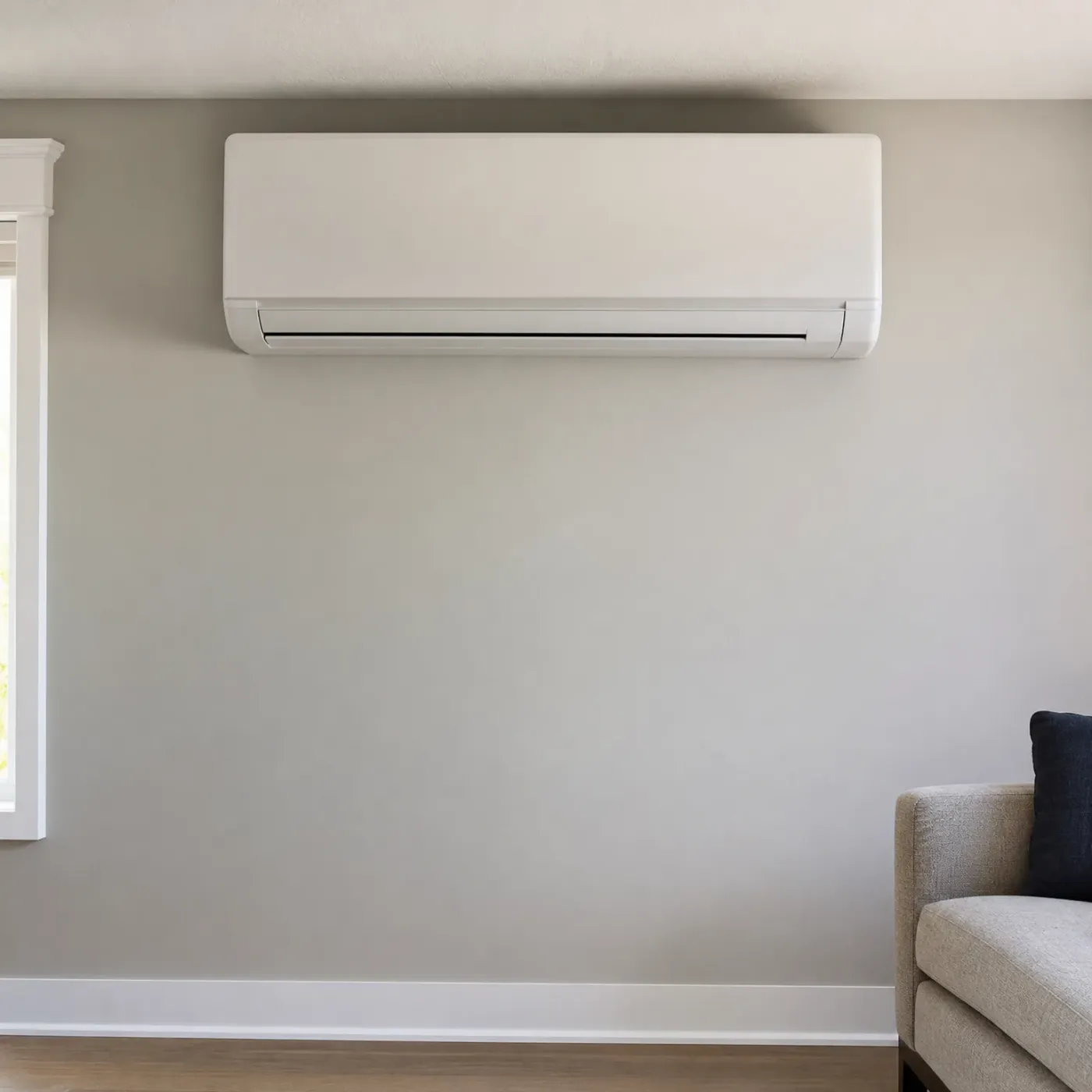
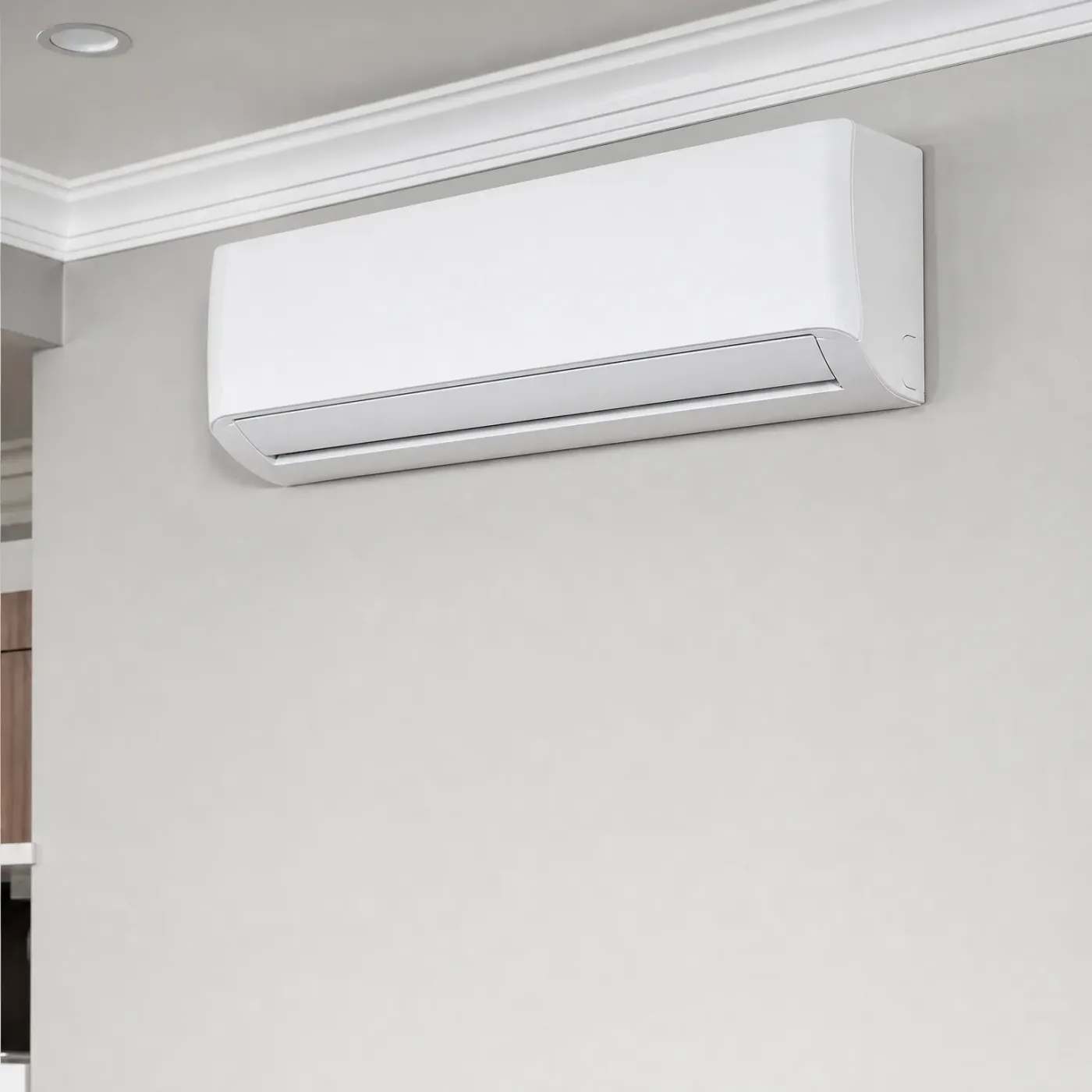
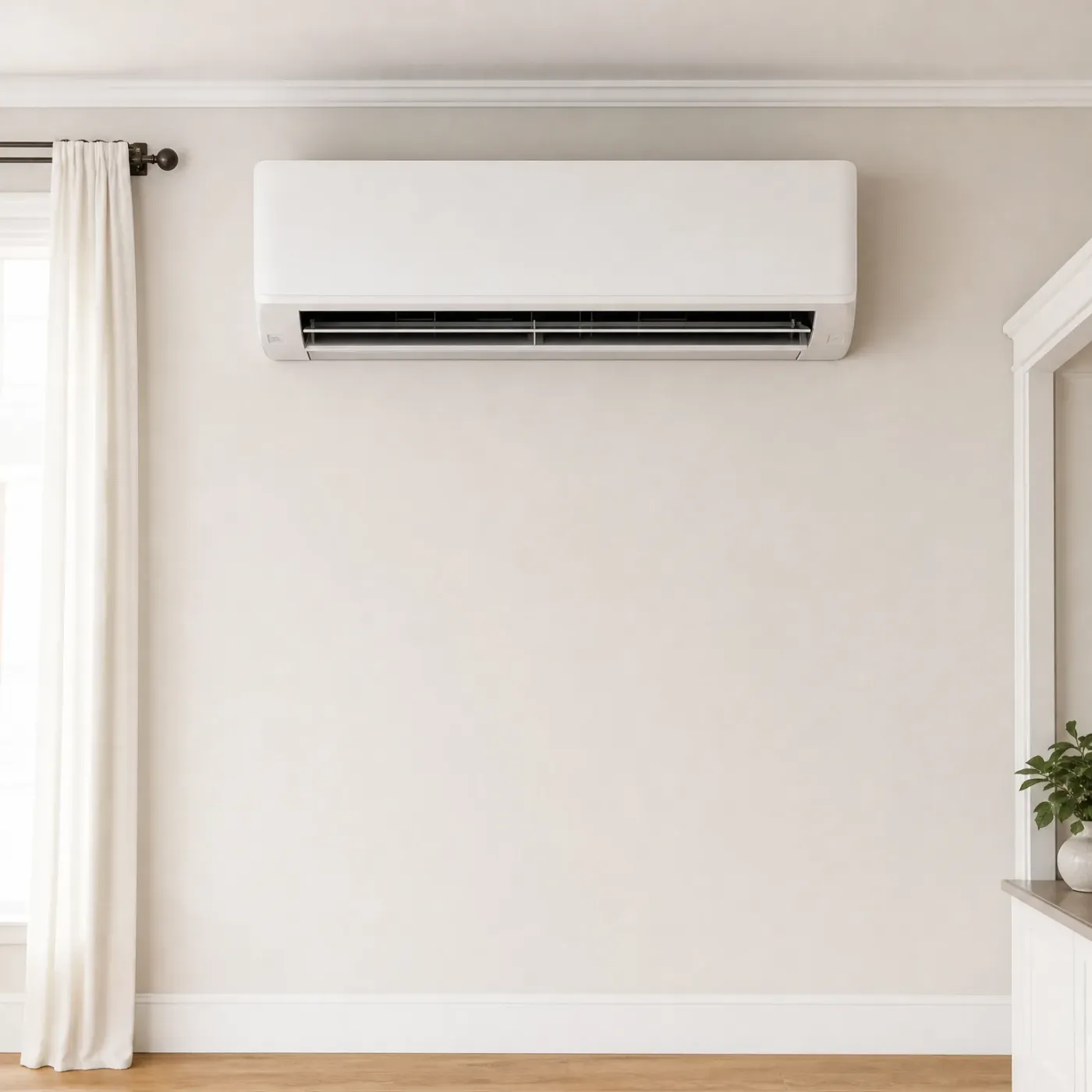
The wall unit sits clean against the room, vents clear, nothing built up along the casing. Air moves through it the way it was designed to. A unit this clean is pulling in room air without resistance, which is part of how it keeps up on a cold night.
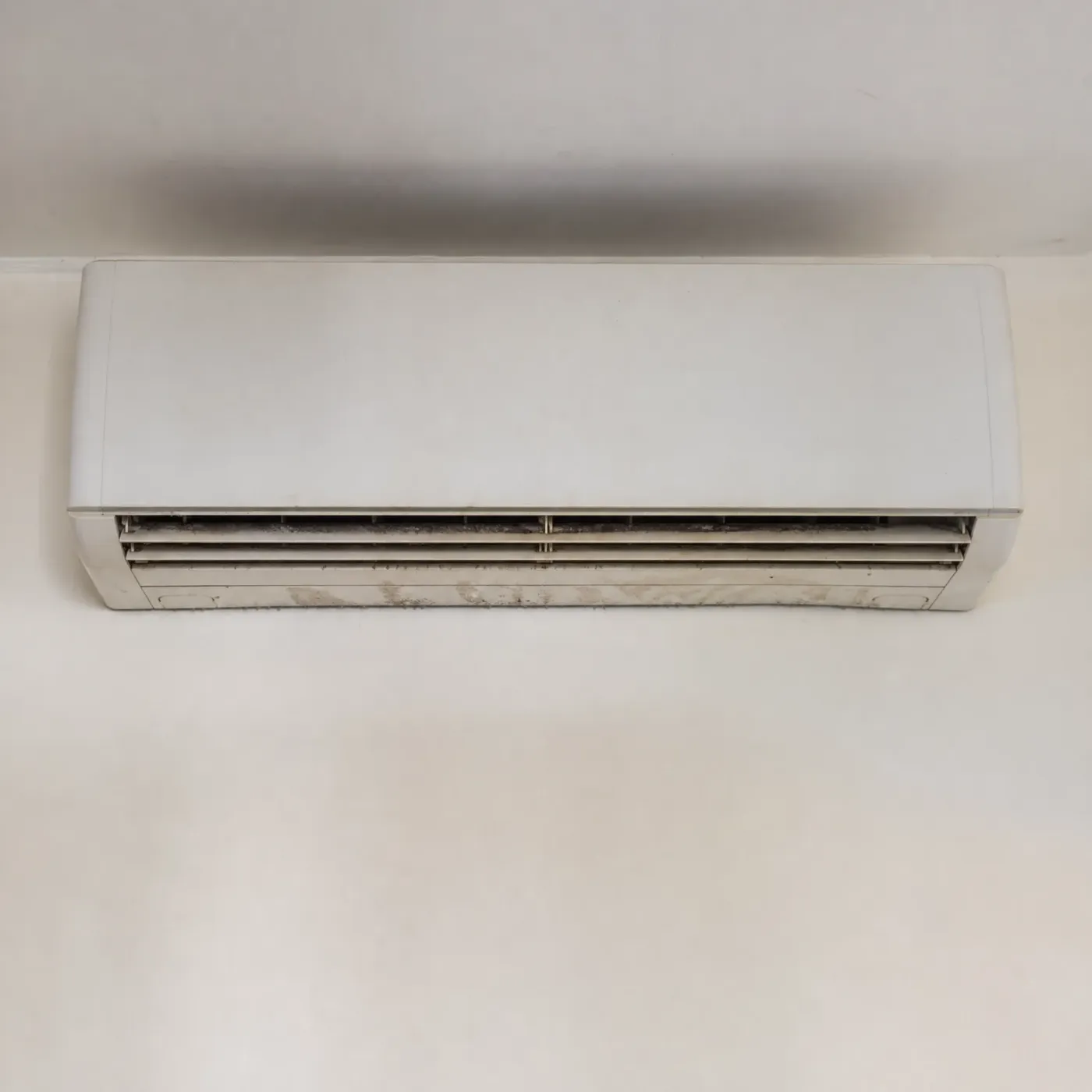
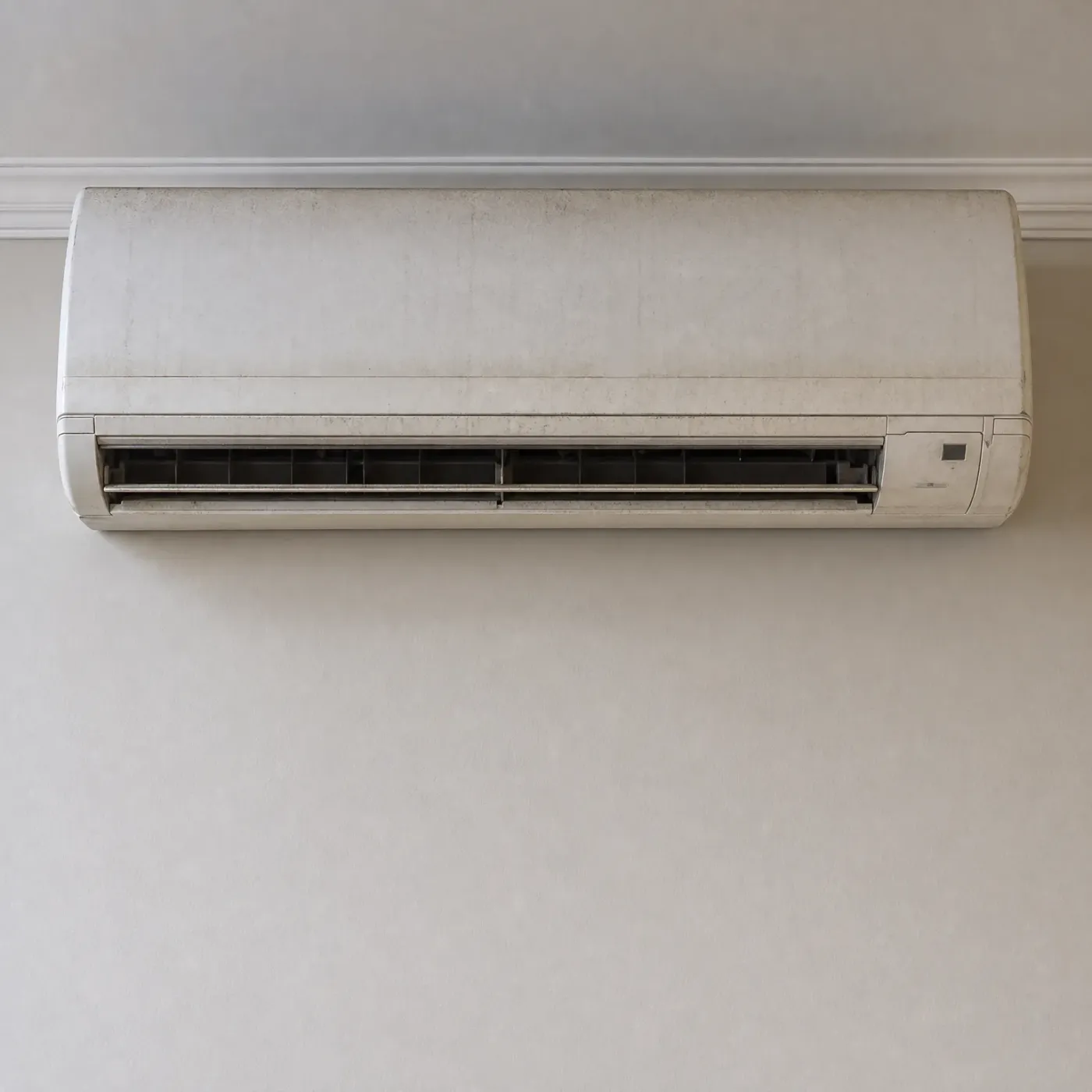
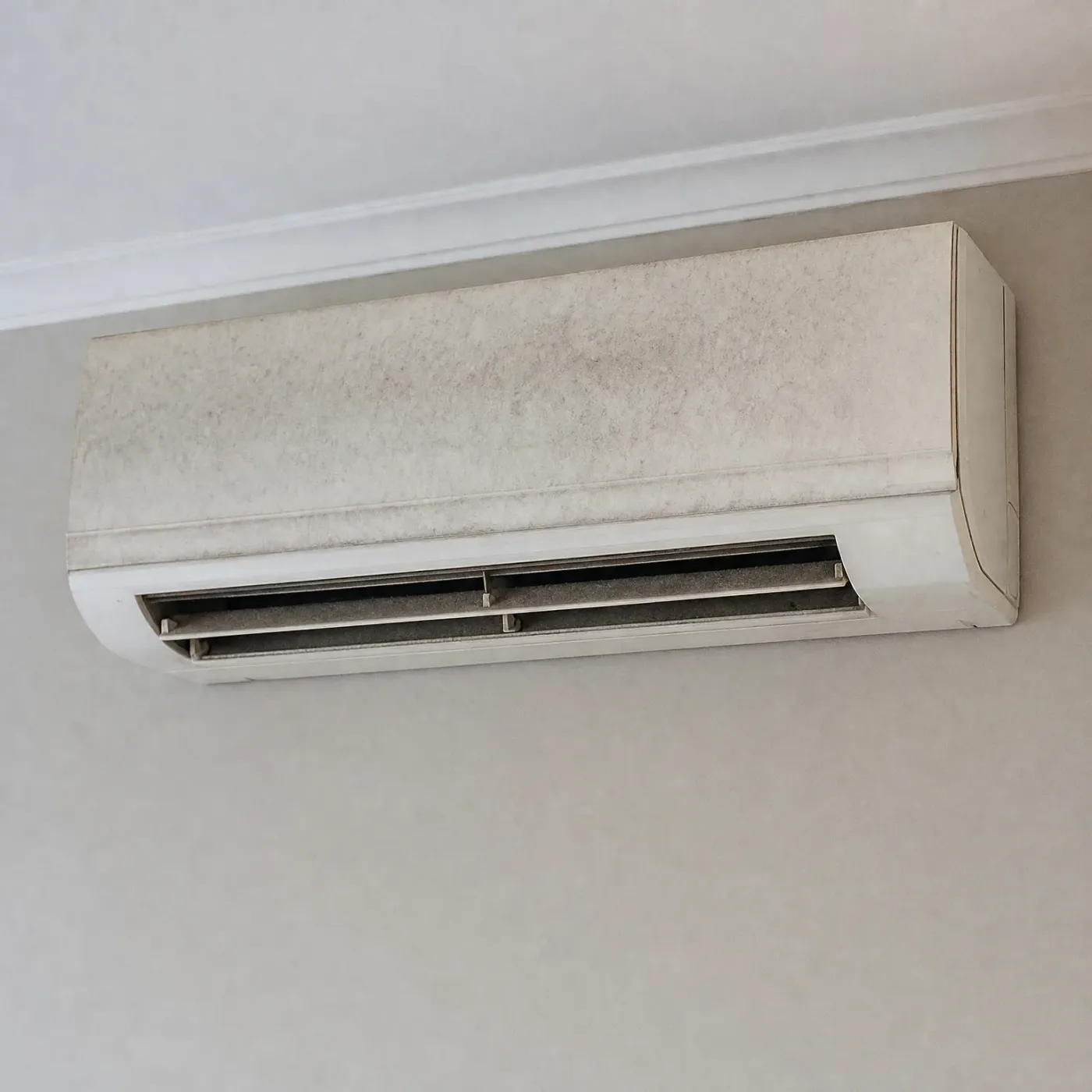
Dirt and mold along the vents and lower casing mean the coil behind them is likely in the same shape. A mini split working that hard to push air through a dirty coil loses capacity it can't spare on a cold night in Liberty, on top of whatever the cold is already costing it.
Cooling runs May through September
Cooling runs May through September. That's five months of your mini split holding the line against Clay County humidity before it ever gets a break.
Heat runs October through April
Heat runs October through April. Seven months is most of the year, so the heating side of the unit works harder and longer than the cooling side ever does.
Power here costs 13.35 cents per kilowatt-hour
Power here costs 13.35 cents per kilowatt-hour. That's cheap enough that a mini split losing capacity in the cold is a repair issue, not a bill issue.
NOAA nClimDiv 1991-2020 · EIA-861 2025
The thermostat calls for heat and signals the indoor head.
The compressor in the outdoor unit starts pulling in refrigerant gas.
The outdoor coil pulls heat from the outside air into the refrigerant.
Hot refrigerant gas travels through the line set to the indoor coil.


Your request stays with one local pro.
Sending the form costs nothing.
A mini split makes heat by moving refrigerant through a cycle, and the compressor is what drives that cycle. Cold outdoor air holds less heat to pull from, so the compressor has to run longer and work harder to move the same amount into your house. On a mild day it might cycle on and off. On a cold night it can run almost constantly. That's normal. What's not normal is a compressor that runs and runs without the room ever catching up, or one that short cycles and shuts off before it gets going.
The outdoor unit pulls in cold air across its coil to extract heat from it, and that means it needs airflow on all sides to work right. Snow piled against it, ice built up on the coil, or leaves packed into the fins all cut down how much air gets through. Less airflow means less heat pulled in, no matter how hard the compressor works. A unit buried after a snowfall or set too close to a fence or wall is fighting a problem that has nothing to do with its age or condition.
When the mini split can't keep up, a space heater fills the gap. Left running overnight or in another room, that's a steady draw on a circuit that wasn't built for it.
Most homes around Liberty heat with gas, and if yours has a furnace alongside the mini split, a unit that won't heat means that furnace is doing the job alone.

A mini split that stops heating on a cold night in Liberty is either running into its normal limit or losing a fight it should be winning. The steps above are how you tell which one you've got. If the outdoor temperature is in the 20s and the head is blowing cool, cleaning up, or stuck in defrost longer than it should, that's the machine doing its job. If it's milder out and the room still won't come up, something in the system needs a hand.
Either way, you don't have to figure out the rest on your own. A technician who works on mini splits around Clay County every winter has seen this exact unit lose heat in this exact weather before, and knows what to check first. Get matched with one who takes on jobs like yours, and they'll reach out to sort out what your unit needs.





A local pro for your mini split repair
Your request goes to one pro, not a list of companies.