Seven months of heat, October through April
That's how long your mini split's heat pump side runs in Christian County. A blinking light during that stretch often points to a frozen coil or a failing defrost sensor.
A blinking light on your mini split is the unit telling you what's wrong, not just that something is. Most indoor units flash a code through a sequence of blinks, and the pattern points to a specific problem: a frozen coil, a clogged filter, a drain line backing up, or a refrigerant level that's dropped. In winter here, a mini split running a heat cycle can ice over the outdoor coil if it isn't defrosting right, and that often shows up as a blinking light too. Some brands blink once for one code and twice for another, and the exact meaning depends on the brand and model you have, so the same blink pattern on two different units can mean two different things. The light itself isn't the problem. It's the unit's way of flagging one, and it usually means the system needs a technician to read the code and check the part behind it rather than something you can clear by resetting it.
Cooling runs June through September
Your mini split cools from June through September. That's the stretch when a refrigerant leak or a dirty coil shows up as a blinking light.
Heat runs October through April
Heat runs October through April here, about seven months. A mini split that won't cycle right in that stretch leaves the house cold fast.
Power here costs 12.78 cents per kilowatt-hour
Electricity here runs 12.78 cents per kilowatt-hour. A unit blinking a fault code and short cycling still draws power without heating or cooling the room.
NOAA nClimDiv 1991-2020 · EIA-861 2025
A slow blink usually means the filter's clogged or the coil's iced over. Clear the filter, shut the unit off so the coil can thaw, and the light often resets on its own.
A fast blink or a repeating count means something electrical or refrigerant related, like a bad sensor or a low charge. That one won't clear by waiting, and running the unit on it can damage the compressor.




That's how long your mini split's heat pump side runs in Christian County. A blinking light during that stretch often points to a frozen coil or a failing defrost sensor.
A blinking light that keeps getting reset without checking the cause lets the real problem keep running underneath it. A local tech can read the pattern and find it before that happens.
Four months of summer is enough for a clogged filter or low refrigerant to turn into a blinking light. If your mini split starts flashing between June and September, it's working hard right when you need it most, so don't wait out the code hoping it clears itself.
NOAA nClimDiv 1991-2020
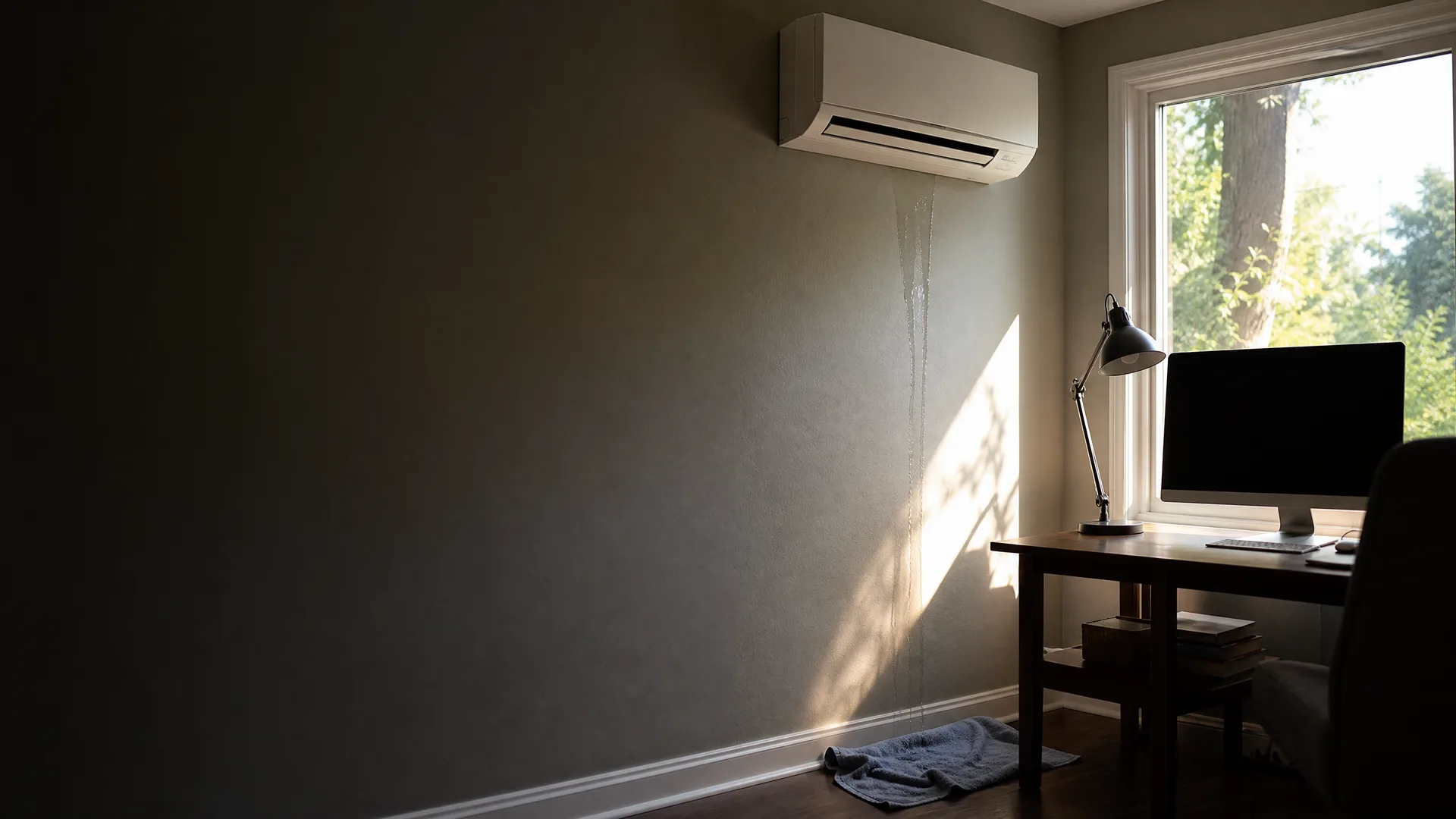
You've been at the desk since lunch, laptop open, the mini split humming over your shoulder to keep the afternoon heat out. You notice the air feels off before you see it, a little warm for what the unit's set to. Then the streak on the wall below the indoor unit catches your eye, a dark wet line running down toward the baseboard. You get up, press a hand to the drywall, and it's damp. There's a towel already on the floor from the last time this happened. The light on the unit is blinking, same slow pattern as before. You stand there a second, then go find your phone.
A blinking light doesn't fix itself by waiting, and with a mini split running cooling for four months and heat for seven here in Nixa, there isn't much of the year it sits idle. Whatever code it's throwing now is likely to throw again next week if left alone, and a frozen coil or a bad sensor rarely gets better on its own. What you need is someone who works on these units every season in Christian County and can look at the blink pattern and tell you right away whether it's a clogged filter or something in the refrigerant line. Sending the request connects you with one contractor, local, licensed to do the work, so you're not stuck fielding calls from five companies while your indoor unit keeps flashing. That part becomes someone else's job the moment you send it. Yours is just getting the air back to normal.
A blinking light on your mini split is never random. It's the unit counting out a code, and the pattern behind it tells you which part is failing. Slow, even blinks are the easy case. That's usually a dirty filter or a coil that's iced over, and clearing the filter or letting the coil thaw often shuts the light off for good. Fast blinks, or a blink that repeats in groups, mean something past the filter. A refrigerant leak, a failed sensor, a board that's lost communication with the compressor. Reading that pattern correctly takes someone who sees this equipment all year, not a guess based on how the unit sounds or feels.
In Nixa, that light has little time to rest. The unit cools from June through September, then switches over and carries heat from October through April. Seven months on the heat pump side alone. A code that shows up in July and gets ignored doesn't go away over the winter. It tends to come back, often worse, and running a unit through a code it's already flagged is how a clogged filter turns into a failed compressor.
The light did its job the moment it started blinking. What happens next is matching that pattern to the actual cause, and that's work for a contractor who works on these units every season and knows what the blink is telling you before they even open the panel.


Finding a pro stops being your job
The pro who reaches out is licensed in Missouri.