Tell us about the job
Takes about a minute. No obligation.
Sizing a mini-split for a Pike County home means accounting for a cooling season that is short and concentrated. Homes in Pike County, MO run cooling about three months a year, from June through August. The compressor cycles hard through those months with little idle time between them, and an install that cuts corners on load calculation or refrigerant charge shows up as poor performance before the season is even out. A contractor quoting this work has to establish the actual heat load of the house before settling on a unit capacity, because an undersized system will run nearly continuously at peak and wear its contactor and fan motor faster than the manufacturer's service intervals assume.
Ductwork in a house built for an earlier generation of equipment is only part of what a contractor has to work through. The electrical service is the other question, and in housing this old it is often the harder one. Half the homes in Pike County, Missouri were built in 1971 or earlier (2020-2024 ACS 5-year). A mini-split runs on a dedicated circuit, and service panels in stock of this vintage were sized for a lighter load than that. What the panel actually contains determines whether the installation proceeds as quoted or whether an upgrade goes on the bill first.
The Mini-split Parts Involved in an HVAC Installation
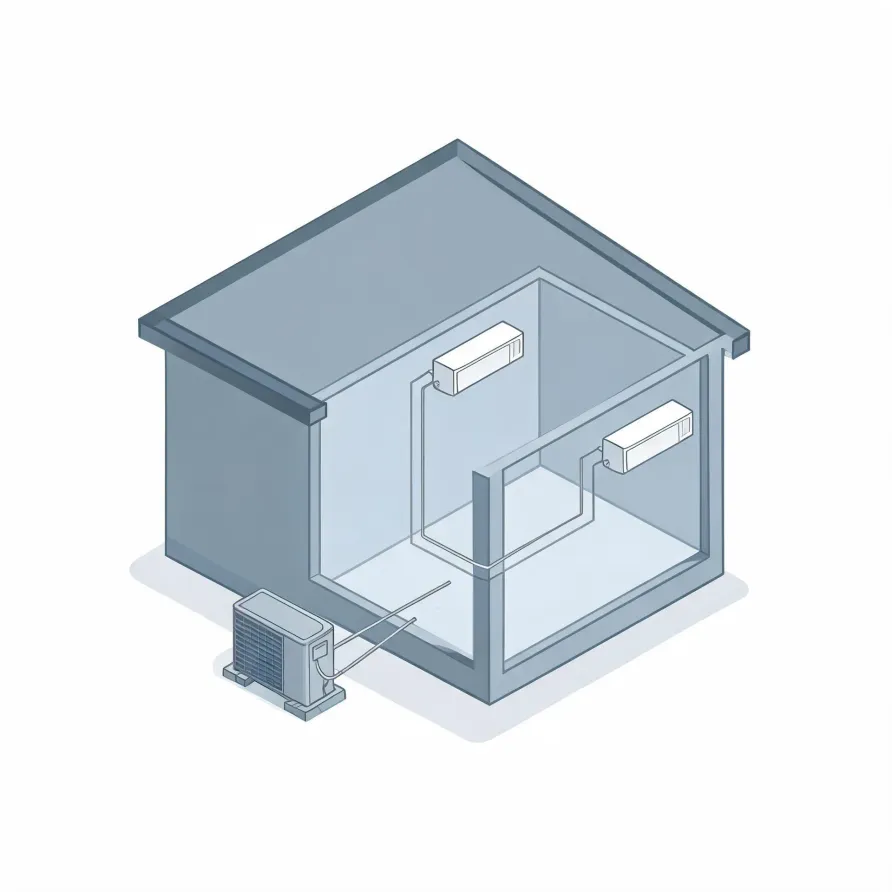
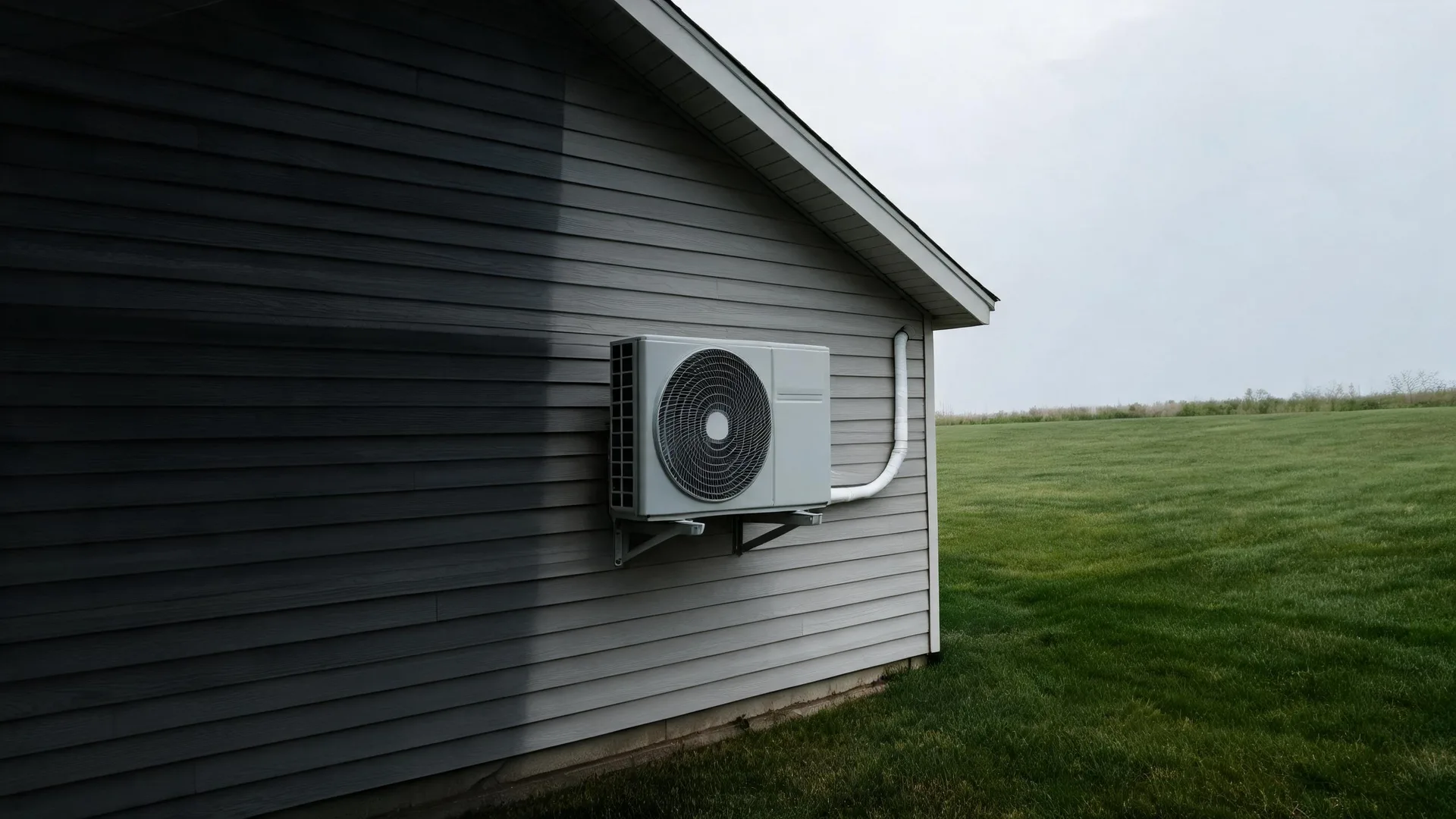
The indoor unit mounts high on a wall inside the room and delivers conditioned air directly into that space. The outdoor unit sits on the ground or a bracket outside the house and houses the compressor and the components that drive the whole system. These two units are the core of what a contractor places and connects during an installation.
A refrigerant line set runs through a small opening in the wall and links the indoor and outdoor units. A condensate drain line carries moisture away from the indoor unit to the outside. A dedicated electrical circuit feeds the outdoor unit, with control wiring running alongside the line set to carry signals between the two units.
The drawing shows a typical layout, and a licensed contractor determines exactly how each piece fits the conditions in your specific home.
Get matched in Pike CountyPike County, Missouri, by the numbers
56 severe weather events were recorded in Pike County, Missouri between 2015 and 2024.
NOAA National Centers for Environmental Information, Storm Events Database, bulk CSV export, events 2015-01-01 through 2024-12-31.Half the homes in Pike County, Missouri were built in 1971 or earlier (2020-2024 ACS 5-year).
U.S. Census Bureau, 2020-2024 American Community Survey 5-Year EstimatesPike County, Missouri holds 7,620 housing units (2020-2024 ACS 5-year).
U.S. Census Bureau, 2020-2024 American Community Survey 5-Year EstimatesOwners occupy 73.3% of the occupied homes in Pike County, Missouri (2020-2024 ACS 5-year).
U.S. Census Bureau, 2020-2024 American Community Survey 5-Year EstimatesSevere Weather Events in Pike County by Year
The load a heating or cooling system carries is shaped by what the local climate throws at it. How hard Pike County's weather pushes on a building determines what kind of mini-split installation actually holds up there.
56 severe weather events, 2015–2024. Source: NOAA National Centers for Environmental Information, Storm Events Database.