Running clean
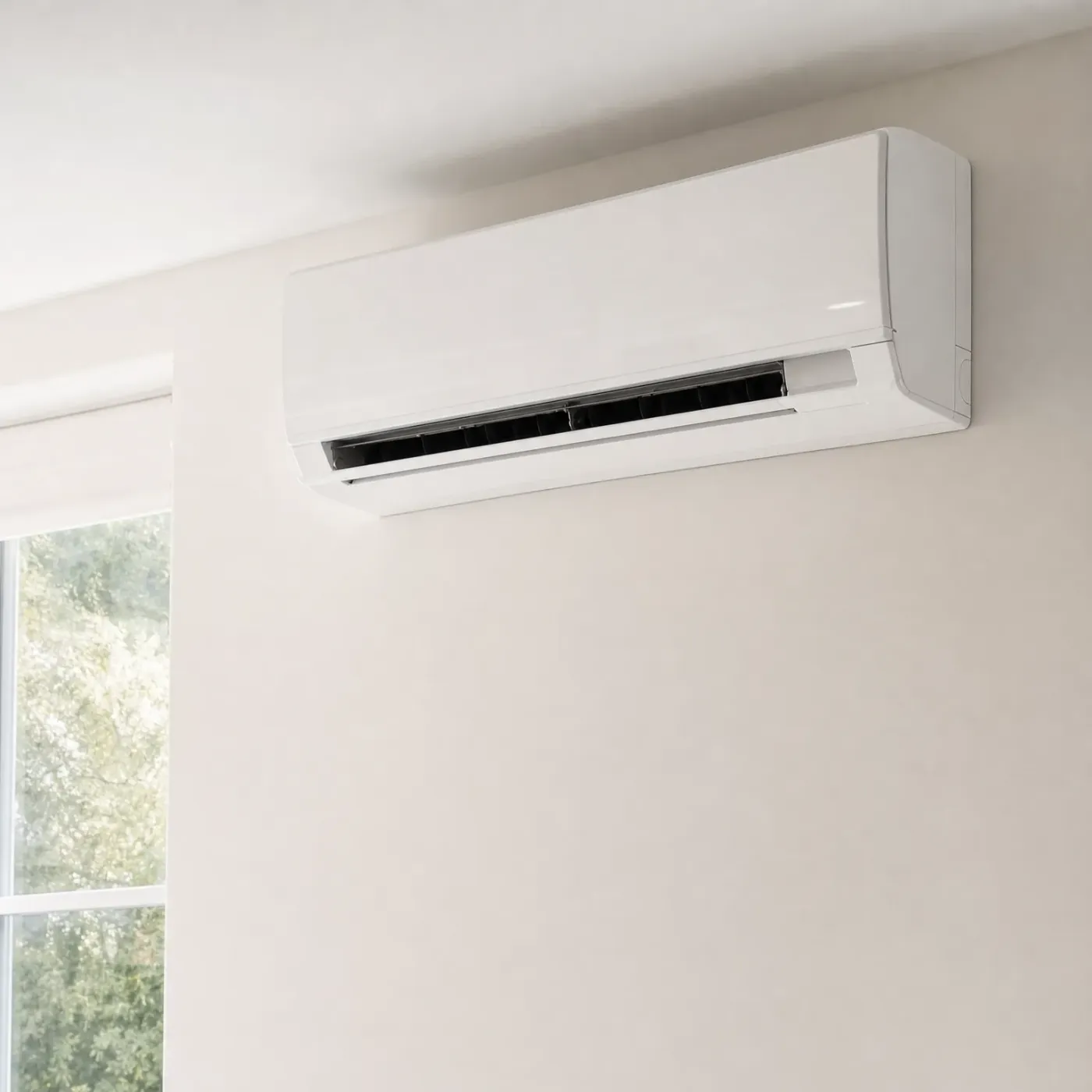
A mini split moving steady air off a clear coil is doing what it's built to do. The filter is catching what passes through it, and the unit is putting out the heat or cooling you set it for, not fighting its own buildup to get there.
You're probably weighing a mini split against running your gas furnace and a central AC, or maybe you're looking at one for a room that never gets comfortable, a bonus room over the garage or a finished basement. With Cass County summers running hot and sticky for months and winters that get genuinely cold, you want to know if this is a smart buy here or just something that works better in milder climates.
A mini split earns its keep in Raymore, but where it fits matters more than whether it works. It handles summer humidity well since it pulls moisture out of the air as it cools, and that matters through a long muggy stretch. In winter, most mini splits lose efficiency as the temperature drops, so on the coldest nights it will lean harder or struggle to keep up on its own. For a room that your main system doesn't reach well, or a space without ductwork, it's a strong fit. As a full replacement for a gas furnace in a cold Missouri winter, it asks more of the equipment than it's built to give on the hardest days.
A mini split is a heat pump. It pulls heat from the outside air, and below freezing there's less heat out there to pull. Most units keep working well into the teens and some are rated lower, but when Cass County hits single digits, a mini split alone will struggle to keep up. That's why most homes here keep it paired with the gas furnace rather than swapping the furnace out.
A mini split cools the one room a central system never reaches evenly, like a bonus room over the garage or a finished basement, because it has its own thermostat and its own airflow right there. It doesn't share ductwork with the rest of the house, so it doesn't lose capacity fighting the long duct run to a room at the far end. In a sticky Missouri summer that runs long, that room stops being the one everyone avoids.

If you've got a room that fights your furnace all winter, that's the one worth fixing first. A bonus room over the garage or a finished basement usually runs on the same ducts as the rest of the house, and by the time the air gets back there it's lost its push. A mini split in that room heats and cools it on its own, so you stop setting a space heater by the couch in January or running a window unit in July.
The other place it shows up is your gas bill versus your electric bill. Gas is still what heats most houses in Cass County, and with power priced the way it is here, a furnace is usually cheaper to run once it's below freezing outside. Where a mini split earns its keep is the months on either side of that, spring and fall, when it can carry the whole load without the furnace kicking on at all. A contractor who knows your house can tell you where that line actually falls for you.

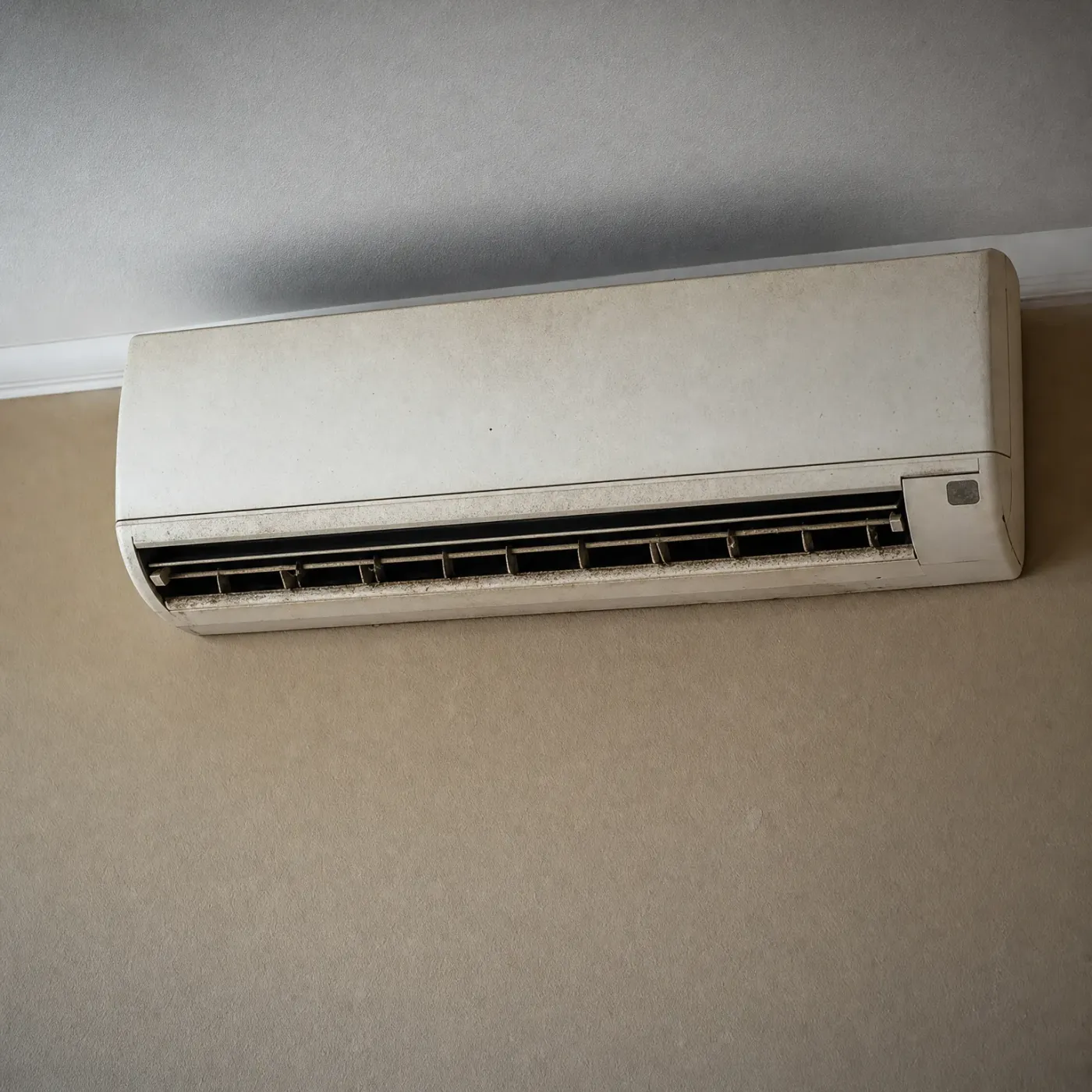
A mini split moving steady air off a clear coil is doing what it's built to do. The filter is catching what passes through it, and the unit is putting out the heat or cooling you set it for, not fighting its own buildup to get there.
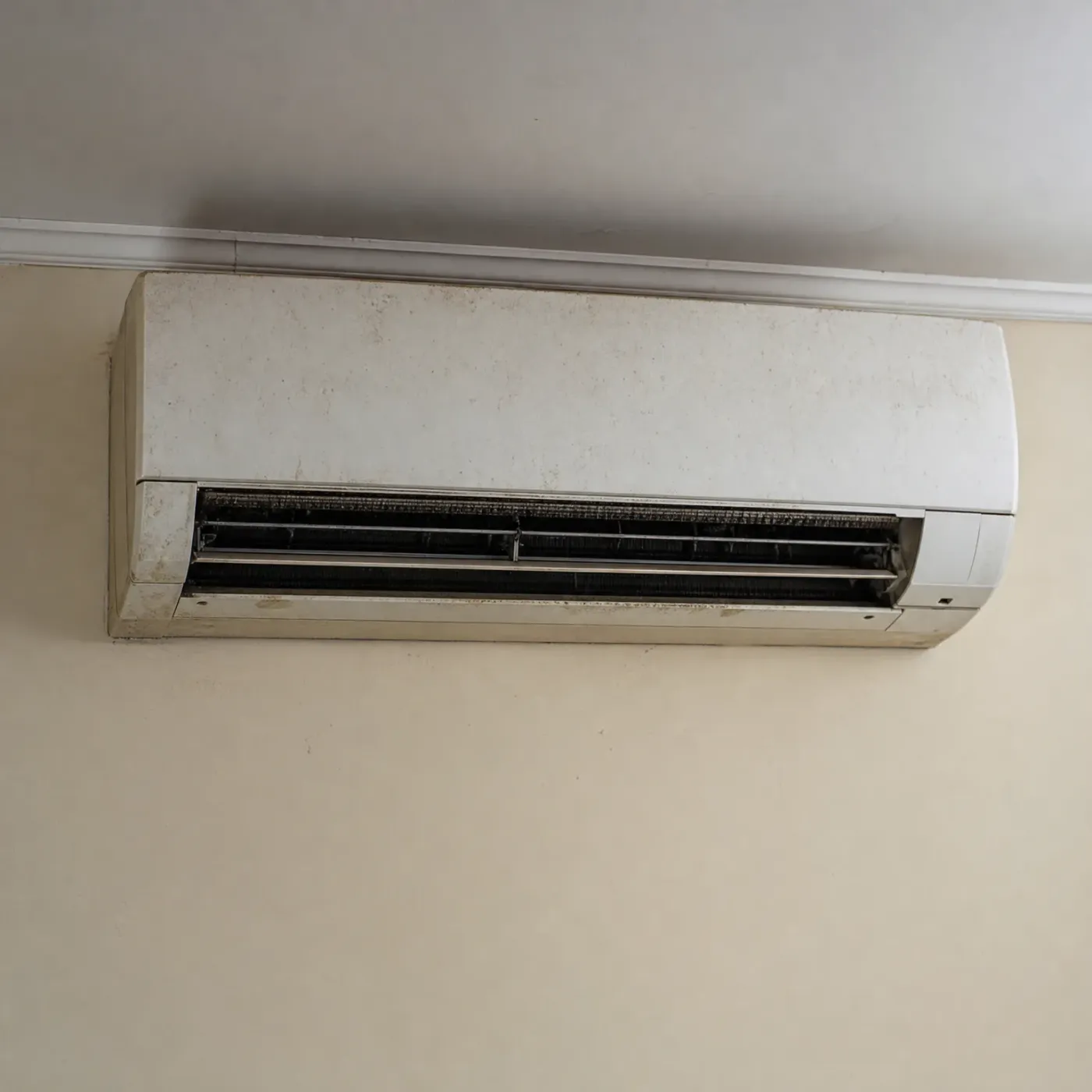
Dust packed into the casing and vents means less air gets through. The unit works harder for the same result, and a filter this caked isn't cleaning much. Pull the filter and wash it, and check whether the coil behind it needs the same.
After you send the request, you're done searching.
Sending the form costs nothing.
A mini split for the whole house means enough indoor heads to cover every room you use, and that costs more up front than fixing one problem room. A single zone on that bonus room over the garage costs less and solves the thing that actually bothers you. Most homeowners in Cass County who add a mini split are doing the second one, not the first. Your gas furnace and central AC already heat and cool the rest of the house well enough. The question is whether you want a mini split to replace that system or just to back it up where it falls short. Those are different jobs with different price tags, and it helps to know which one you're actually asking for before a contractor gives you a number.
Keep the furnace and add a mini split for one room, and you're running two systems instead of one, which means two things to maintain. Replace the whole setup with mini splits and you lose the furnace's output on the coldest nights, the ones where Cass County sits below freezing for days. You also give up the cheap gas you're already paying for and shift that heating load onto power instead, and power costs here are low but it's still a change to how you pay for heat. Neither choice is wrong. One fixes a specific room without touching what already works. The other replaces a system that works fine for most of the house to gain comfort in the part that doesn't.




When Cass County drops into single digits, a mini split works harder to pull heat from outside air and puts out less than it does at thirty degrees. Your gas furnace doesn't have that problem. Gas burns hot regardless of what it's like outside, and gas is cheap here. A lot of homeowners run the mini split through fall and spring, then let the furnace carry the coldest stretch of winter. That split keeps the mini split in its comfortable range and leans on the furnace only when it's actually needed.
A central AC and furnace already heat and cool the whole house, so a mini split there is one more system to maintain and one more remote to keep track of, not a replacement. Where it earns its keep is the room the ducts don't serve well, the bonus room over the garage, the finished basement. There it's not competing with anything. It's the only thing actually conditioning that space, and it does it without opening up ductwork to a room that was never properly tied into the rest of the house.
Five months of cooling is real work for a mini split, but it still leaves seven months where your furnace carries the load alone or that problem room sits unheated. A mini split earns its keep in the stretch from May through September and on the shoulder weeks either side.
NOAA nClimDiv 1991-2020
A mini split is worth it in Raymore when it's solving a real problem, a room your furnace and AC never reach, or a smarter way to cool and take the edge off winter in the space you added on. It's not worth it as a reason to pull out a gas furnace that already heats the rest of the house fine, especially once Cass County drops into single digits. Where it fits, it earns its keep from May through September and on the mild days on either side of that. Once you know which case is yours, the next question is just finding someone who installs them right and sizes the unit to the room, not the brochure. That part doesn't have to sit on your list. Send the form and let a contractor who handles mini splits in this area follow up with you. You'll have answered the only question that mattered here, whether it's worth it in your house, and from there it's someone else's job to get it on the wall.

A mini split pro near you