




Can a mini split be your only heat in Missouri

Send the form and the search for an installer is over.

Hand it off

A mini split can heat a Missouri home through the winter, but most homes here still keep a gas furnace as backup for the coldest stretches. Heat pumps lose capacity as the outdoor temperature drops, and on the single-digit nights that show up most winters, an older or undersized unit will struggle to keep up on its own. Newer cold-climate mini splits handle this much better than the models from even a few years back, and some are rated to keep producing heat well below zero. Whether yours can carry the whole winter depends on which unit you have and how it was sized for your house. For a lot of homeowners here, the mini split does most of the work most of the year, with the furnace kicking in only when it really gets cold. That split keeps gas use low without betting the whole winter on one system.

A man in a blue sweatshirt reclines with closed eyes in a brown leather armchair in a living room with a bookshelf, houseplant, sofa, window, and a side table holding newspapers and a dark mug.
A bearded man in a gray pullover reclines with closed eyes on a brown leather sofa in a sunlit room with a window, framed picture, potted plant, and a wooden cabinet holding papers and a dark mug.
A man in a gray sweater leans back with closed eyes in a brown leather armchair beside a wooden side table holding a dark mug and a folded newspaper, with bookshelves and a window seat behind him.
A man in a green sweater reclines in an armchair with his eyes closed and a slight smile, beside a window with plants, a small table holding a mug and folded newspaper, and bookshelves behind him.

Mini split alone or with gas backup

Mini split only

  • A cold-climate mini split keeps producing heat well below freezing, but its output drops as the temperature outside drops.
  • On a single-digit night, the unit may run constantly and still lose ground against the heat loss in the house.
  • No gas line, no furnace filter to change, no flue to inspect, since the whole system is the one unit on the wall.
  • Every bit of heat comes from electricity, and power here is cheap, so the running cost stays low even on the coldest days.
  • If the outdoor unit ices up or the power drops out, there is no second system in the house to carry the heat load.

Mini split with gas backup

  • The furnace takes over once the outdoor temperature drops below where the mini split can keep up, so the house never depends on one system alone.
  • Most homes in Missouri already have a gas furnace in place, so adding a mini split means pairing it with equipment that is already there.
  • The furnace covers the coldest nights efficiently, while the mini split handles the milder months without running the gas line at all.
  • Two systems means two things that can need service, and a thermostat or control setup has to send the call to the right one.
  • Keeping the furnace as backup means keeping its yearly service and its own point of failure, even if it runs only part of the winter.
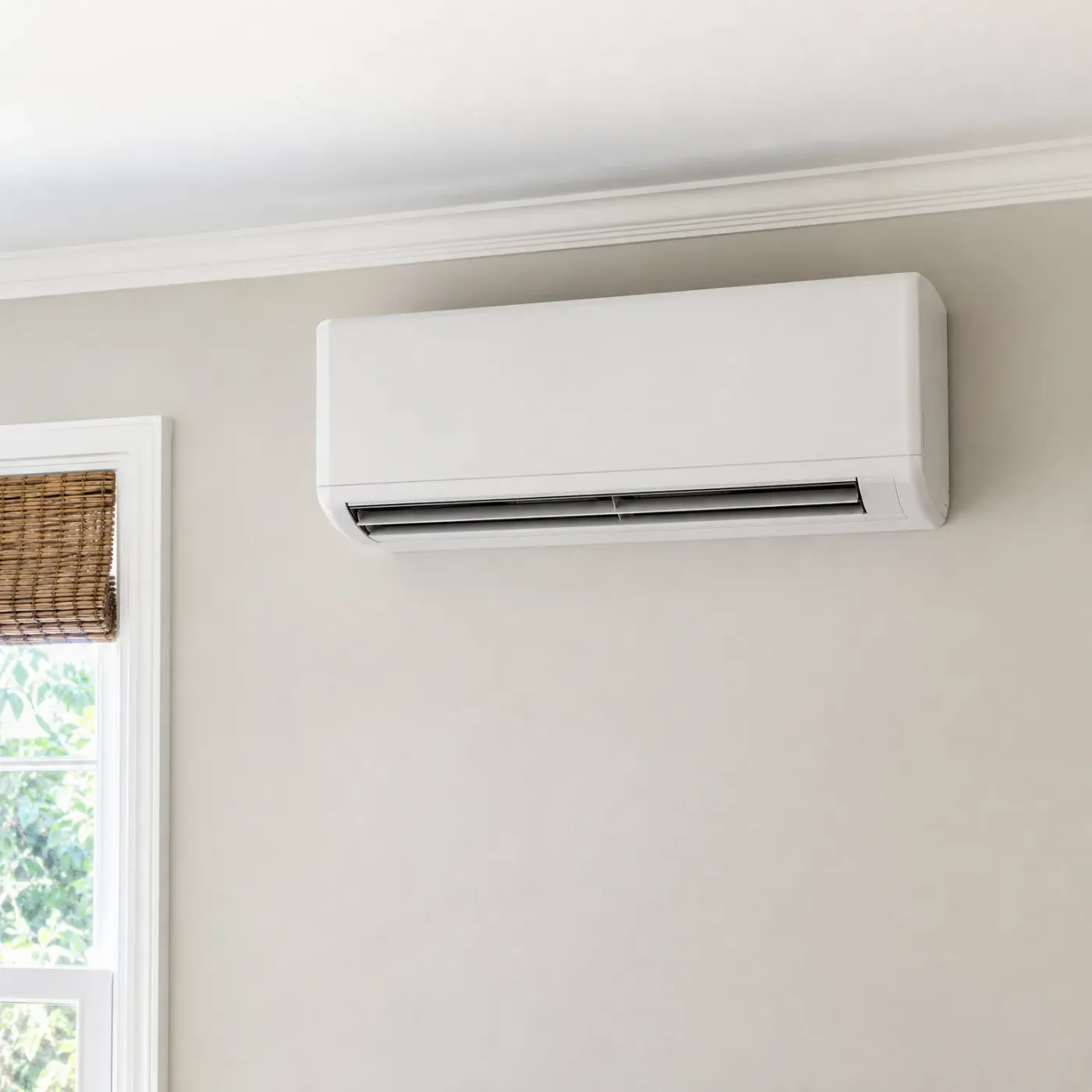
A white wall-mounted mini-split air conditioner unit installed high on a beige interior wall below white crown molding, with a window and woven shade at the left edge showing green foliage outside.

Paired with gas backup

This is the setup most Missouri homes run. The mini split carries the mild stretches, fall and spring and the warmer winter days, while the furnace waits for the nights that drop into the single digits. Power here is cheap, so the mini split does most of the work without much cost, and the furnace only kicks in when it's needed.
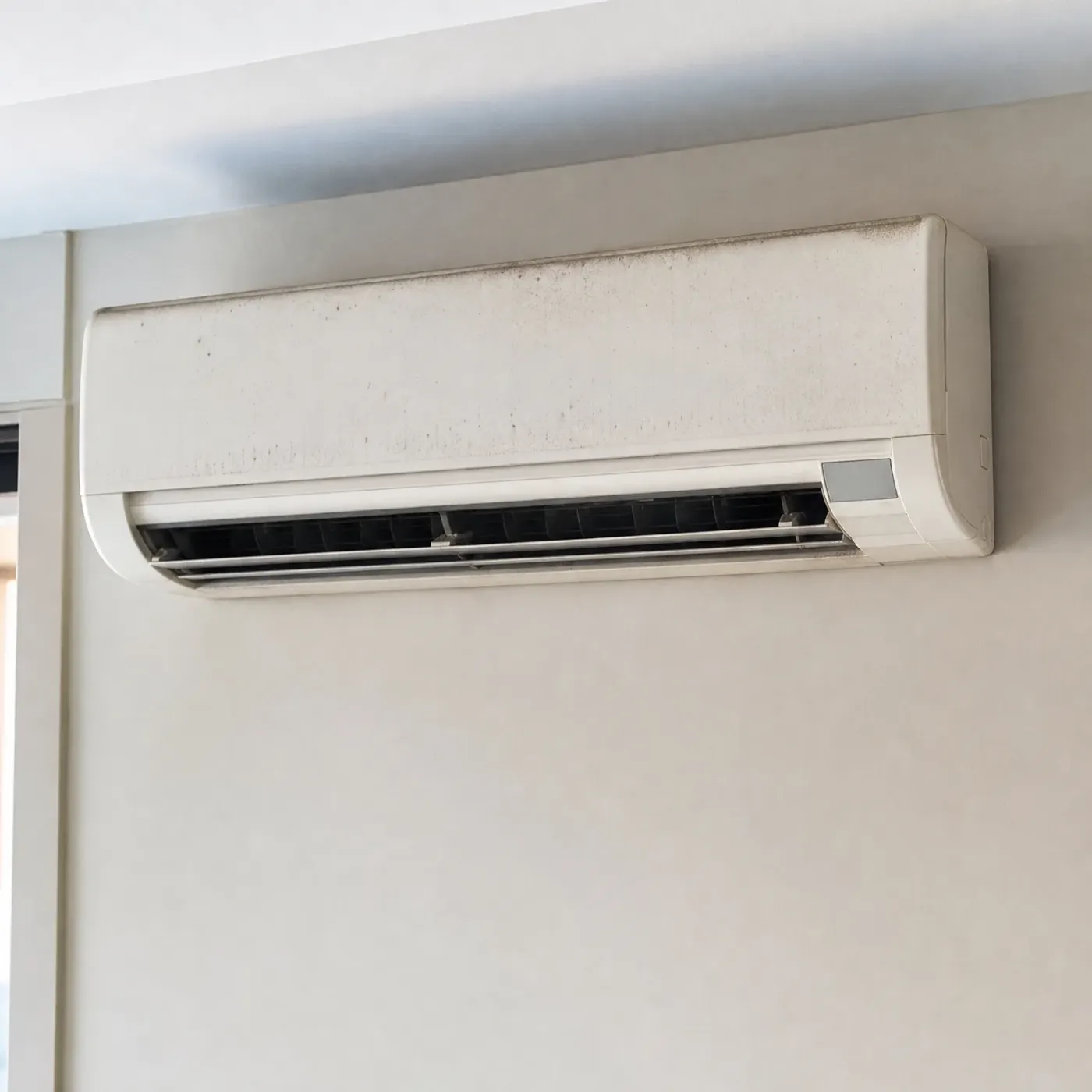

A dusty, stained white wall-mounted mini-split air conditioner indoor unit installed high on a plain off-white interior wall near the ceiling.

Mini split alone

Left to cover a Missouri winter by itself, a mini split loses capacity as the temperature drops outside. On the coldest nights it can run constantly and still fall behind the heat the house is losing. The dust and buildup on a unit worked this hard show up faster, and the house stays harder to keep warm.

An older man with gray hair and a beard leans back on a beige sofa with his eyes closed, in a sunlit room with potted plants, a wicker chair and large windows behind him.
A woman in a cream knit sweater sits in an armchair with her eyes closed and a slight smile, beside an open window showing orange autumn foliage, with a mug, books and a lit candle on a small side table.
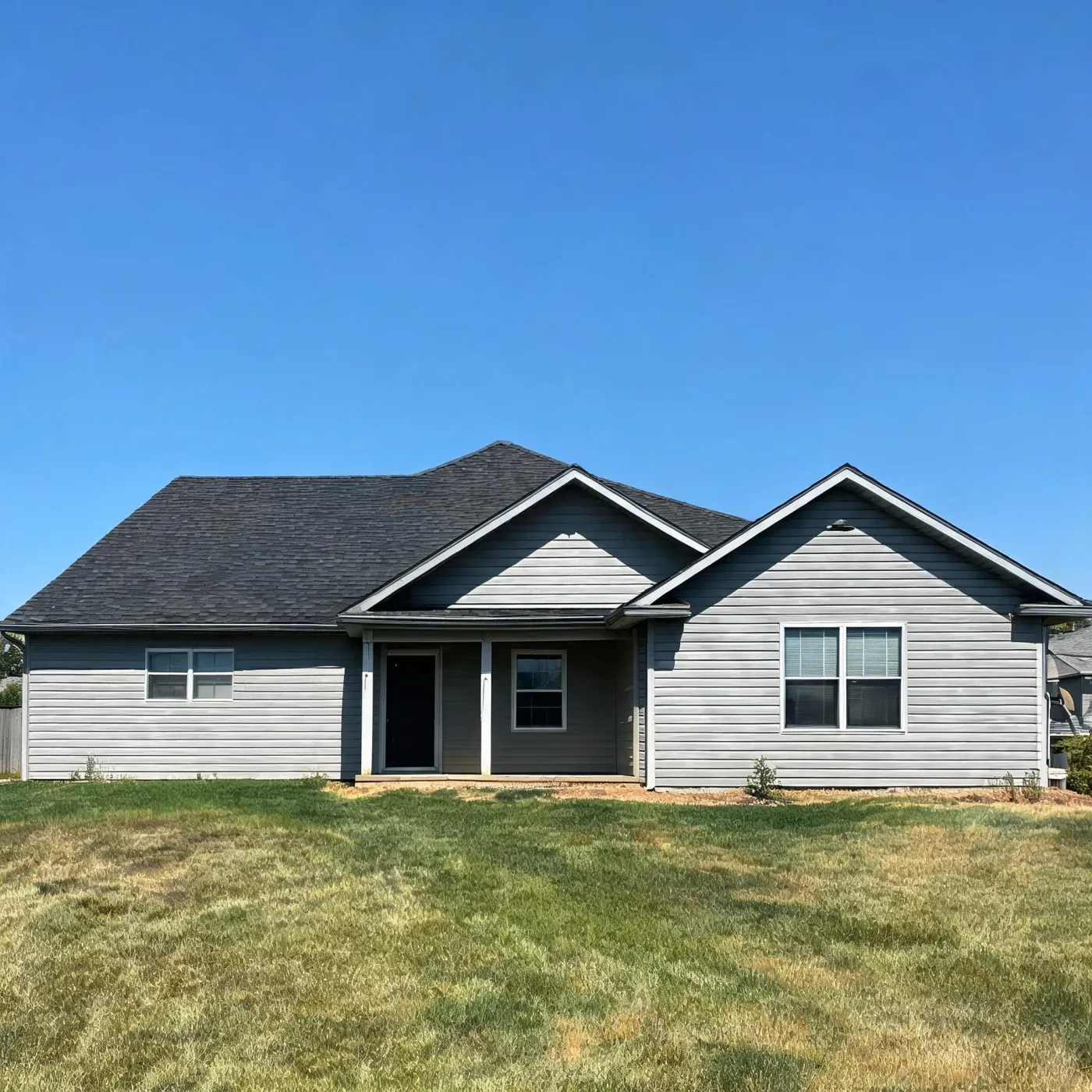
Single-story house with gray horizontal lap siding, dark shingled gable roof, a small covered front porch with a dark door, and windows, set behind a patchy green and brown lawn under a clear blue sky.

Summer here is less about the heat and more about the air itself. Dew point across Missouri averages 66°F through June, July and August, the figure NOAA uses to track how much moisture sits in the air, and that's the range where a room starts to feel damp even with the temperature under control. A mini split pulls that moisture out as it cools, running its compressor longer on these muggy days to keep up. You'll feel the difference most on the stickiest afternoons, when the air inside stays dry and even even though the number on the thermostat hasn't moved.

NASA POWER T2MDEW county cells weighted by homes

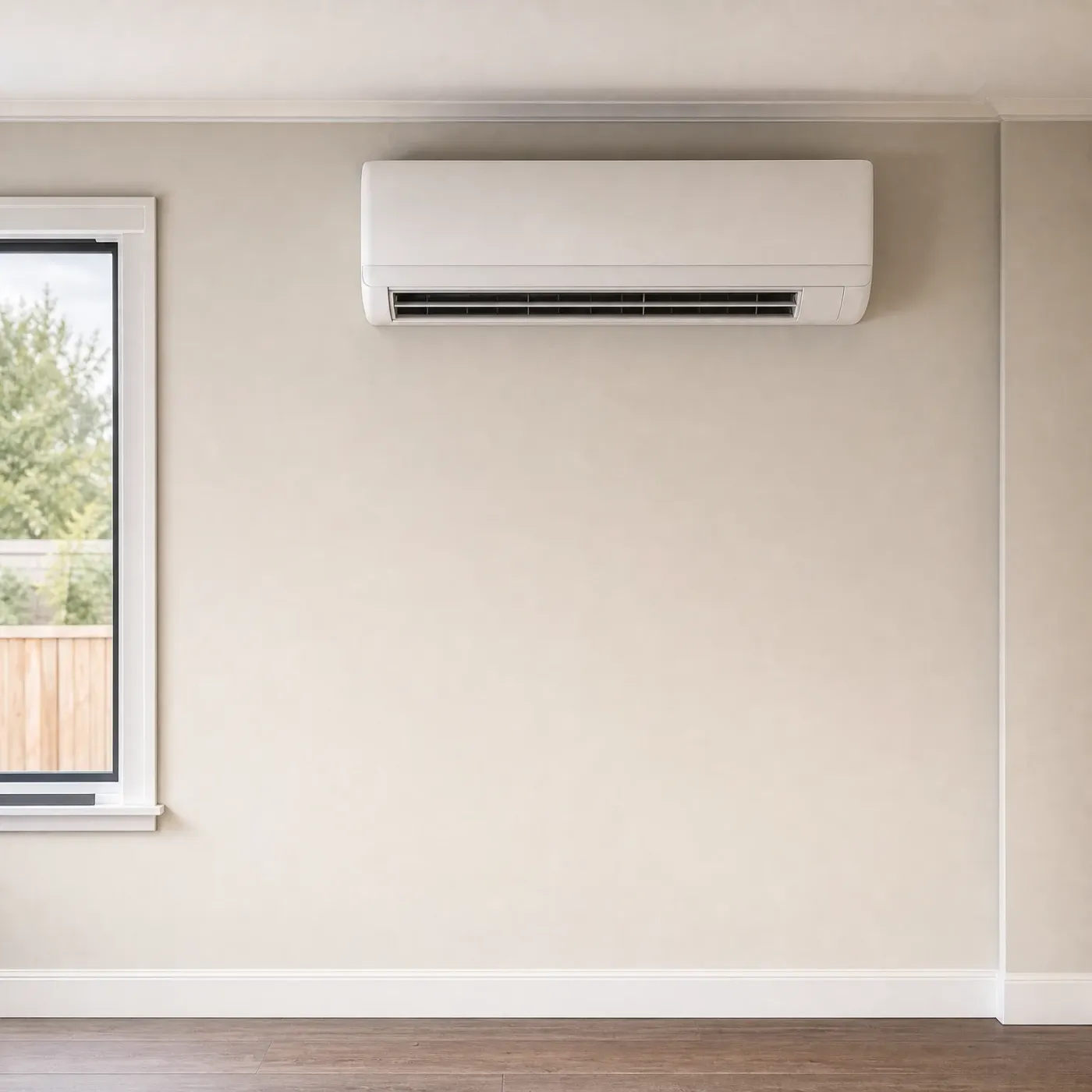
A white wall-mounted mini-split air conditioner on a beige interior wall, with a window at left showing trees and a wooden fence, and dark wood flooring below.
A mini split sized and installed right keeps even output on a day like this, warm air moving steady with no strain showing.
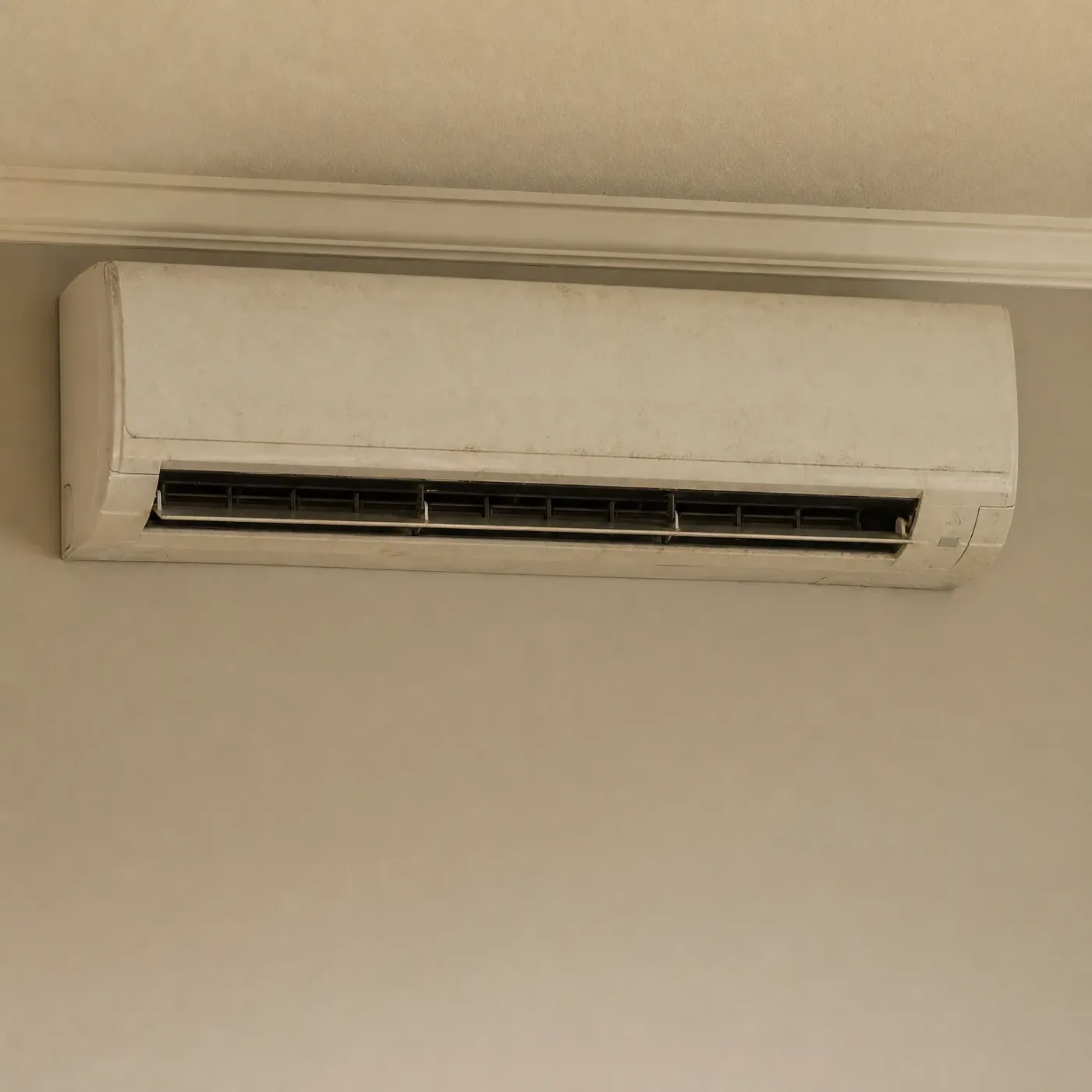
A white wall-mounted mini-split air conditioner indoor unit with dark louvered vents, installed near the ceiling on a beige wall below white crown molding.
Dust on the coil and a casing this worn mean the unit is losing ground, and the backup furnace is doing more of the work.

The outdoor unit doesn't just switch on at full blast. Its compressor changes speed, so it pulls more refrigerant through the system as the house loses more heat, and backs off when it doesn't need to work as hard. That's different from how a furnace burner fires. Once the temperature outside drops below freezing, the unit periodically reverses itself for a few minutes to clear frost off the outdoor coil, then goes right back to heating. Inside, the wall-mounted head is reading the room on its own, adjusting fan speed and refrigerant flow rather than cycling on and off at one setting. If a furnace is paired in as backup, its thermostat gets set a few degrees below the mini split's, so it only kicks on once the mini split can't keep the room where you want it. None of this runs through ductwork. Refrigerant lines pass through a small hole in the wall to each indoor head directly. And the size of the unit a house needs comes from a heat loss calculation, not square footage, since windows, insulation and layout all change the number.

How a mini split actually heats

  • A mini split's outdoor unit uses a compressor that changes speed, pulling more refrigerant through the system as the heat load goes up instead of just switching on and off.
  • Below freezing, a cold-climate model runs a defrost cycle that briefly reverses to melt frost off the outdoor coil, then switches back to heating.
  • The indoor head reads the room temperature and adjusts fan speed and refrigerant flow on its own, rather than cycling at one fixed output.
  • A furnace paired as backup needs its thermostat set a few degrees below the mini split's, so it only fires once the mini split can't keep up.
  • Refrigerant lines run through a small hole in the wall between the outdoor unit and each indoor head, with no ductwork involved.
  • Sizing comes from a heat loss calculation on the house, not the square footage alone, since windows, insulation and layout all change what the unit needs to produce.
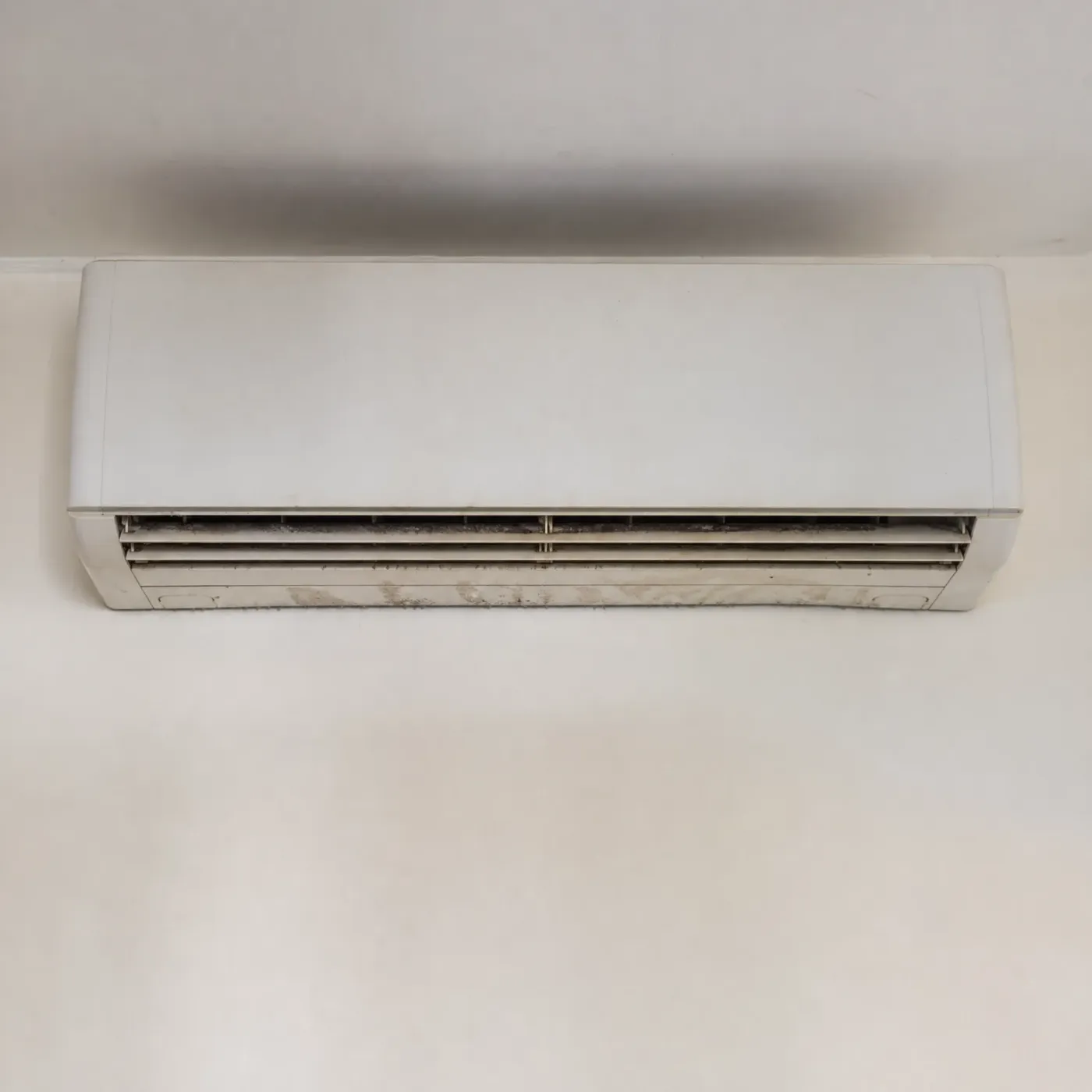
A white wall-mounted mini-split air conditioner indoor unit with visible dust and staining along its lower vent, installed on a plain pale wall.
Before you get your mini split installation
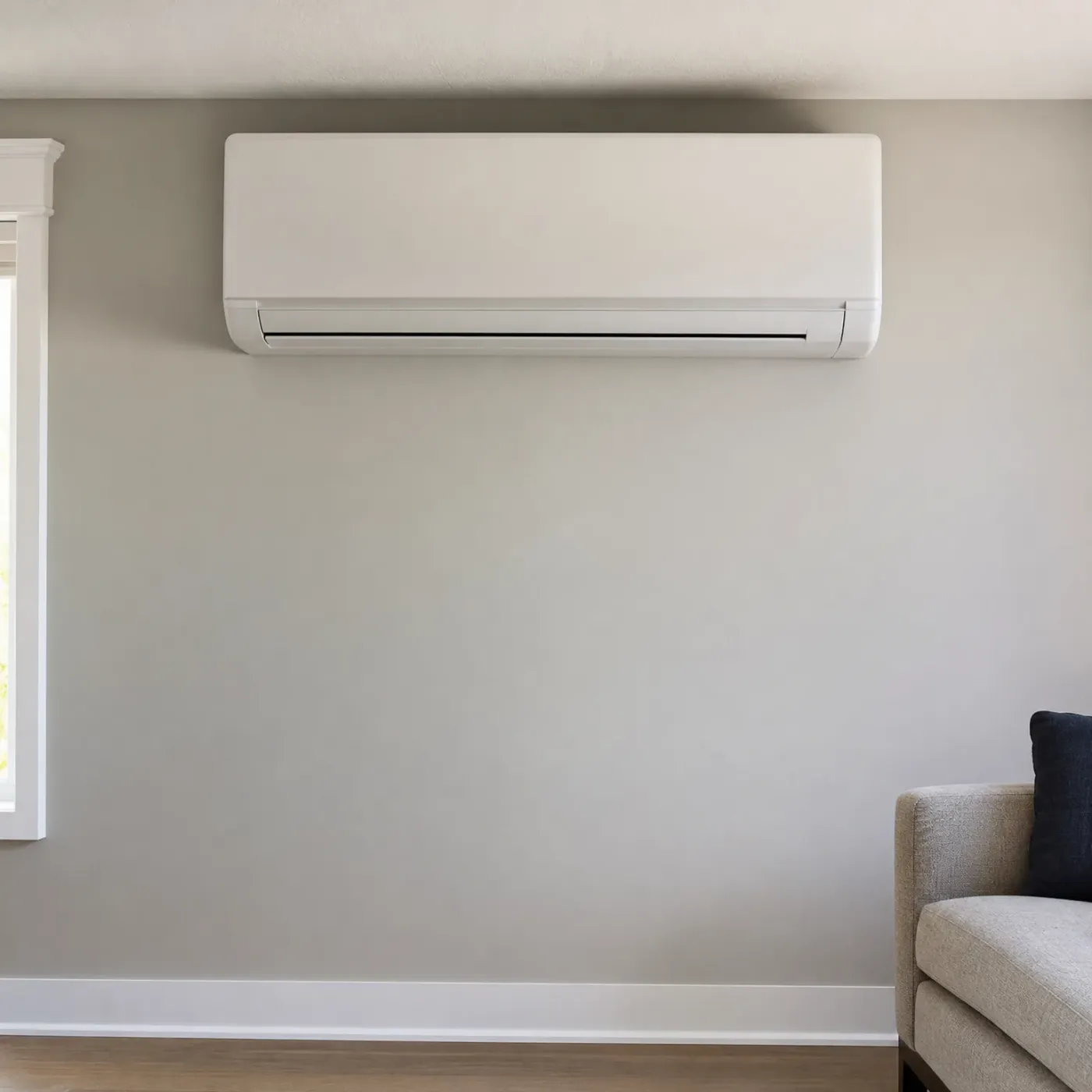
A white wall-mounted mini-split indoor unit installed high on a gray interior wall, with a window at left and part of a light gray sofa with a dark cushion at lower right.
After you get your mini split installation

Send one request and you're done looking

A mini split sized for your home will carry you through most of the year without the furnace ever kicking on. The question is what happens on the nights that drop into the single digits, and whether your ductwork and gas line are set up to let the two systems hand off to each other cleanly. That's a judgment call that depends on your house, not a rule that applies to every Missouri home the same way. A local contractor who installs these year round, in houses with the same muggy summers and hard winters as yours, can look at your space, your current setup, and what you're trying to get out of it, and tell you straight whether a mini split alone makes sense or whether it should run alongside what you've already got. Send the request and one contractor who knows this equipment and this climate takes it from there.

A heat pump's rated capacity is measured at 47°F outdoors. At 5°F, the same unit might put out half that, even though it's still running flat out.

That's the gap a gas furnace is there to cover. It doesn't need to run often, just on the nights when the mini split alone can't keep up.

Power costs 13.30 cents per kilowatt-hour statewide

At 13.30 cents a kilowatt-hour, running your mini split hard through the mild months costs little. That's what makes the gas backup setup work out for most Missouri homes: the furnace only has to cover the few nights the mini split can't, and the rest of the season runs cheap.

EIA-861 2025 statewide residential average

Where this leaves you

  • A mini split can run as your only heat, but most Missouri homes keep gas for the single-digit nights.
  • Sizing the unit to the house and the local climate is what decides how far into winter it carries the load alone.
  • A furnace that only has to cover a handful of cold nights runs very little compared to one that heats the whole winter.
  • Whoever installs the system also has to make sure the ductwork and gas line support running both together.
  • A local installer who works on mini splits all year knows which failures show up first in Missouri winters.
  • One contractor means one visit and one person answering for how the system performs, not a round of competing bids.

A mini split alone can carry a Missouri home through most of the year, and for a lot of homes it's the only system running from spring through fall. What it can't do by itself is guarantee heat on the handful of nights that drop into the single digits, which is why gas backup stays part of the plan for most houses here. Getting that combination right comes down to sizing, the ductwork, and the gas line all working together, and that's a judgment call made on-site, not from a brochure. It's also why who installs it matters as much as the equipment itself. A contractor who works on mini splits through every Missouri winter has already seen which parts struggle in a hard freeze and which installs hold up without a callback. That's different from someone who installs a few a year and moves on. When you send a request through this page, it goes to one licensed local contractor, not a batch of competing bids. You get a single point of contact who can walk your house, look at what's already there, gas line, ducts, electrical, and tell you straight what a system here would need. No guessing which of five callers to trust, no pressure to decide fast. Just someone local who installs and services this equipment for a living, looking at your specific setup and telling you what it would take to make a mini split work as most of your heat, with the furnace standing by for the nights it's built for.

At dusk, a dark board-and-batten house with a standing-seam metal roof and lit entry walkway of stone pavers, with two large outdoor heat pump units on a stone-walled pad at right and trees and hills in the background.

Mini Split Installation

Finding a pro stops being your job

Step 1 of 3: Equipment
  • A brown leather and wood armchair with a cream knit throw sits in a corner beside a woven basket holding a dark cushion, under a framed mountain photograph, with a wood-trimmed window showing yellow and green foliage.
    • A local installer who puts in mini splits gets your project.
    • Get in touch with a local installer about a new mini split.
  • A dark wood dresser against a pale wall holds a ceramic vase of eucalyptus branches, a stack of books with a wooden bowl, and a woven basket, with a framed landscape painting above and a woven basket holding a knit blanket on the floor beside a window.
    • One request and the search for a pro is handled.
    • Send it once and finding someone is no longer on you.
  • A window seat with beige linen and brown textured cushions, a chunky knit blanket, and an open book, beside a window showing blurred yellow autumn foliage.
    • Answer a few questions instead of calling shop after shop.
    • Describe your mini split job once, to one pro.
  • A cream upholstered armchair with a rust-colored pillow and knit fringed throw sits beside a window with a ceramic vase of orange-leafed branches on the sill, overlooking autumn trees and leaf-covered ground.
    • The pro who reaches out is licensed in Missouri.
    • Only one pro gets your request, so you hear from one company.